Wild West Weekly
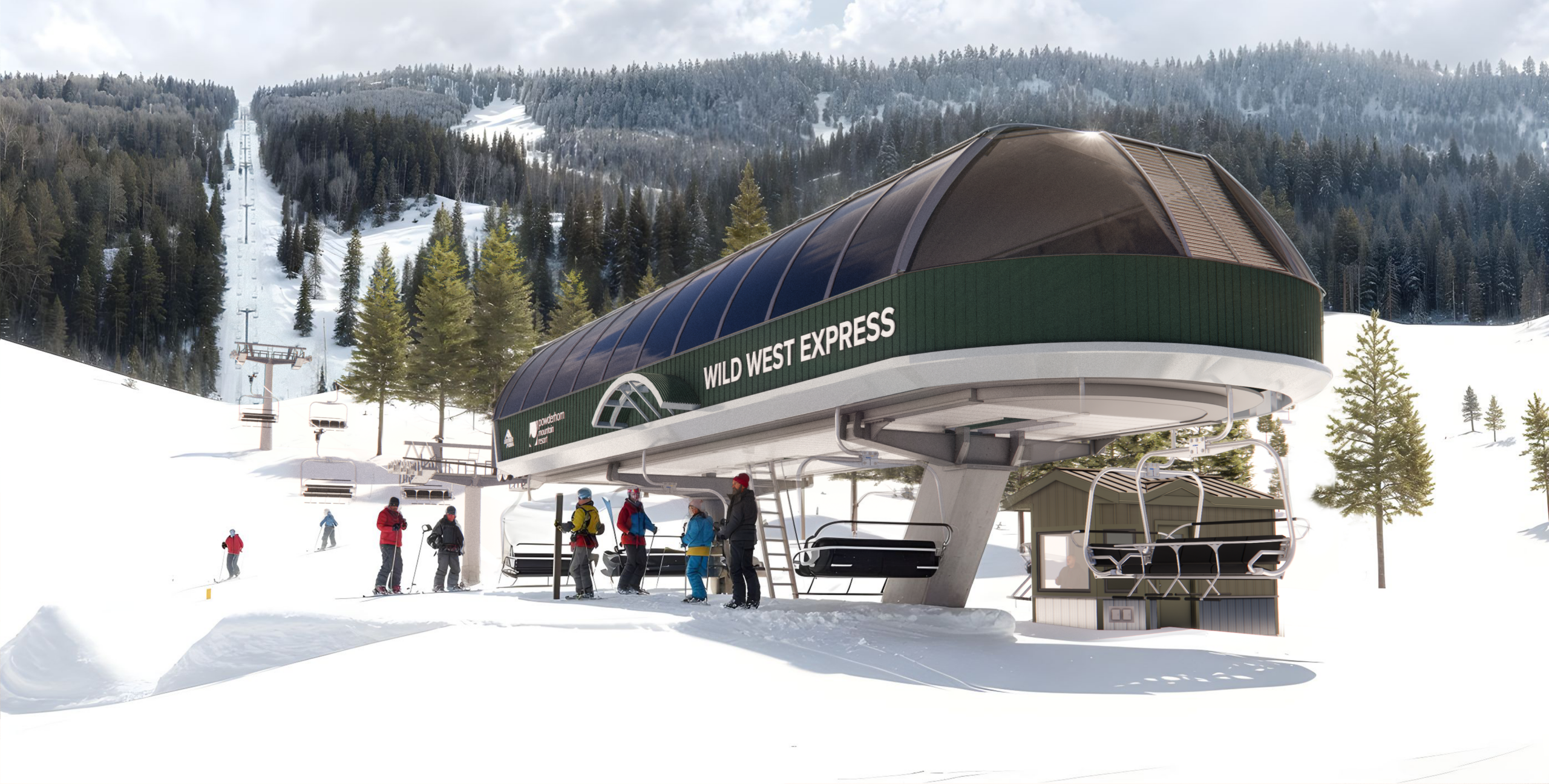
A New Chapter of Our Story Begins
Building a chairlift isn’t one big moment. It’s hundreds of small moments that, together, add up to one monumental change for Powderhorn. Throughout the summer, we’ll take you behind the scenes as the Wild West Express comes to life. From the decommissioning of the West End chairlift to the engineering, craftmanship, and countless moving parts required to assemble a modern high-speed lift. Some weeks will bring dramatic changes to the mountain skyline. Others will highlight the planning, partnerships, and behind-the-scenes work that make a project of this scale possible.
Whether you’re following along from home or visiting the mountain this summer, we’ll be here to regularly share progress and give you an inside look at the future of Powderhorn’s west side.
Concrete By Air
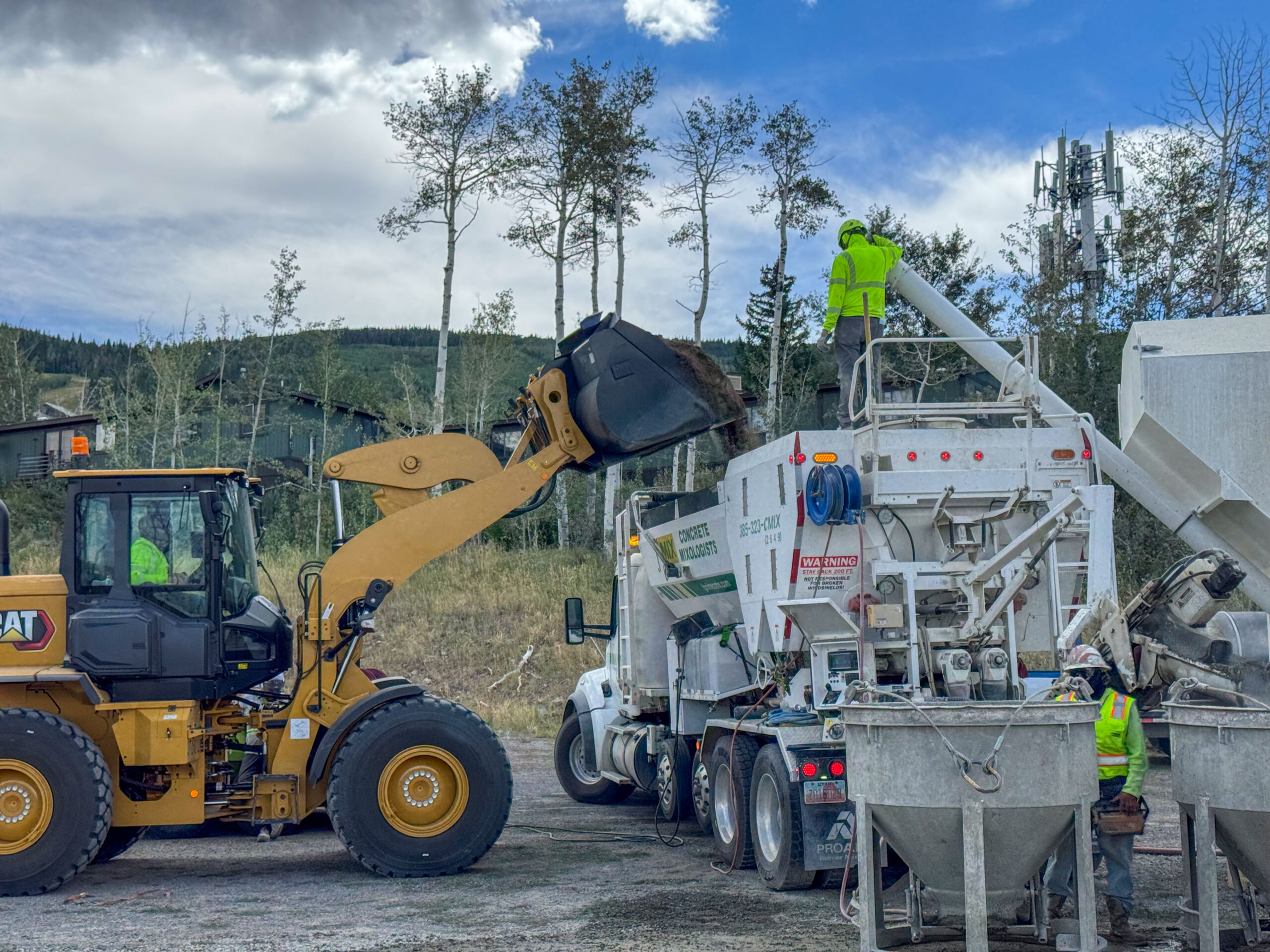
There are certainly easier ways to pour concrete. At the bottom of the Wild West Express lift line, a concrete truck and a reasonably good road did the trick. A handful of towers are poured, finished, and backfilled. The rest of the tower locations sit on terrain where “reasonably good road” doesn’t apply.
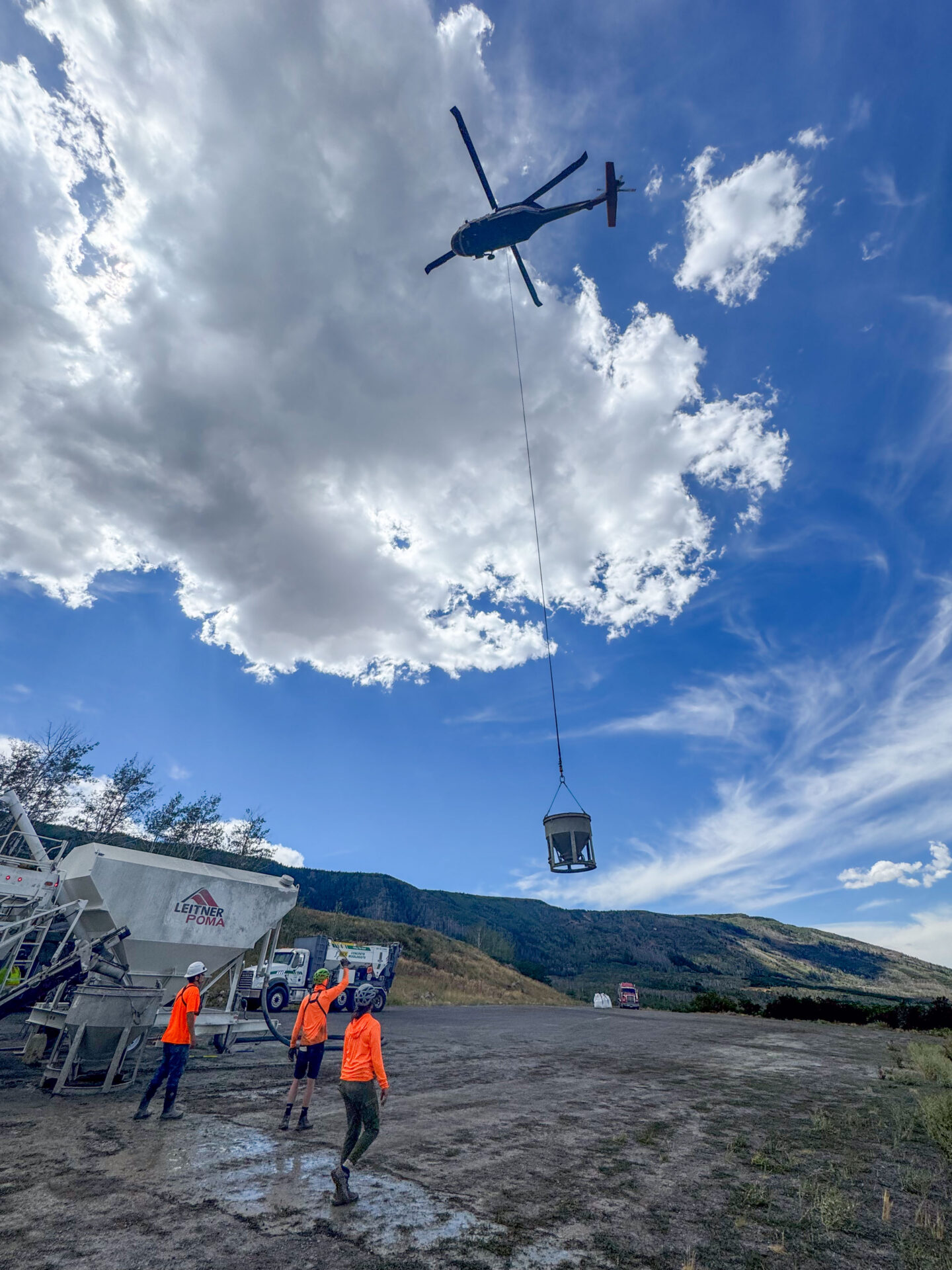
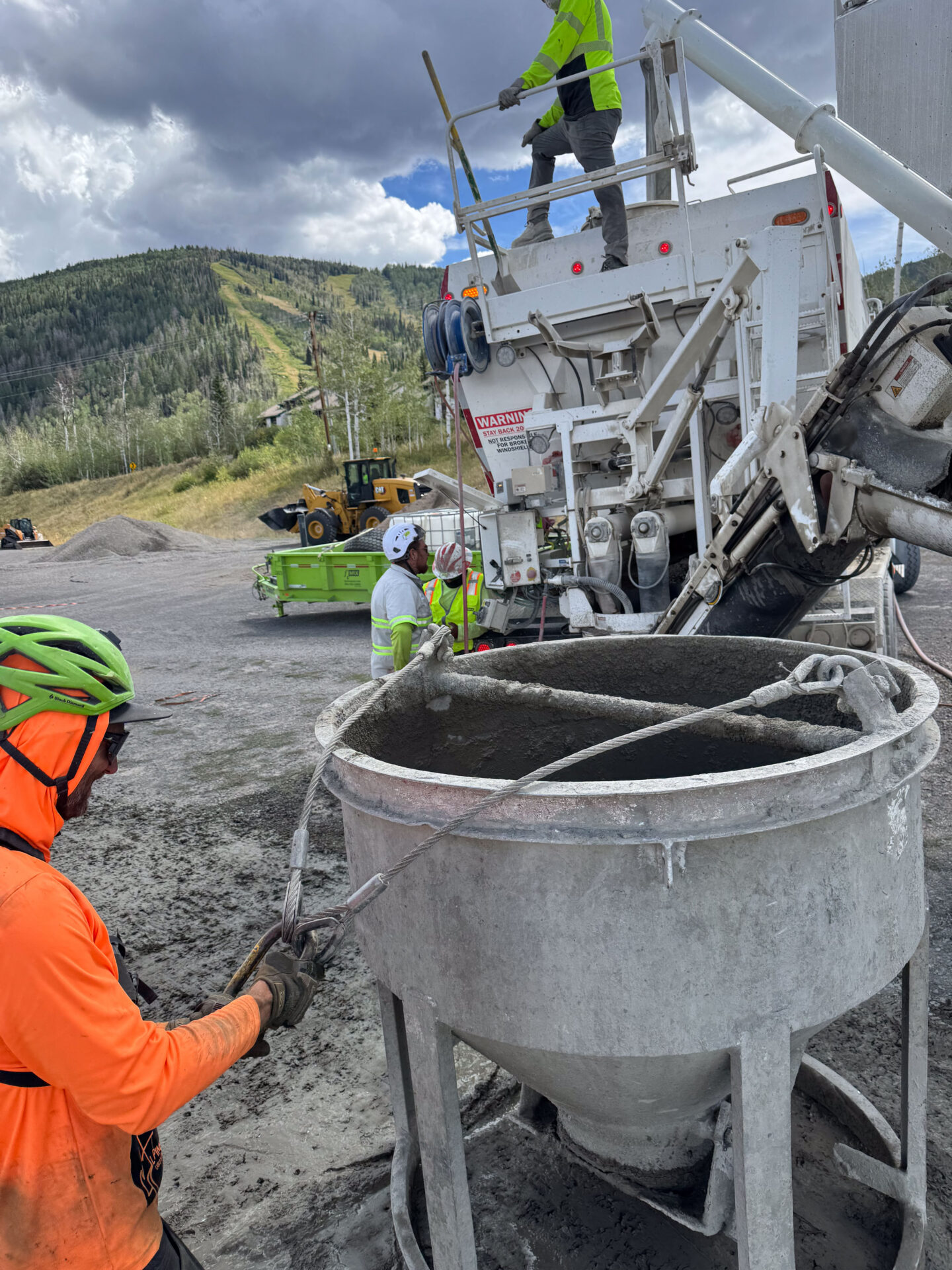
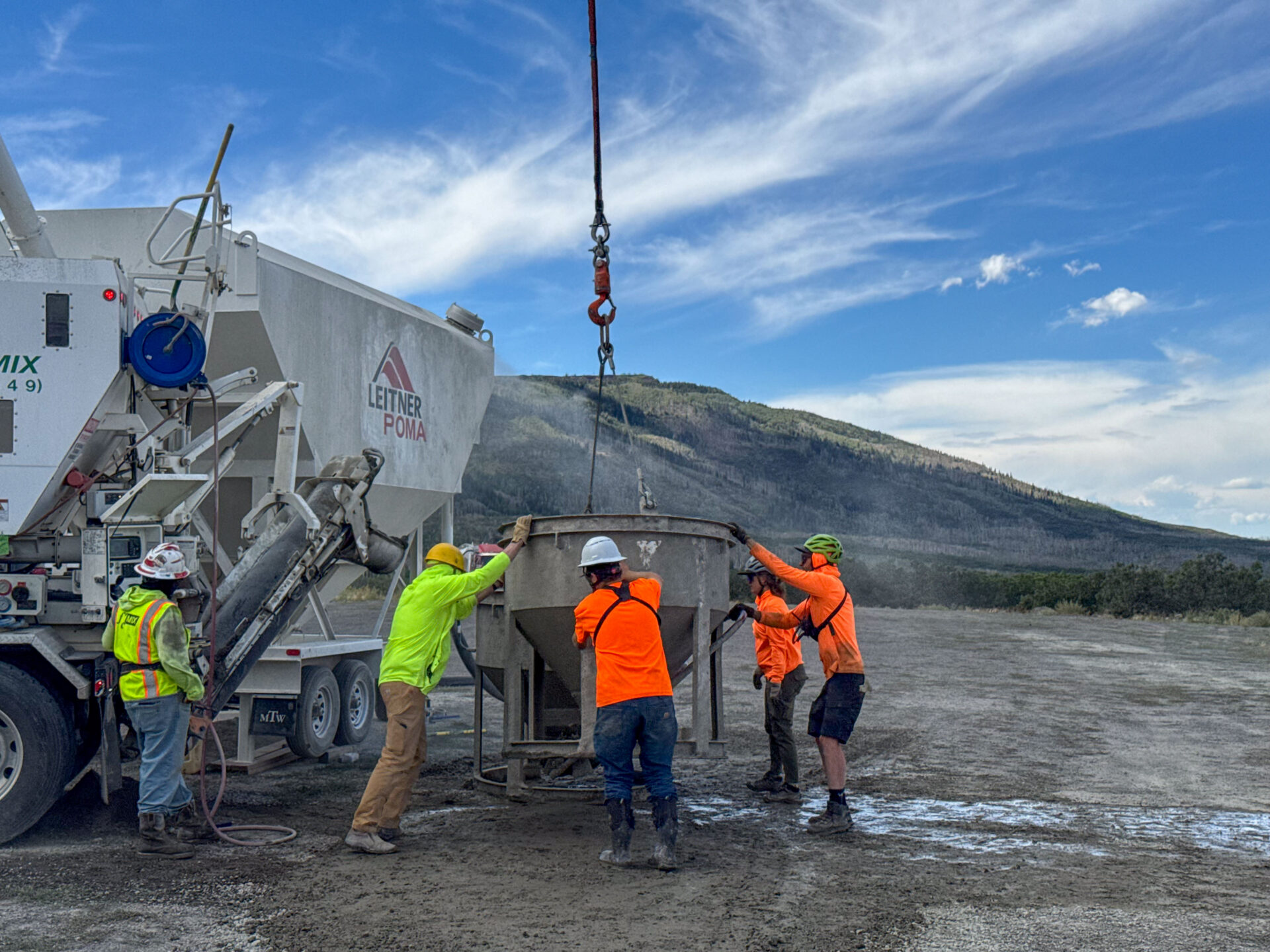
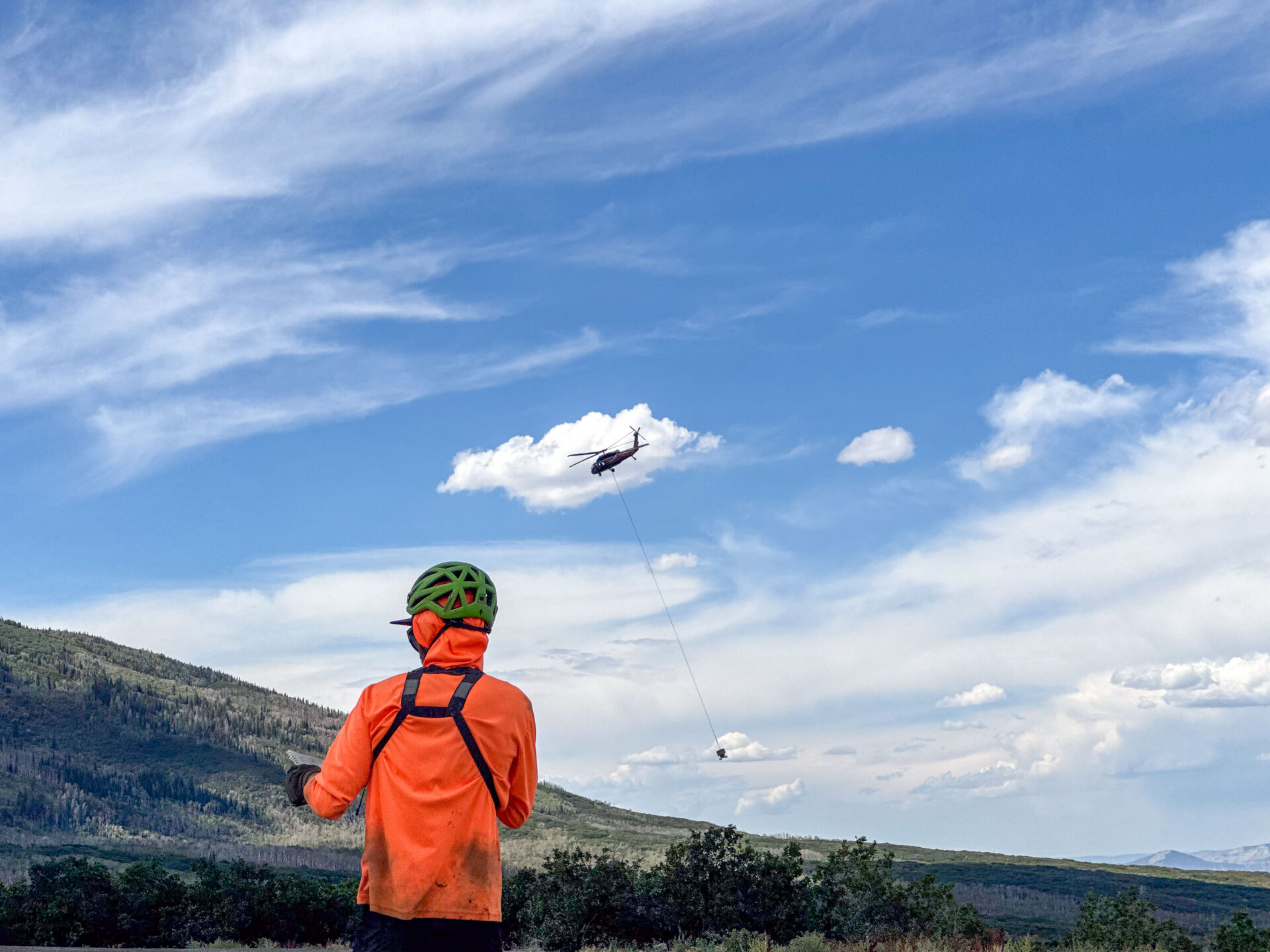
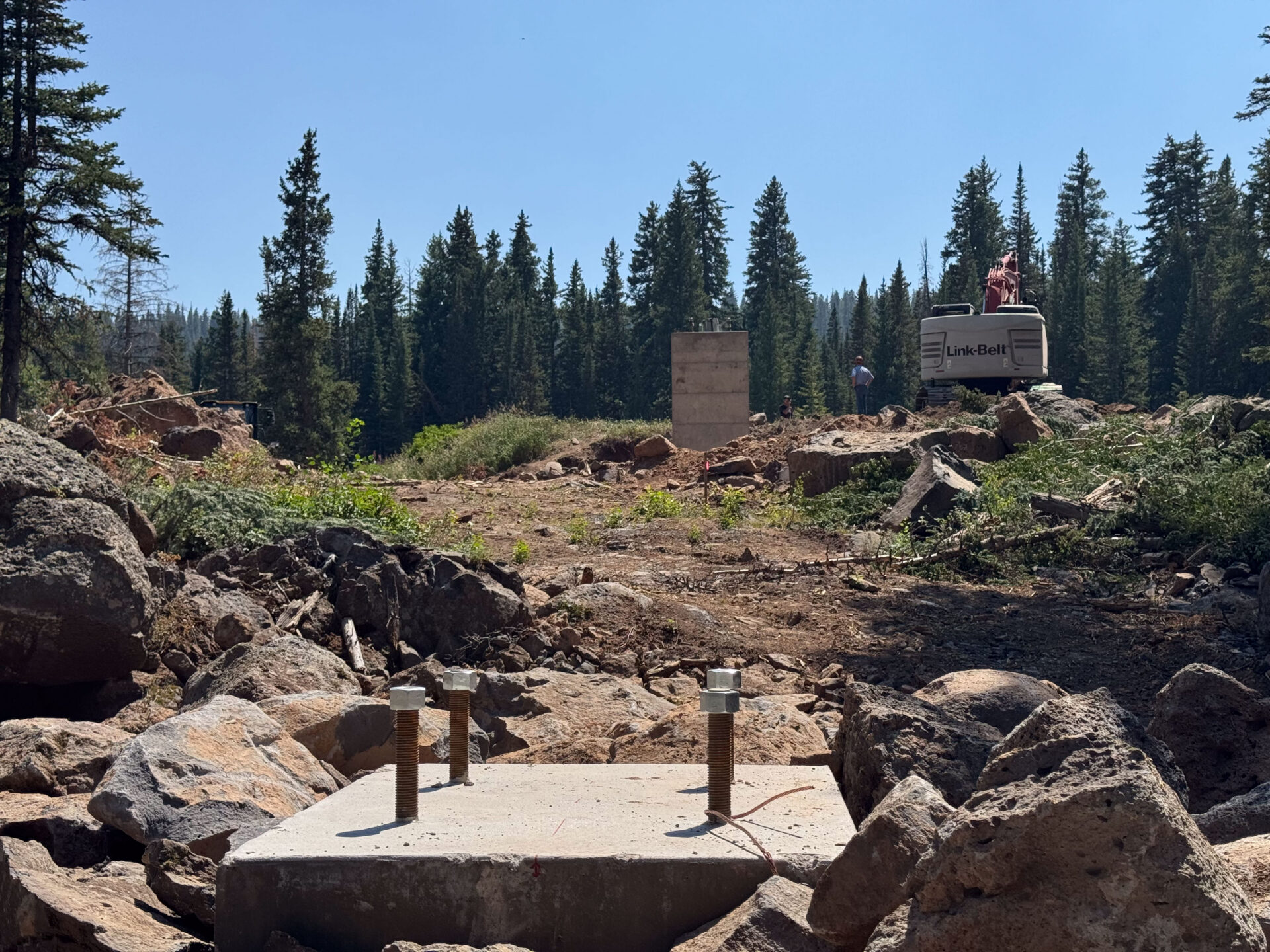
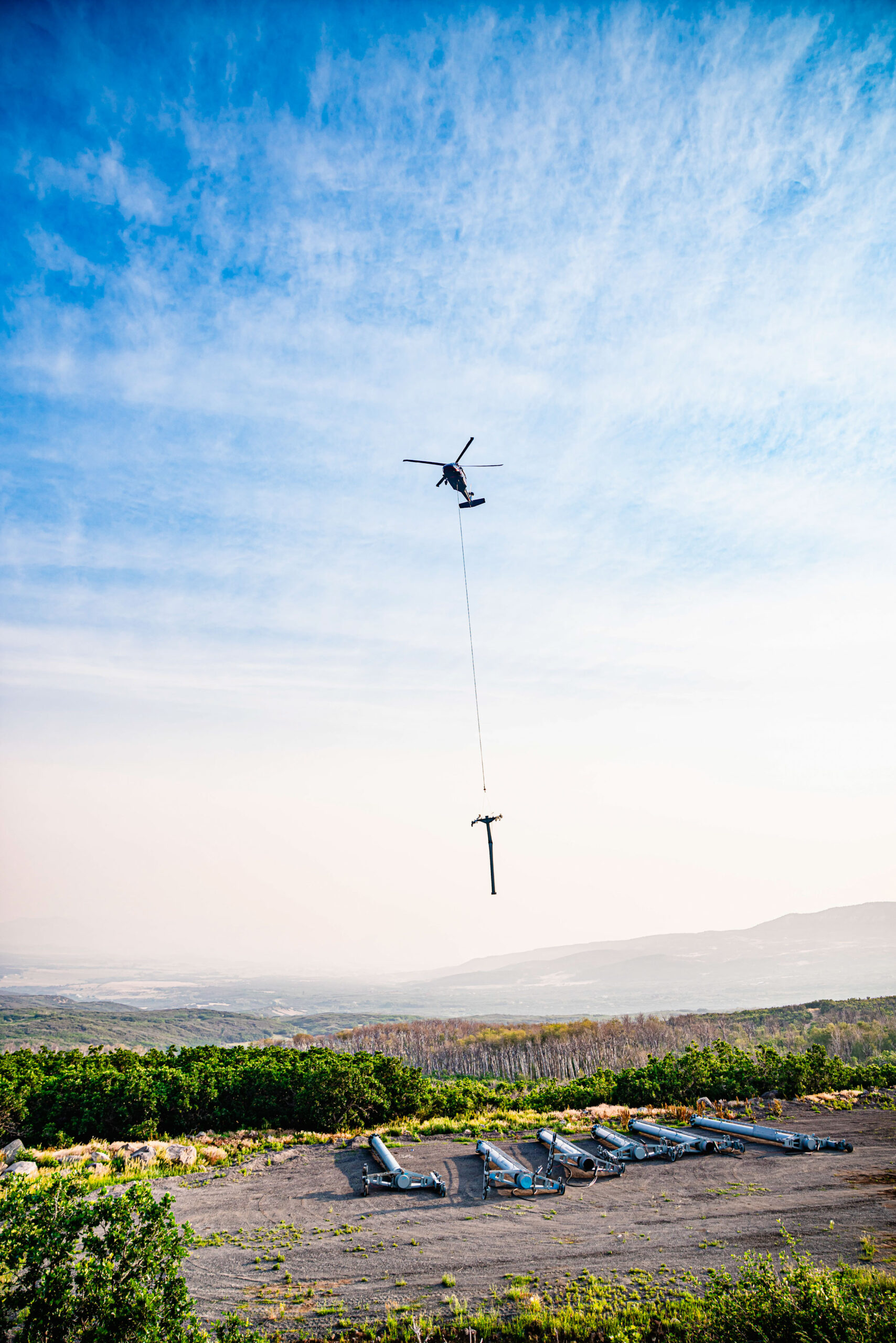
So instead, the concrete is coming from the sky. The helicopter returned to Powderhorn to carry concrete up to the tower foundations along the steep and inaccessible middle sections of the lift line. The tower forms are in place, many in the same terrain recently excavated by the spider excavator. To complete these foundations, over 150 cubic yards of concrete was mixed, flown, and poured—a new single-day record, according to the crew.
It’s an amazing sight. Rather than driving concrete up the mountain by the truckload, it’s mixed in the fourth lot and delivered by helicopter, one giant bucket at a time, to three separate crews waiting along the lift line. The helicopter keeps moving, the crews keep pouring, and a job that would be extraordinarily difficult from the ground gets done from above.
While concrete is flying on the mountain, the mechanical side of the Wild West Express continues coming together at Leitner-Poma of America in Grand Junction. The return mechanisms have already made the trip to Powderhorn and been craned into place at the bottom terminal, where crews are completing interior work before the electrical team begins wiring. The drive mechanisms have finished production as well, sporting fresh paint, new siding, and updated electrical equipment, and are waiting for their turn to head uphill.
The chairs and grips are also ready. Every grip has been torn down, cleaned, inspected, and fitted for replacement components where needed. Tower sheave assemblies (the wheels on each tower that guide and support the haul rope) have been rebuilt to accommodate an updated safety monitoring system and should arrive on the mountain soon. Next up in the LPOA shop is the drive unit itself. It is headed into the assembly bay for what amounts to a very thorough physical.
When these Wild West updates began, we saw concrete forms being built in the parking lot. A few weeks ago, we wrote about the specialized equipment required to dig the holes to hold them. Now the helicopter has brought concrete to those hard-to-reach forms in each carefully-dug tower location. Soon enough, steel towers will fill in the familiar treeline.
If following the Wild West Express project has you thinking about being among the first to ride it, now is a pretty good time to make plans for winter. Powderhorn Season Pass prices increase September 7. We’ll handle the concrete, helicopters, and steel. You just need the pass.
It’s Starting to Look a Lot Like a Chairlift
For much of the spring and summer, building the Wild West Express has meant digging holes, pouring concrete, moving dirt, and preparing for what comes next. Important work, all of it. But admittedly, you’ve needed a little imagination to look at a concrete foundation and picture a high-speed quad. That changed this week.
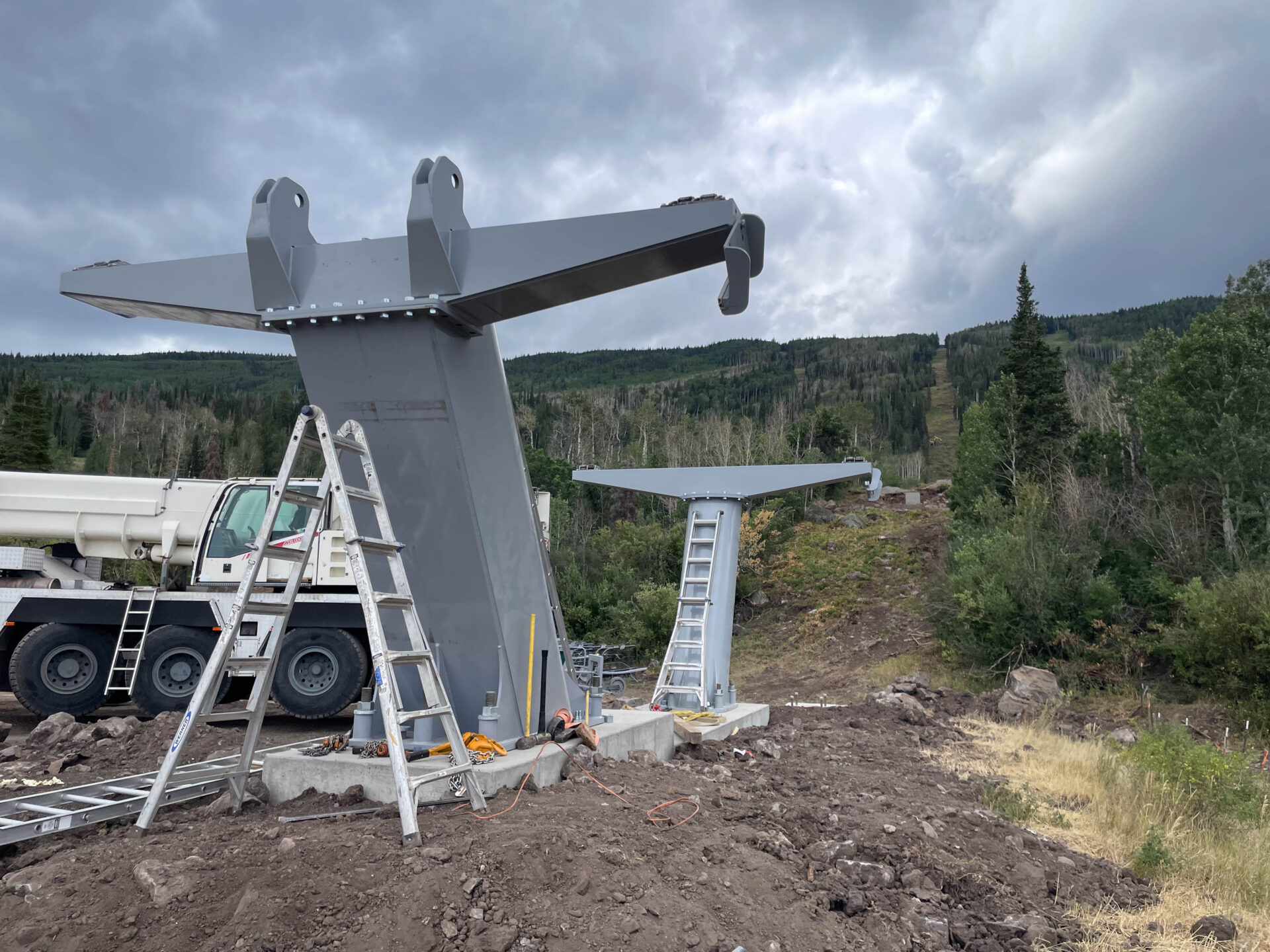
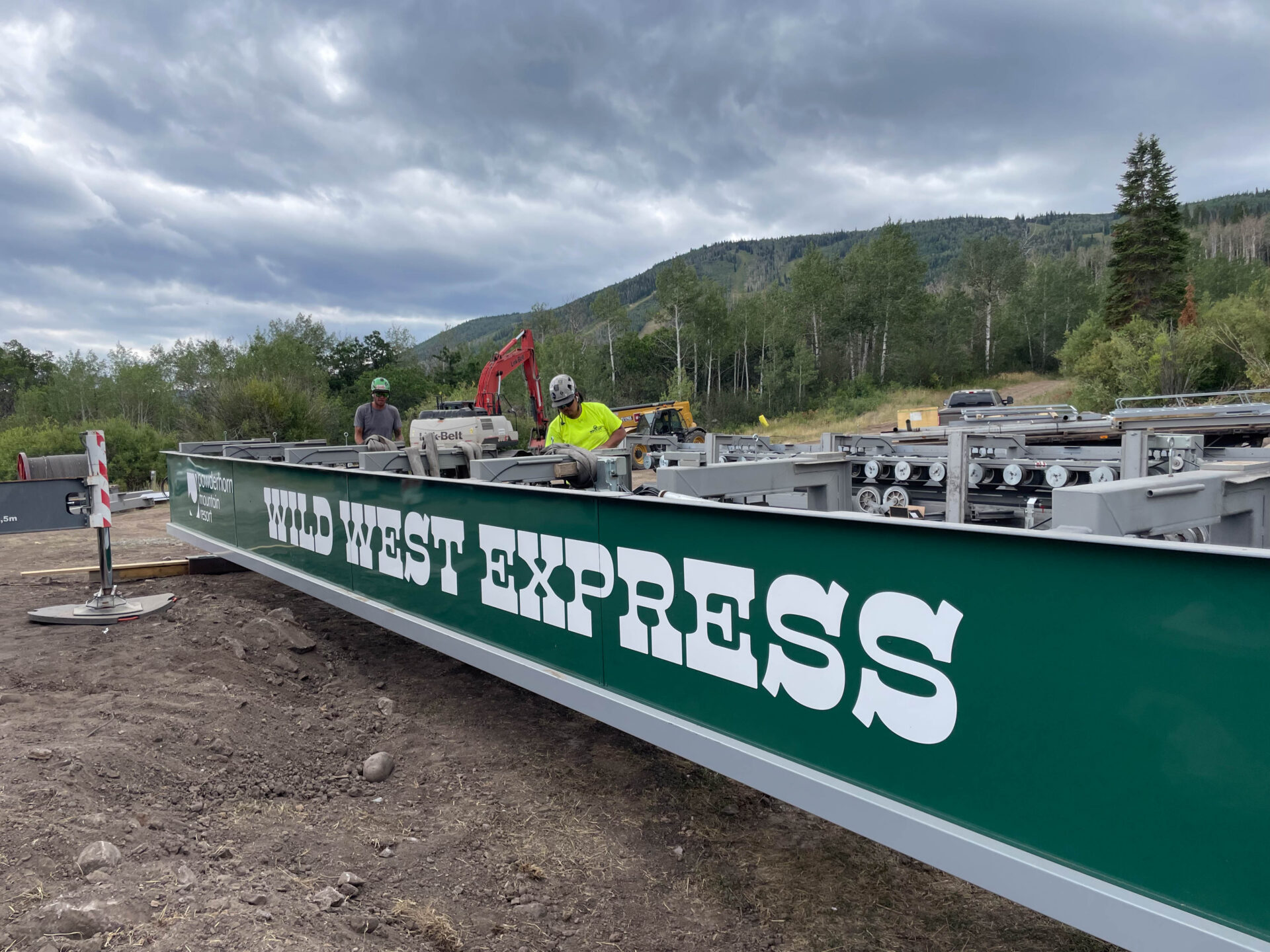
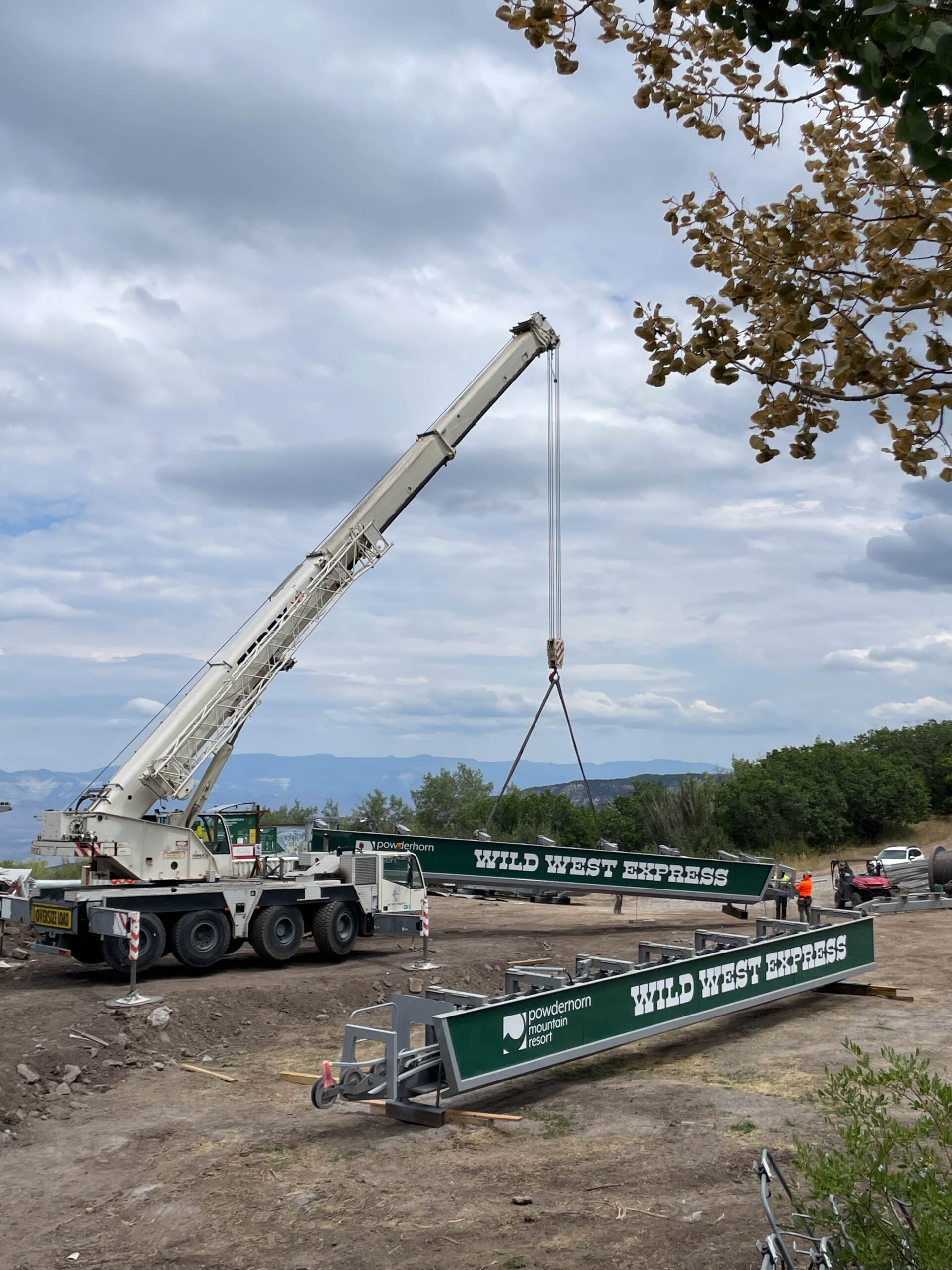
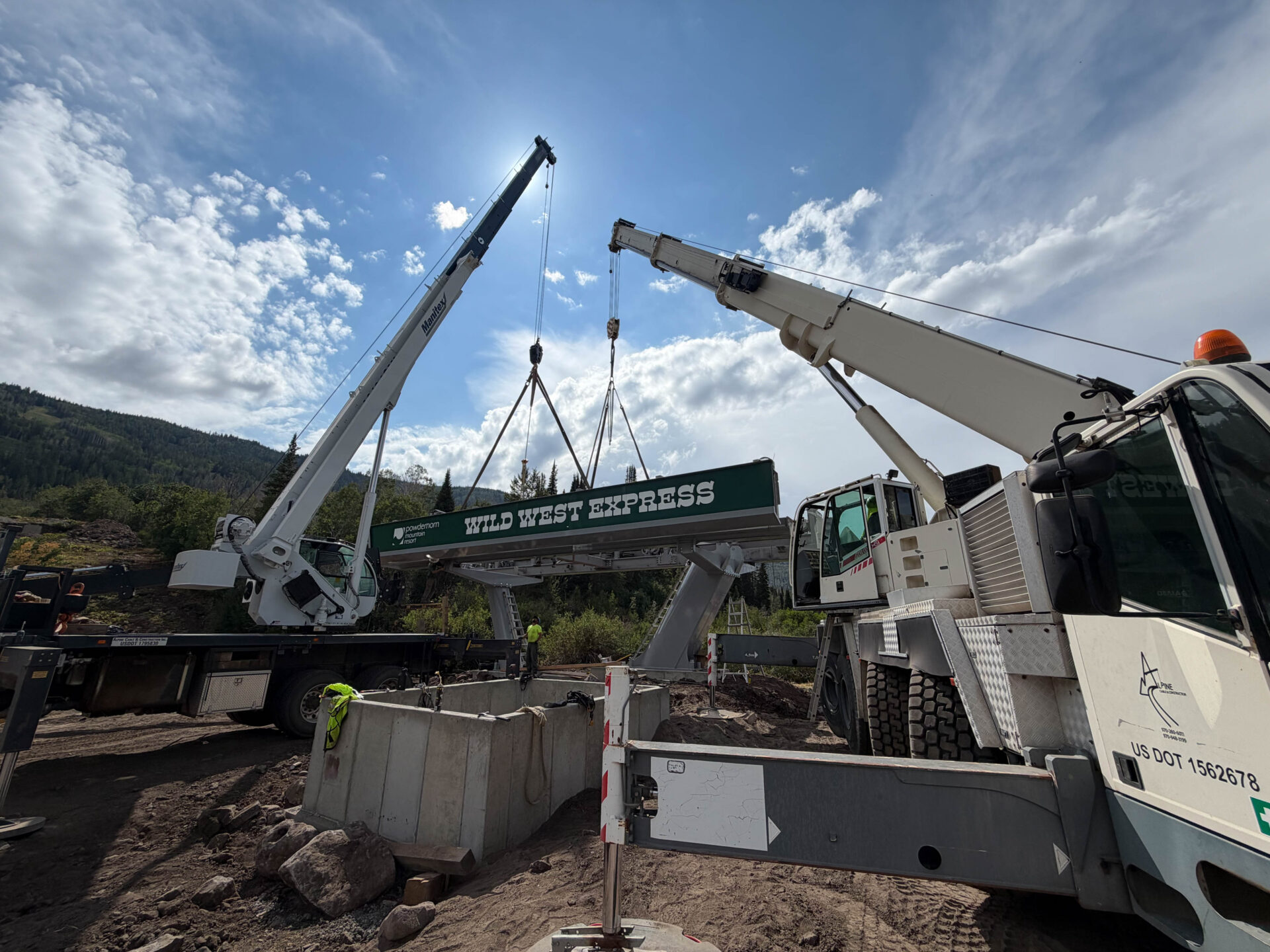
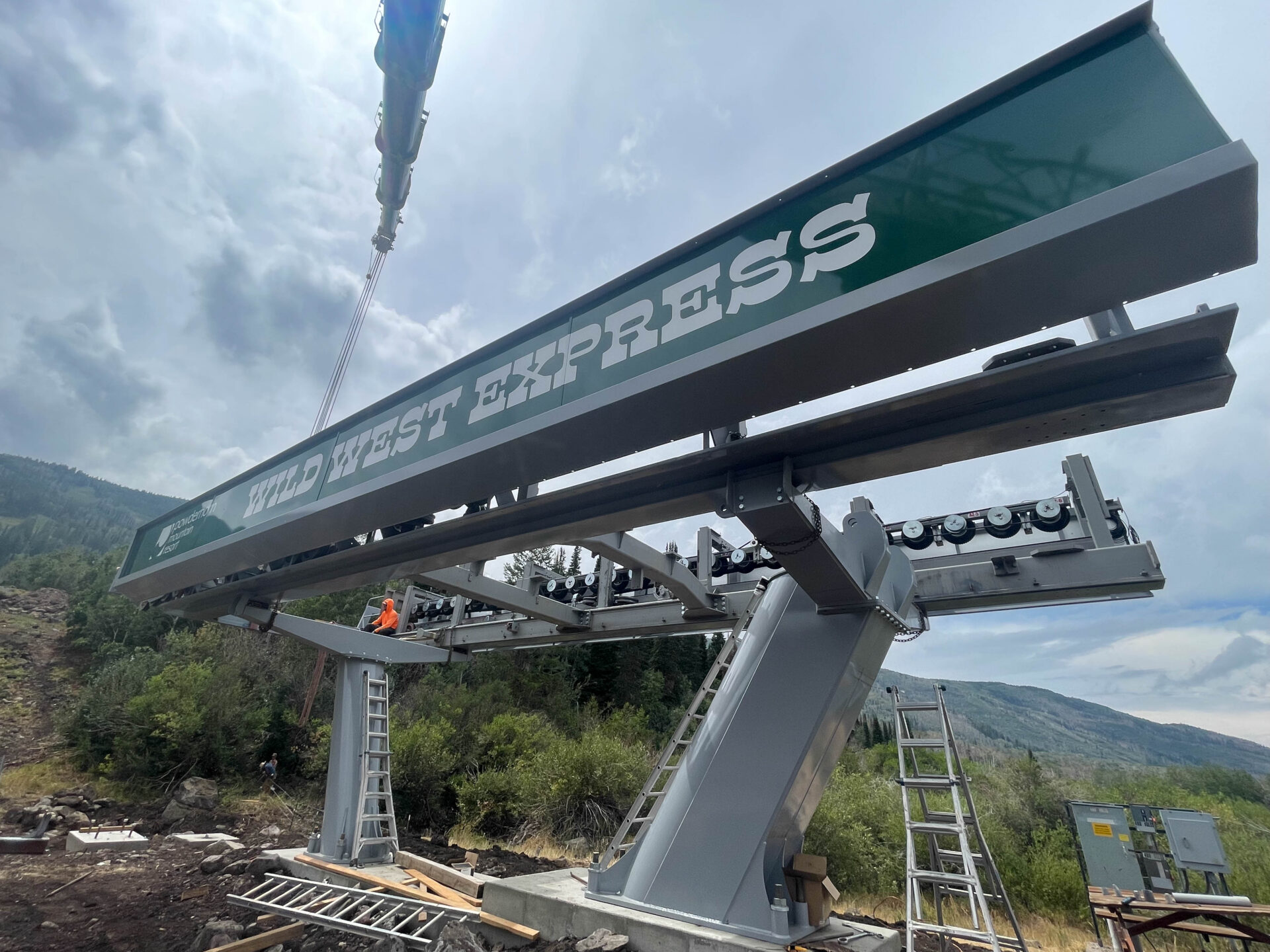
Crews have begun installing the bottom—or return—terminal of the Wild West Express. The large terminal structure, freshly lettered and looking very much like a chairlift, was carefully hoisted into position with cranes and set onto the concrete foundation that crews have spent the past several weeks preparing.
A quick bit of lift anatomy: the Wild West Express is a top-drive lift, as opposed to the decommissioned WestEnd lift, whose motor lived at the bottom. The new terminal taking shape at the base is the return terminal, where chairs make the 180-degree cycle and begin heading back uphill. The real muscle of the operation, the drive machinery that will propel the haul rope and everything attached to it, will live in the top terminal. That equipment is still being refurbished by our partners at Leitner-Poma of America in Grand Junction and will make its way up the Mesa soon.
There’s still plenty to install at the bottom, too. The foundation for the operator house is now complete, preparing another piece of the puzzle for installation alongside the terminal. And then there’s the haul rope. It arrived at Powderhorn this week weighing in at a mighty 65,000 pounds. Eventually, that rope will be spliced into one continuous loop running from bottom terminal to top and back again, carrying the chairs along the entire Wild West Express alignment. For now, 32 ½ tons of steel cable is waiting patiently for its turn.
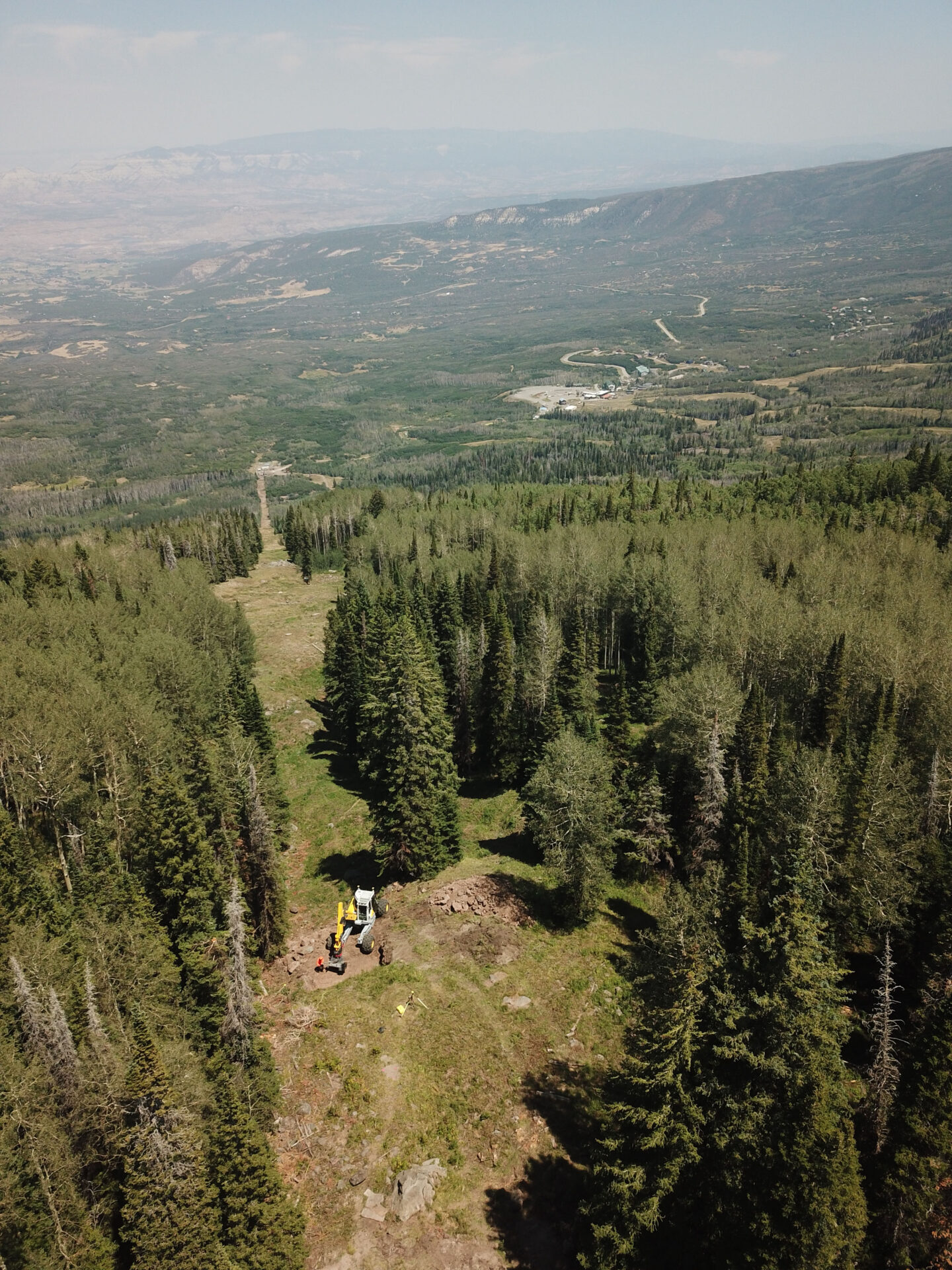
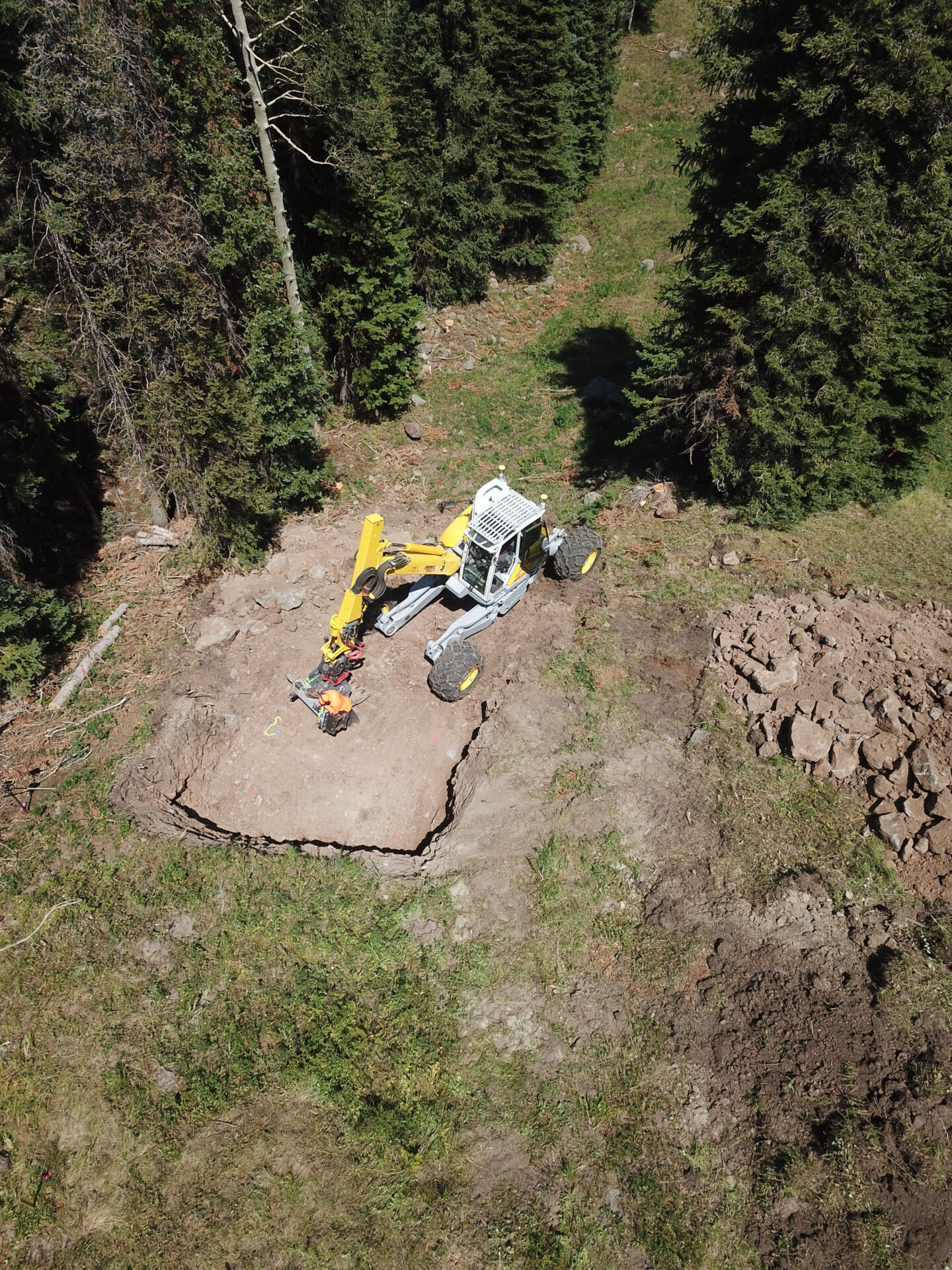
Farther uphill, our four-legged construction equipment has finished its assignment. The spider excavator has completed excavation of the difficult tower footer locations along the steep sections of the lift line. With the holes dug, the next specialized piece of equipment will again come from above. Helicopters return over the next few days to fly footer forms into locations that aren’t practical to reach from the ground. It’s another example of just how many different tools it takes to build one chairlift—excavators where you can drive, spider excavators where you can’t, and helicopters when even four mechanical legs aren’t enough.
There is still a lot of work between today’s construction site and opening day. The drive terminal is still in Grand Junction. Towers still need to rise. That massive haul rope still needs to find its way uphill. But the view from the base has changed considerably. You don’t have to look at drawings or survey stakes and imagine the Wild West Express anymore. You can just look up.
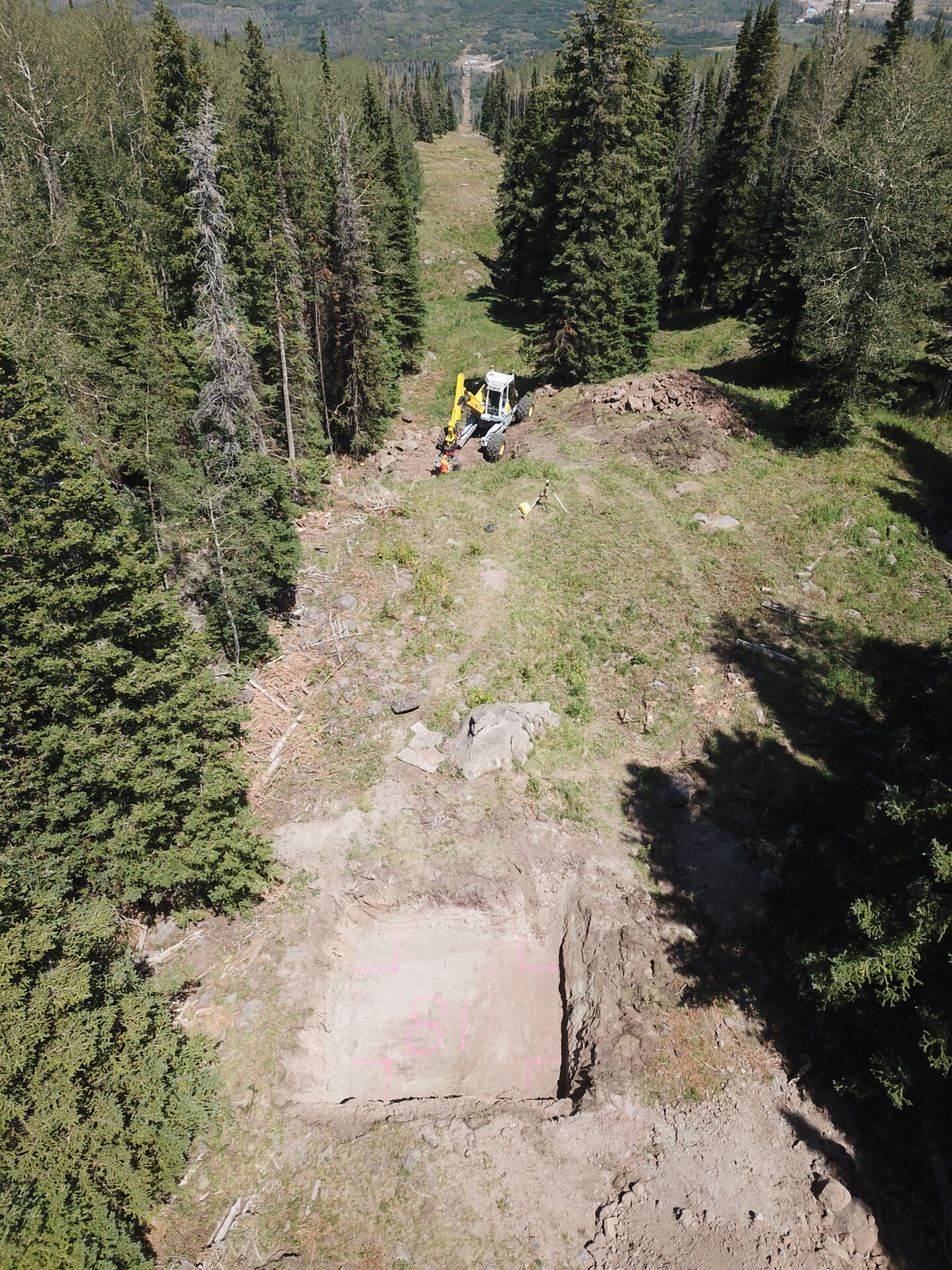
Meet the Spider Excavator
Every chairlift has them. They’re usually painted to blend into the landscape. They’re tucked beside the top and bottom terminals. Most skiers and snowboarders pass them hundreds of times without giving them much thought. Operator houses, often lovingly called lift shacks, may not be the most recognizable part of a chairlift, but they are essential.
This week, while concrete footer pours continue on the mountain, crews are rigging the operator houses that will eventually find their home at the top and bottom of the Wild West Express.
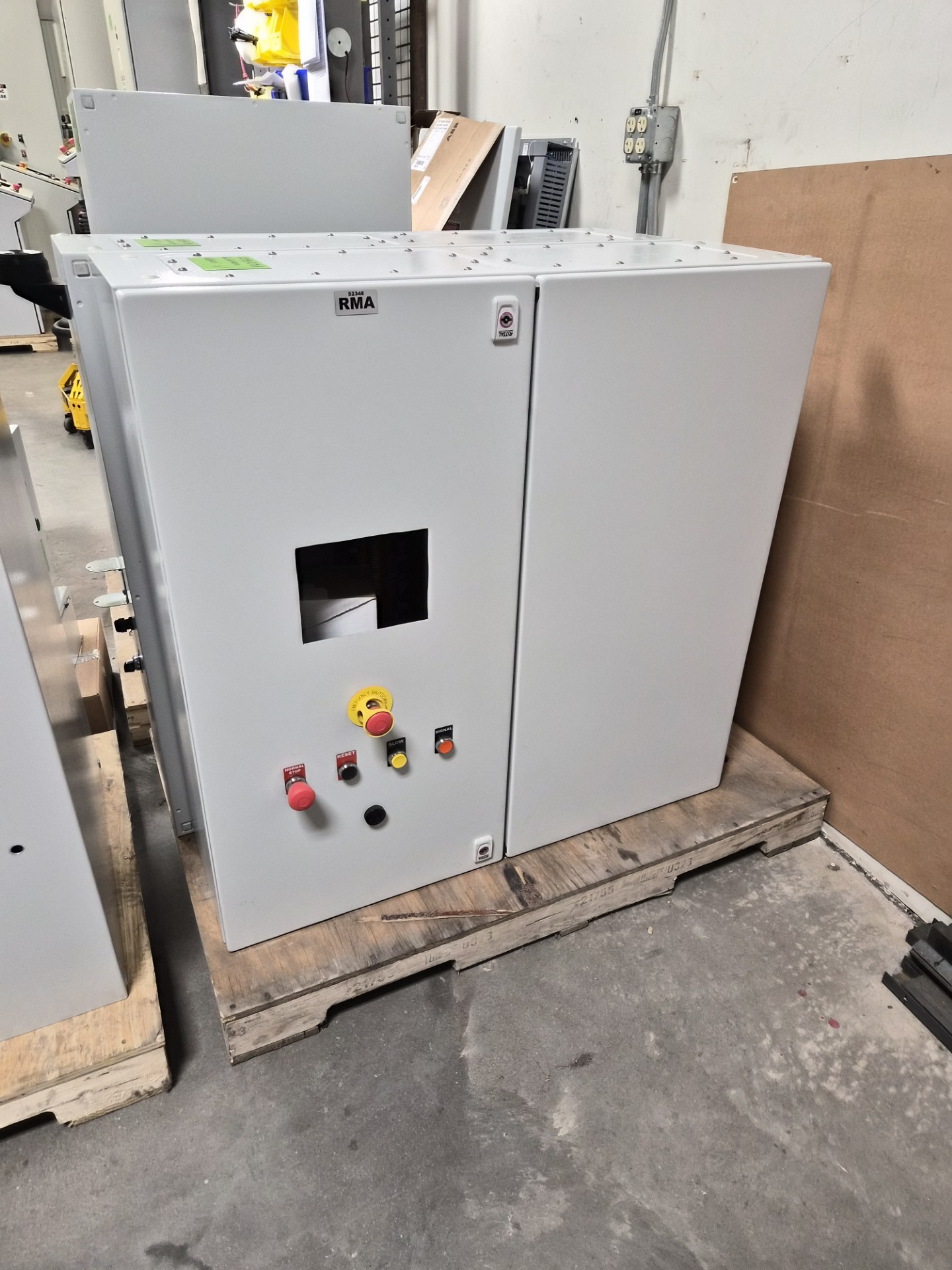
To most of us, they’re simply where the lift operators work, and that’s true, but they’re also the brains of the lift. Inside these modest buildings are the controls that start and stop the lift, monitor every minute of its operation, and communicate with the opposite terminal. Modern detachable chairlifts are remarkably sophisticated, but they’re still operated by humans in and around the operator houses.
That human element has always been a part of skiing. Long before digital displays and computerized monitoring systems, lift operators relied on little more than radios, switches, and experience. While the technology has changed dramatically over the decades, the job hasn’t changed nearly as much. Every day begins with someone unlocking the operator house, powering up the lift, checking every system, and welcoming whoever is lucky enough to be on first chair.
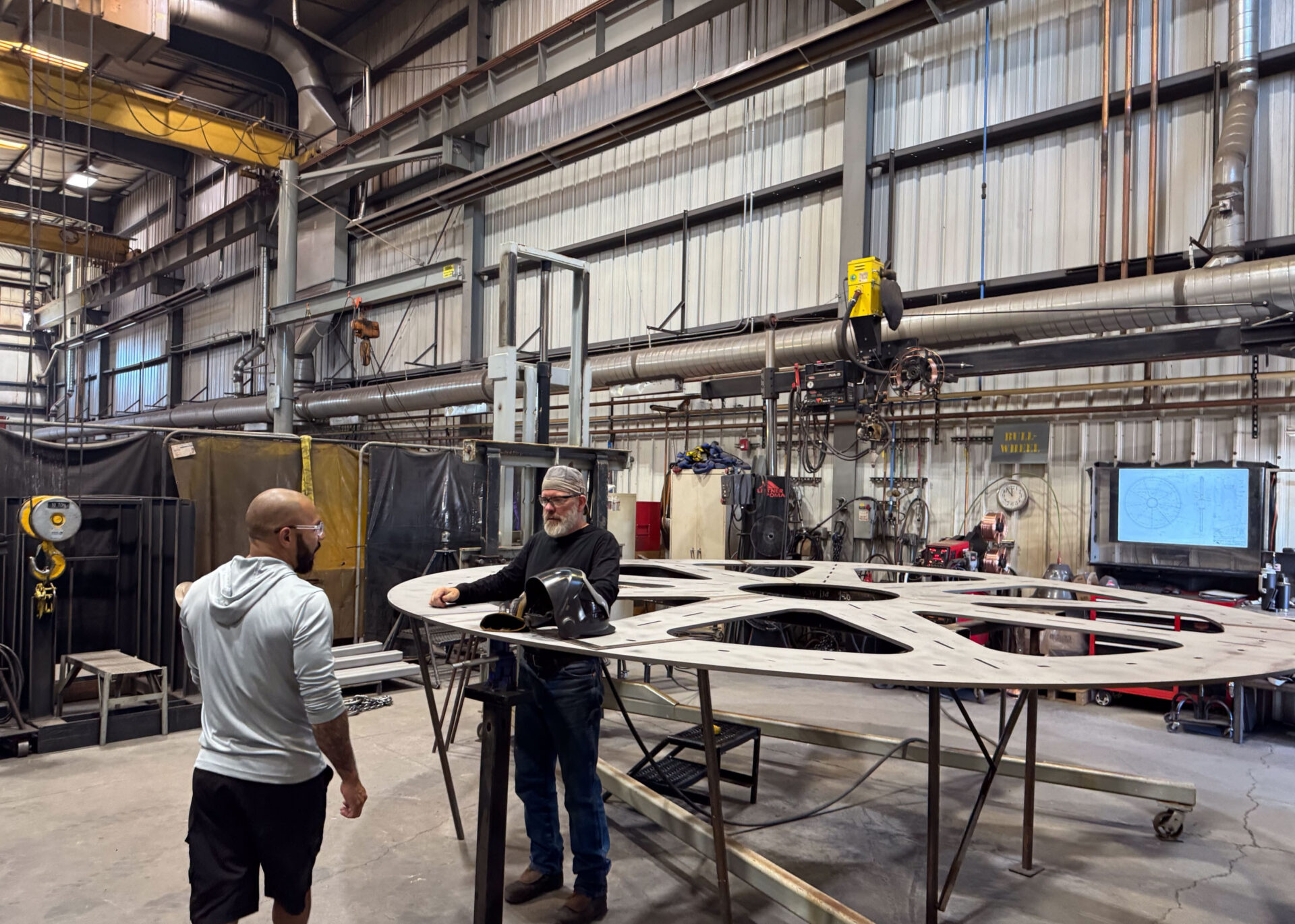
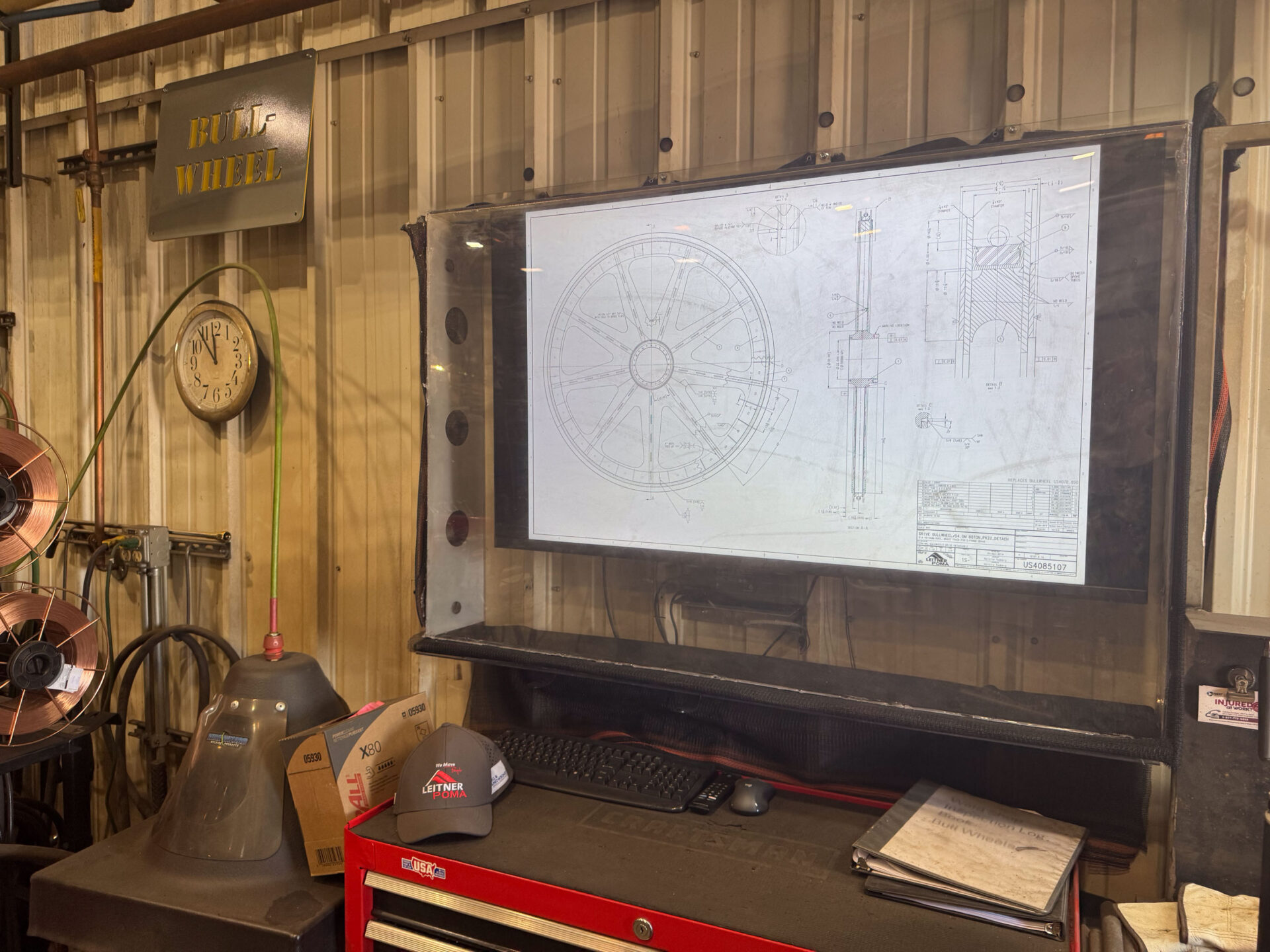
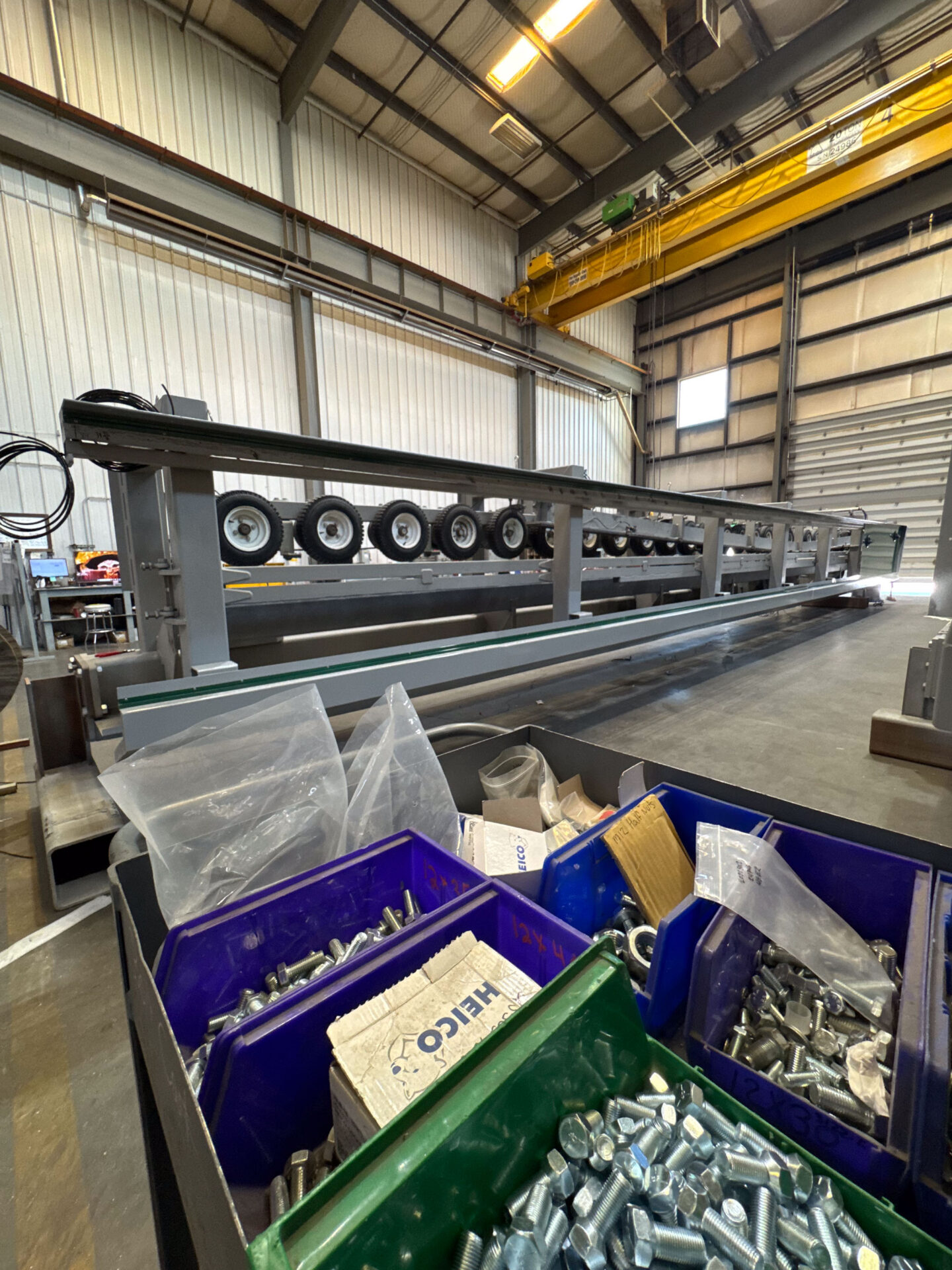
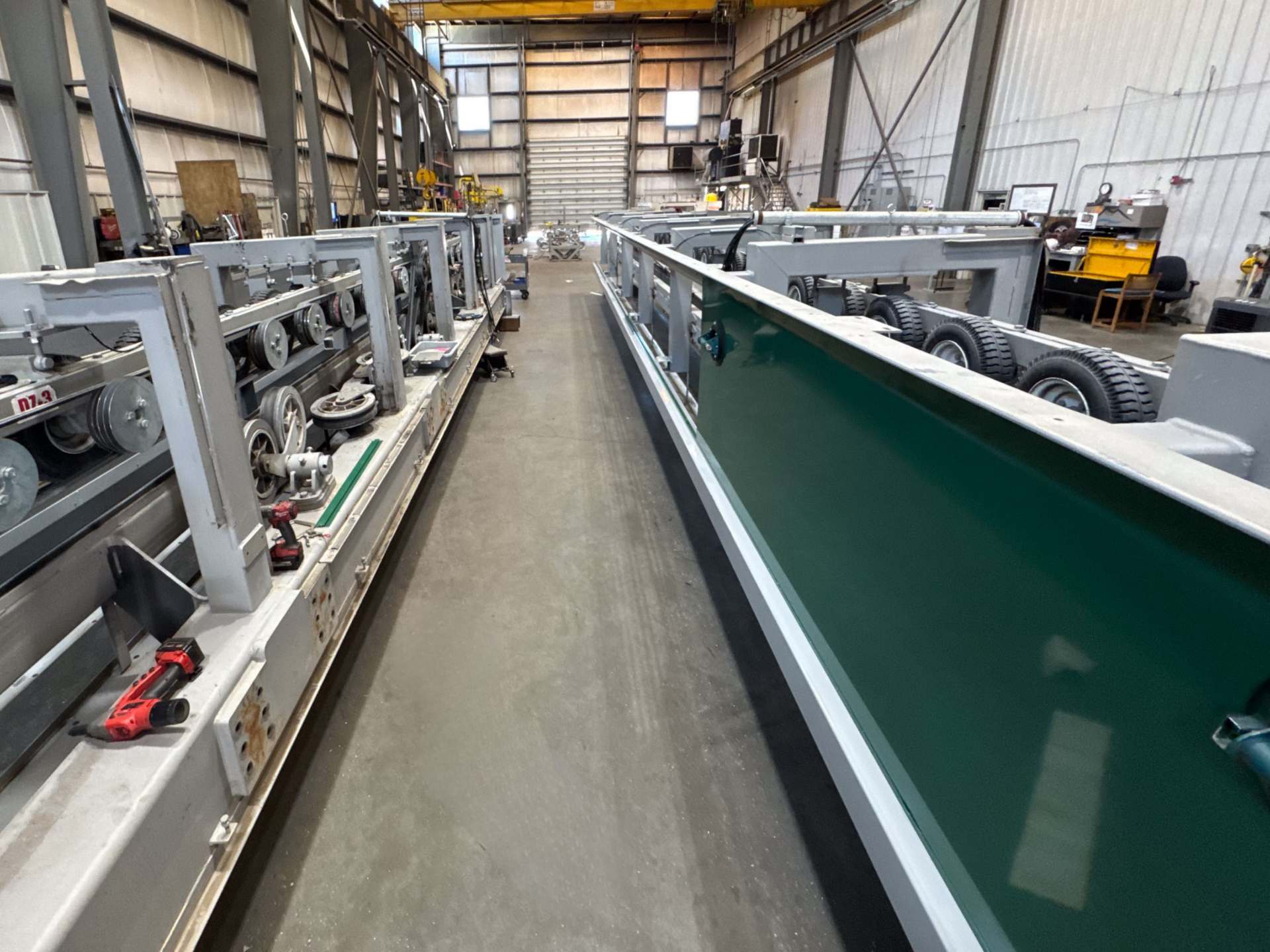
Down in the valley, our partners at Leitner-Poma are still hard at work. In massive warehouses and multiple bays, there’s teams of men and women working day and night. Some twist bundles of wire between sensors, fuses, and switches, for the control pedestals and electrical cabinets of the operator houses. Simultaneously, there’s welding on towers and bullwheels, green paint going on terminal siding, and elaborate tracks under assembly for conveying chairs onto the haul rope and up the hill.
Back on the mountain, the locations for the new operator houses are being prepared. Before long, these small buildings will be placed and begin their working lives. While they’re not as exciting as helicopters or towers or chairs suspended from the haul rope, every ride on the Wild West Express will begin and end with someone inside one of these little buildings, making sure everything works exactly as it should.
The Little Building that Keeps the Lift Spinning
Every chairlift has them. They’re usually painted to blend into the landscape. They’re tucked beside the top and bottom terminals. Most skiers and snowboarders pass them hundreds of times without giving them much thought. Operator houses, often lovingly called lift shacks, may not be the most recognizable part of a chairlift, but they are essential.
This week, while concrete footer pours continue on the mountain, crews are rigging the operator houses that will eventually find their home at the top and bottom of the Wild West Express.
To most of us, they’re simply where the lift operators work, and that’s true, but they’re also the brains of the lift. Inside these modest buildings are the controls that start and stop the lift, monitor every minute of its operation, and communicate with the opposite terminal. Modern detachable chairlifts are remarkably sophisticated, but they’re still operated by humans in and around the operator houses.
That human element has always been a part of skiing. Long before digital displays and computerized monitoring systems, lift operators relied on little more than radios, switches, and experience. While the technology has changed dramatically over the decades, the job hasn’t changed nearly as much. Every day begins with someone unlocking the operator house, powering up the lift, checking every system, and welcoming whoever is lucky enough to be on first chair.
Down in the valley, our partners at Leitner-Poma are still hard at work. In massive warehouses and multiple bays, there’s teams of men and women working day and night. Some twist bundles of wire between sensors, fuses, and switches, for the control pedestals and electrical cabinets of the operator houses. Simultaneously, there’s welding on towers and bullwheels, green paint going on terminal siding, and elaborate tracks under assembly for conveying chairs onto the haul rope and up the hill.
Back on the mountain, the locations for the new operator houses are being prepared. Before long, these small buildings will be placed and begin their working lives. While they’re not as exciting as helicopters or towers or chairs suspended from the haul rope, every ride on the Wild West Express will begin and end with someone inside one of these little buildings, making sure everything works exactly as it should.
What Lies Below
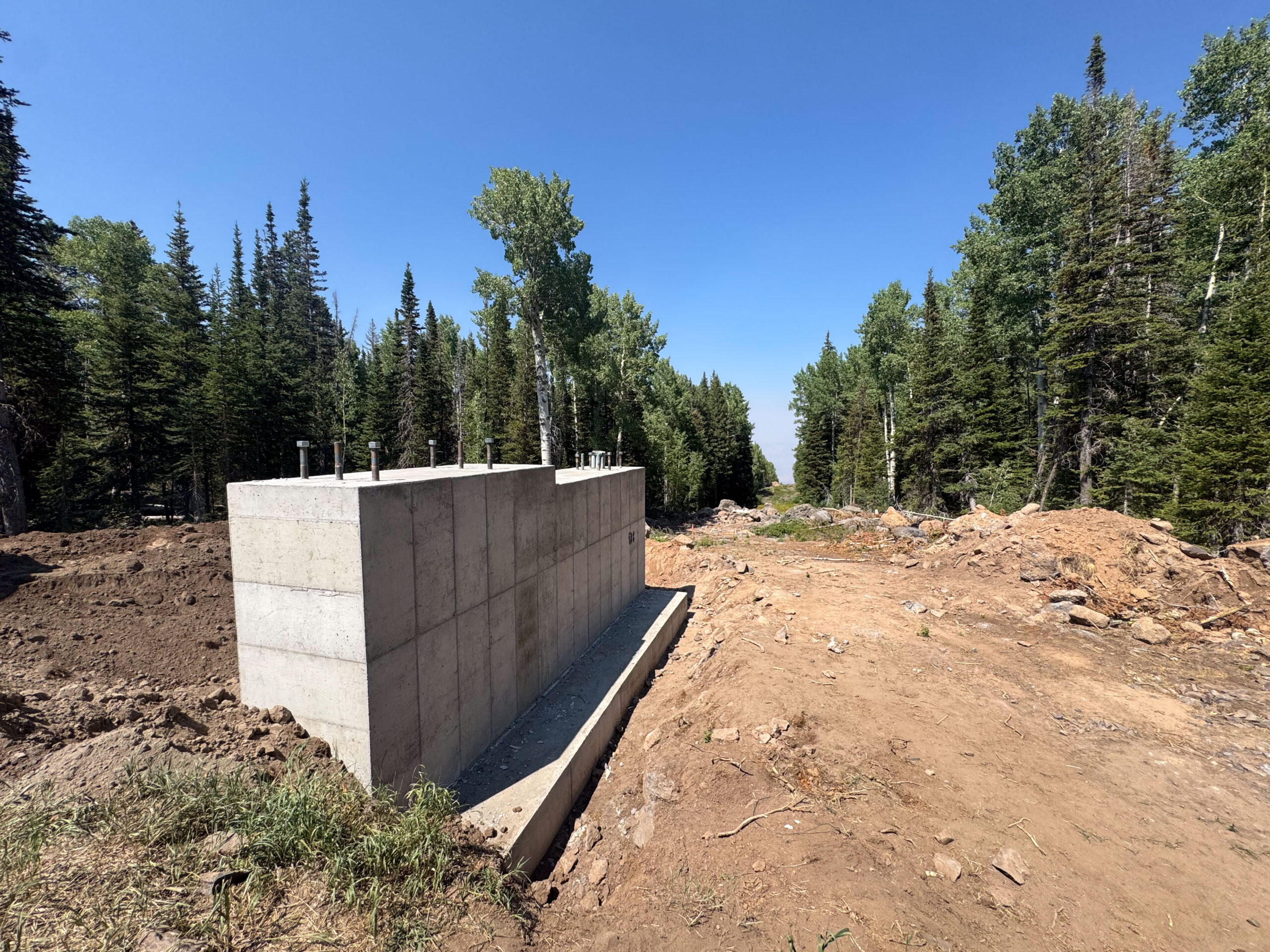
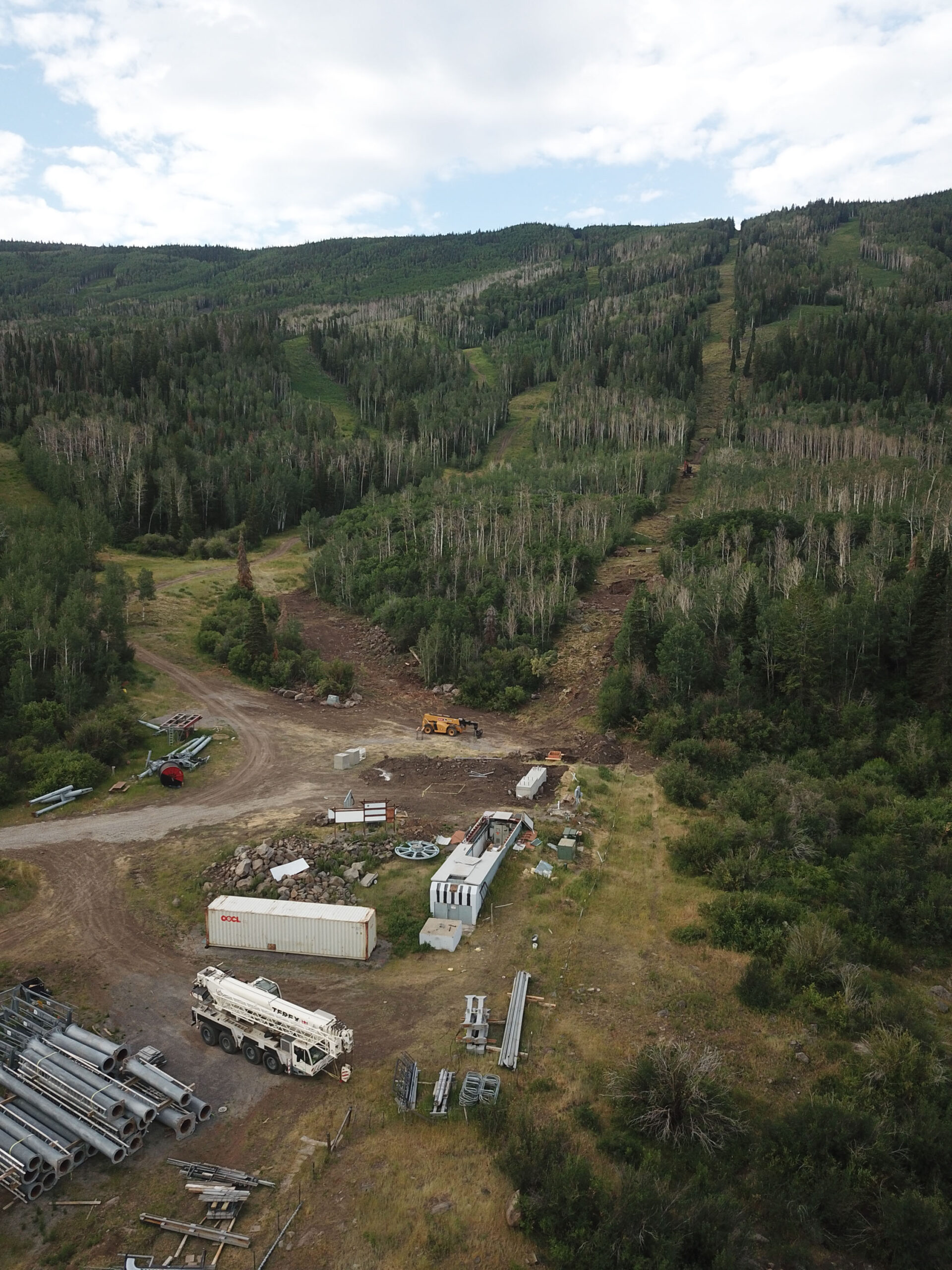
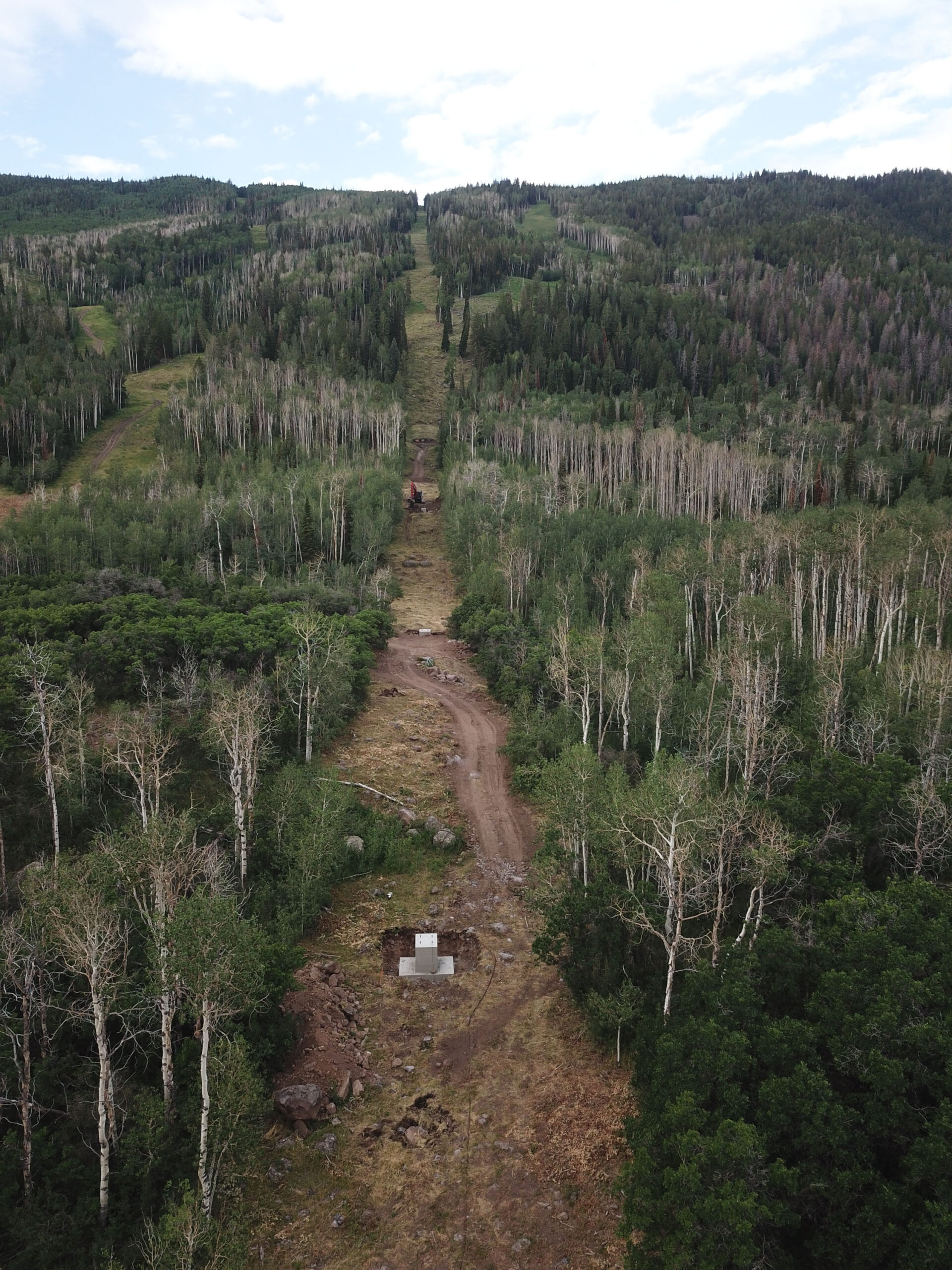
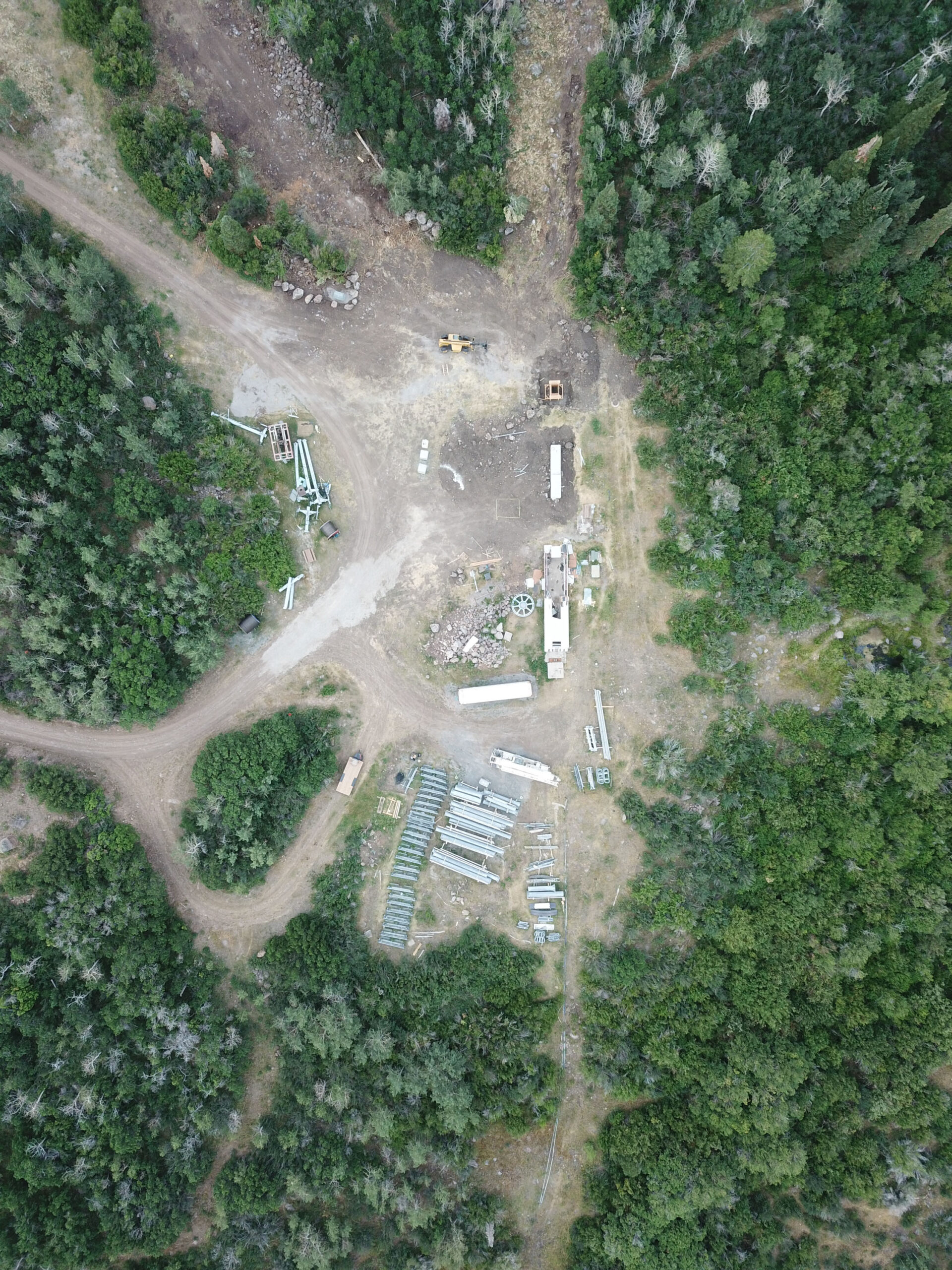
Every construction project has a point where progress starts to feel permanent. For the Wild West Express, this has been one of those weeks. Crews successfully poured concrete for both the new top terminal and the uppermost tower foundation, Tower 22, last weekend. Down the mountain, foundations for Towers 3, 4, 5, and 7 are now complete, with Tower 6 being poured today.
Not every aspect of excavation has been cooperative. The Grand Mesa isn’t just dirt, it’s a basalt-capped volcano above layers of sedimentary rock, and it occasionally likes to remind us who’s been here longer. While preparing the foundation for Tower 2, crews uncovered a sizable rock that had no intention of making room for a chairlift. Since alignment couldn’t be changed, we changed the rock. After breaking it apart by hand, work moved ahead, and Tower 2 will soon be ready for concrete like the rest.
With those pours behind us, footer work with conventional vehicles is nearly complete. The remaining tower locations sit on terrain that’s a little too steep and a bit too rugged for standard equipment. Next week, a spider excavator, purpose-built for mountainsides like ours, will arrive to continue the work. If you’ve never seen one before, imagine a giant arachnid that runs on diesel.
Looking a little farther ahead, helicopters are expected to return in August to fly in the remaining footer forms, and eventually the new towers. It’ll be another one of those moments when weeks of preparation suddenly become visible. Every footing that’s poured disappears underground. Most guests will never notice them. But for decades to come, every chair leaving the terminal will depend on the work happening now. It’s not the most visible part of building a lift, but it could well be the most important.
As always, thanks for following along. If you’re visiting Powderhorn this summer, please continue to respect all construction closures and give our crews plenty of room to work. Every bucket of concrete poured this summer brings us one step closer to opening the Wild West Express this winter.
Quiet on the Mountain, Busy in the Shop
After several weeks of steady progress, the west side has temporarily grown a little quieter. That’s by design. Work within the designated elk calving area was on hold while new calves arrive on the Grand Mesa. Our construction crew even reported hearing elk giving birth while working nearby, a remarkable reminder that while we’re building something new, we’re doing it in a place that wildlife calls home year-round. Projects like this don’t happen despite the mountain, they happen in partnership with it.
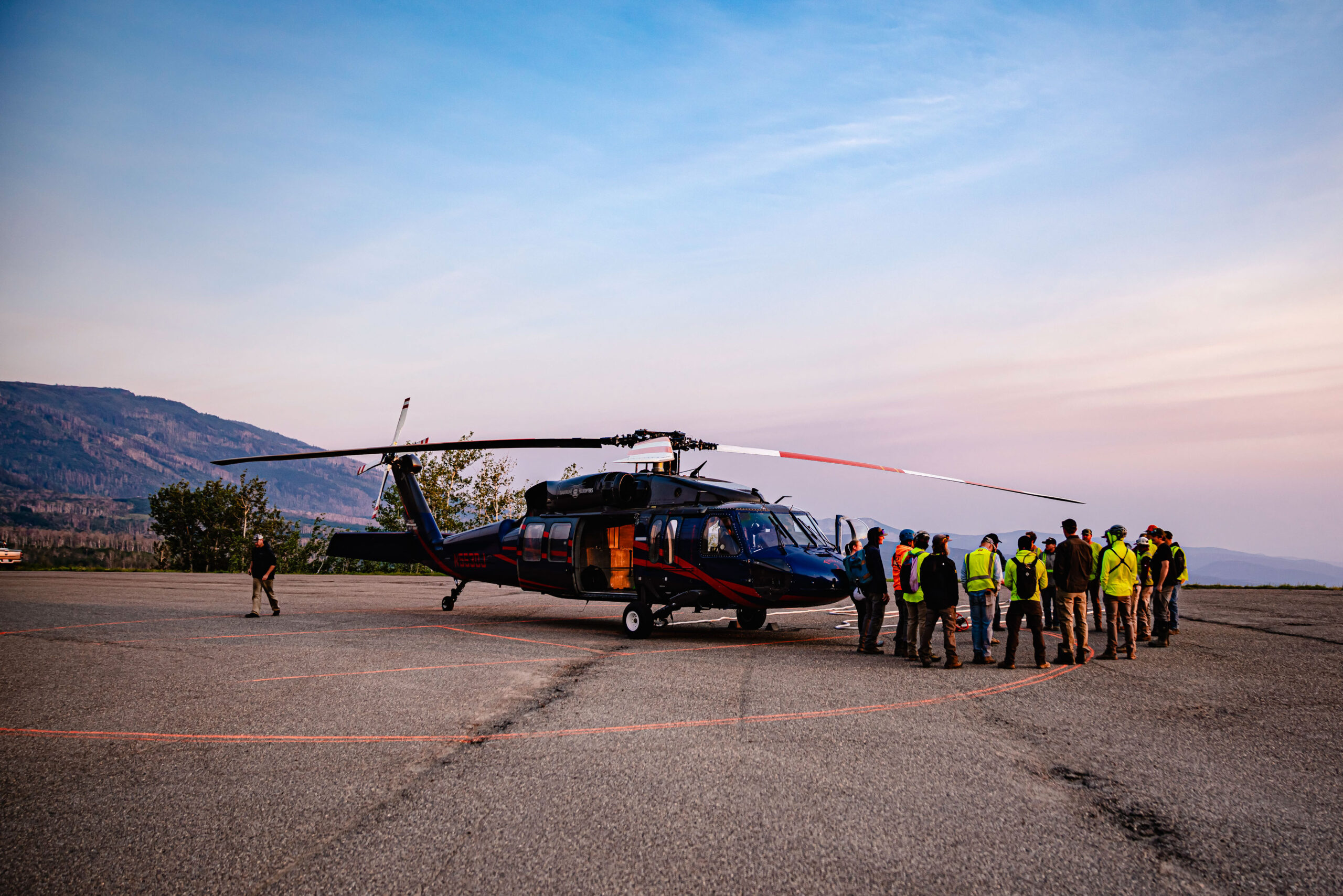
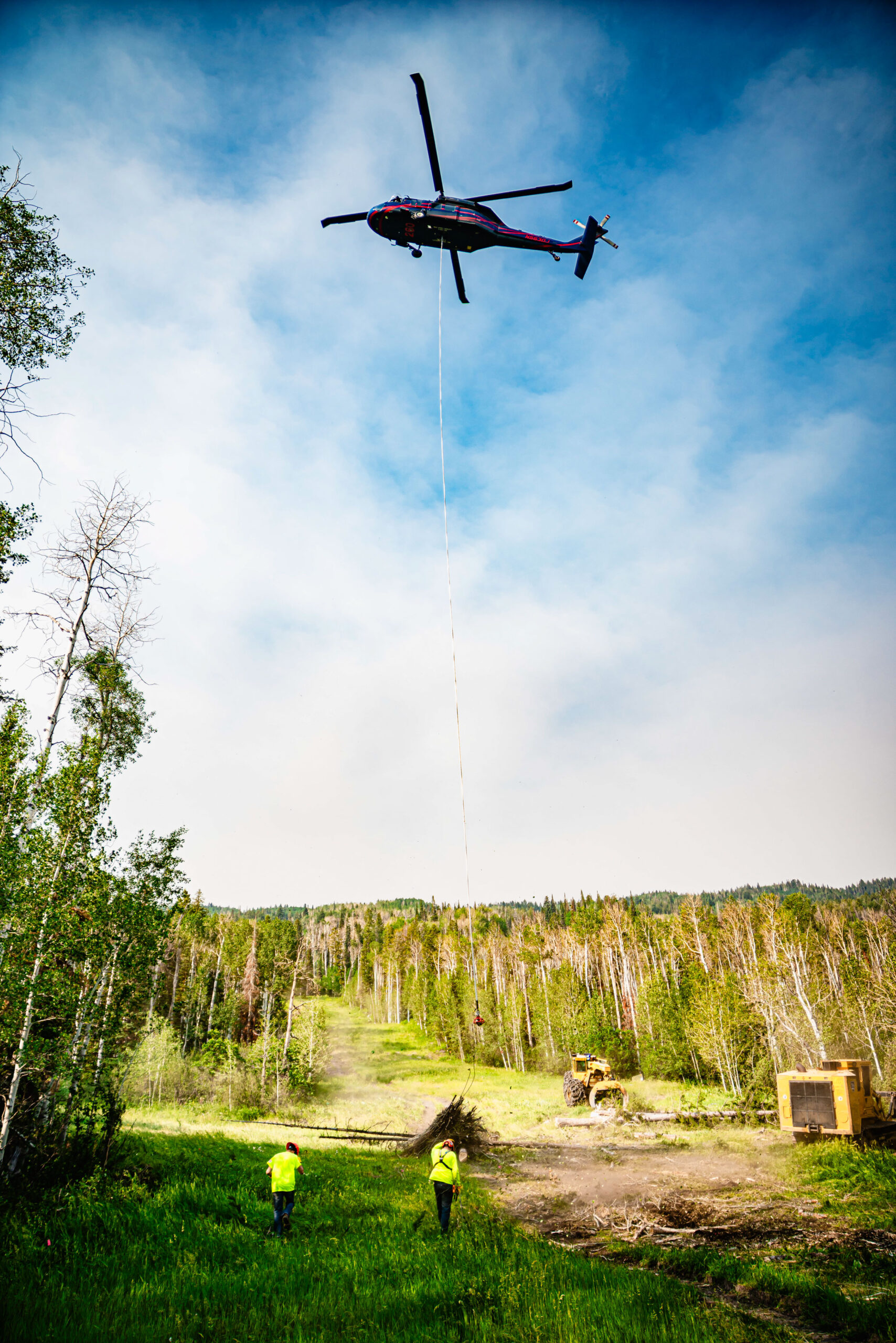
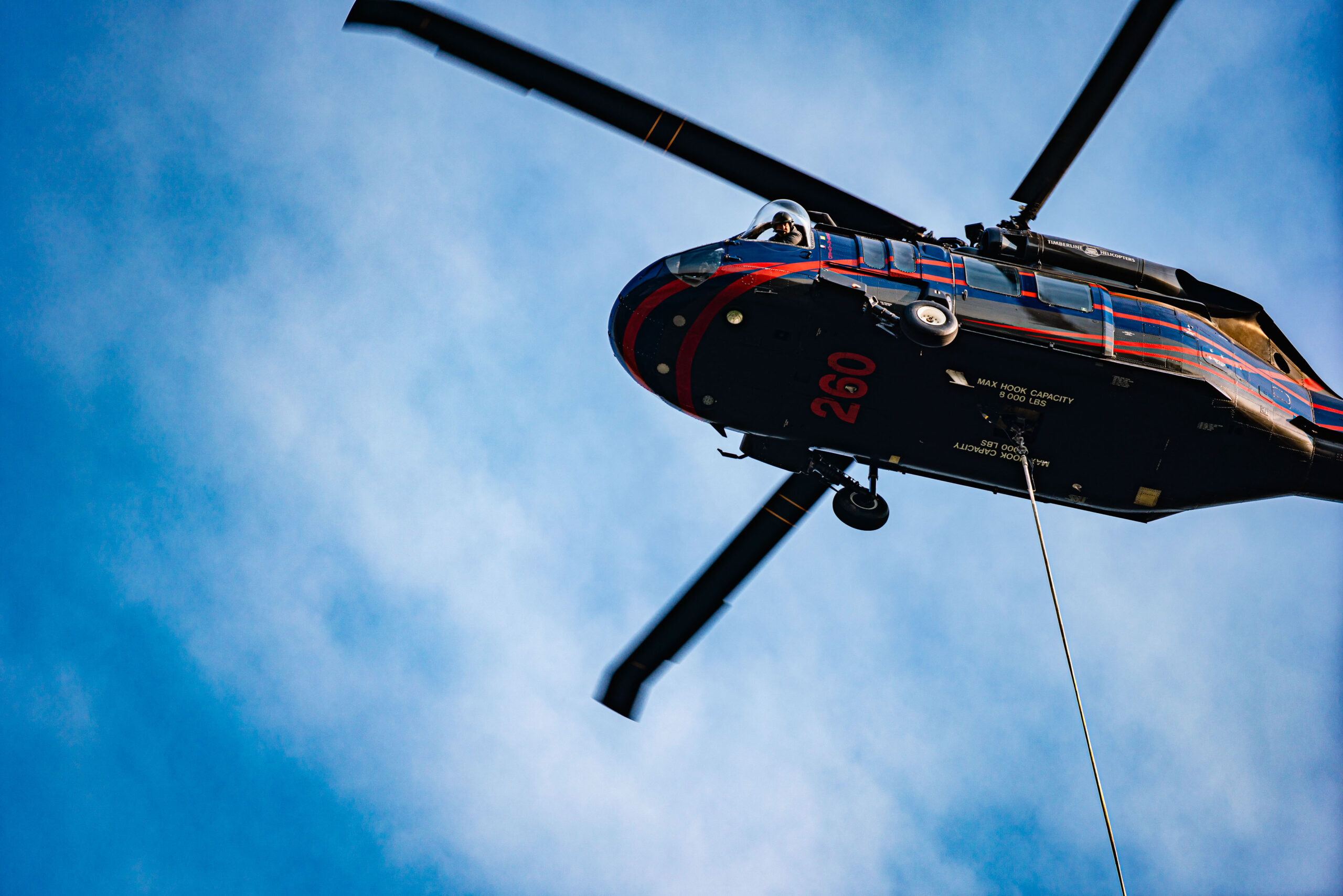
A significant deconstruction milestone has been reached since our last update. The last of the West End towers have now been successfully helicoptered off the mountain, bringing us one step closer to new installation. The helicopter’s gone back home for now, but not for long. They’ll return later this summer when it’s time to fly the new Wild West Express towers into place.
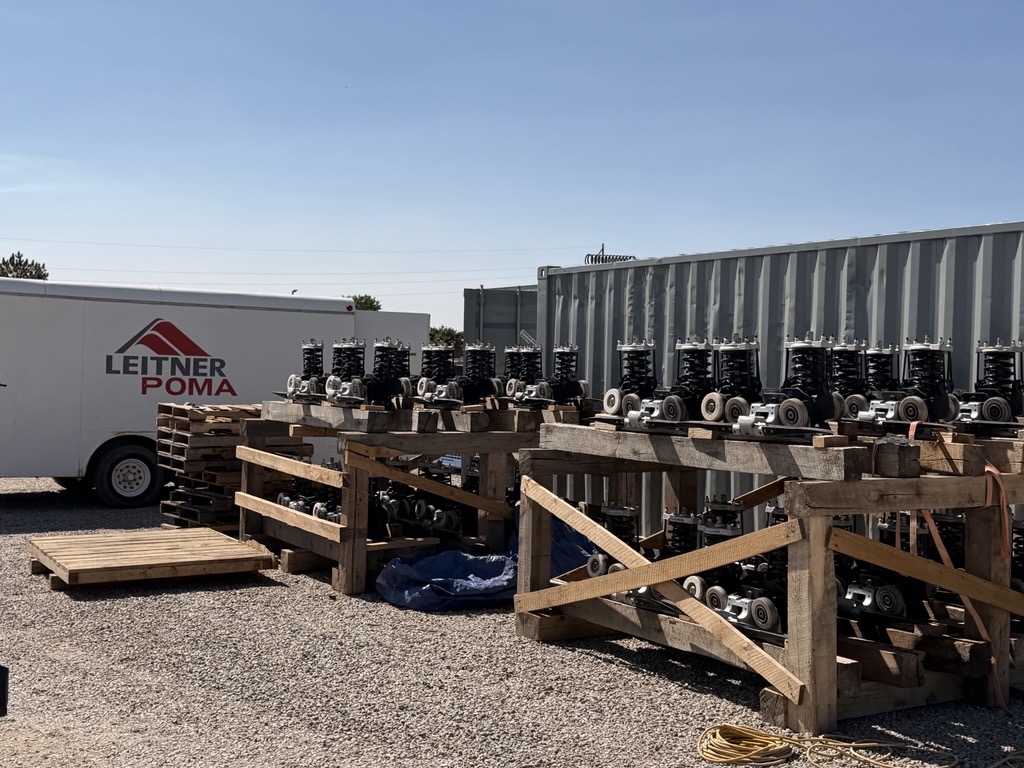
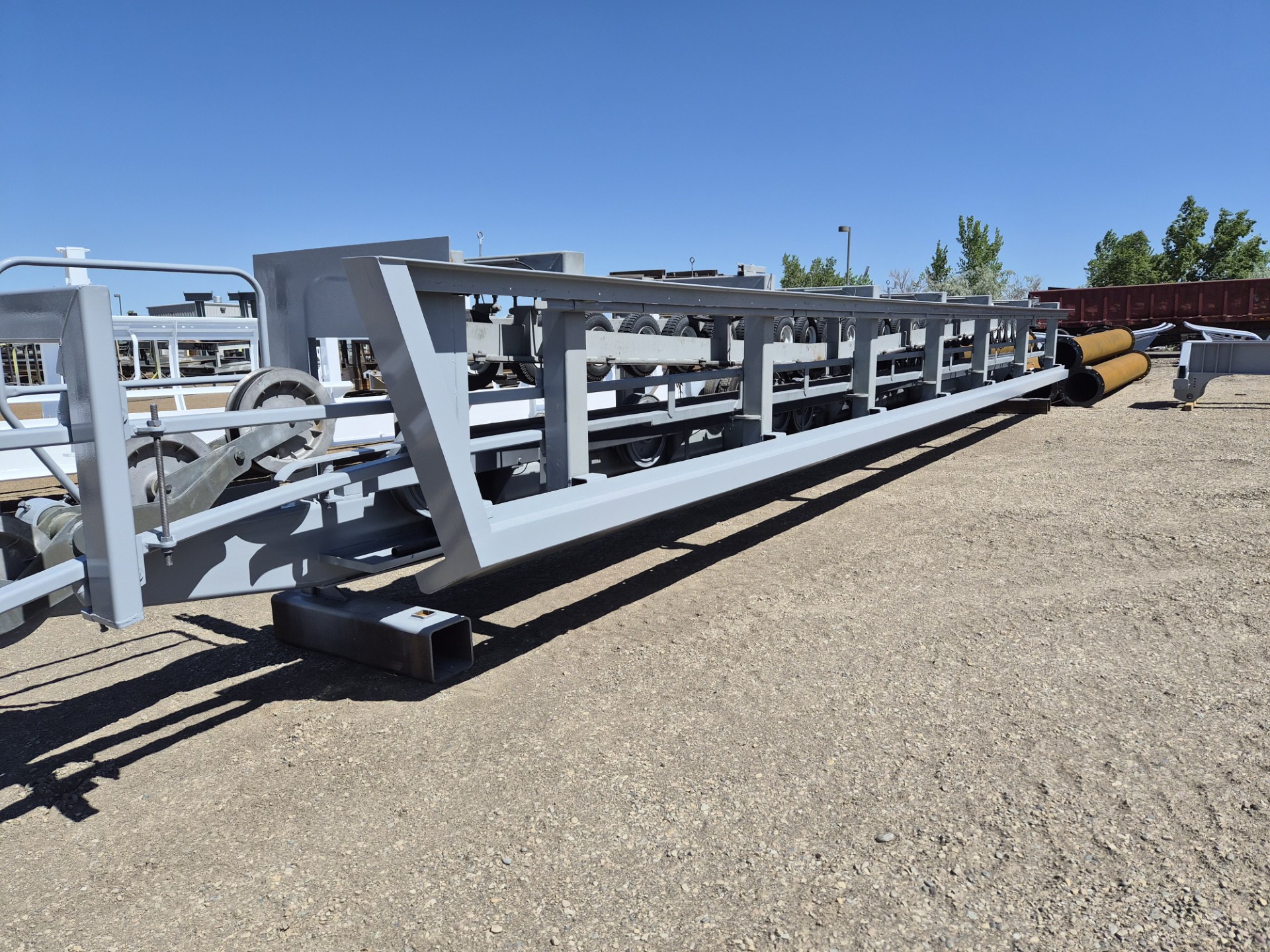
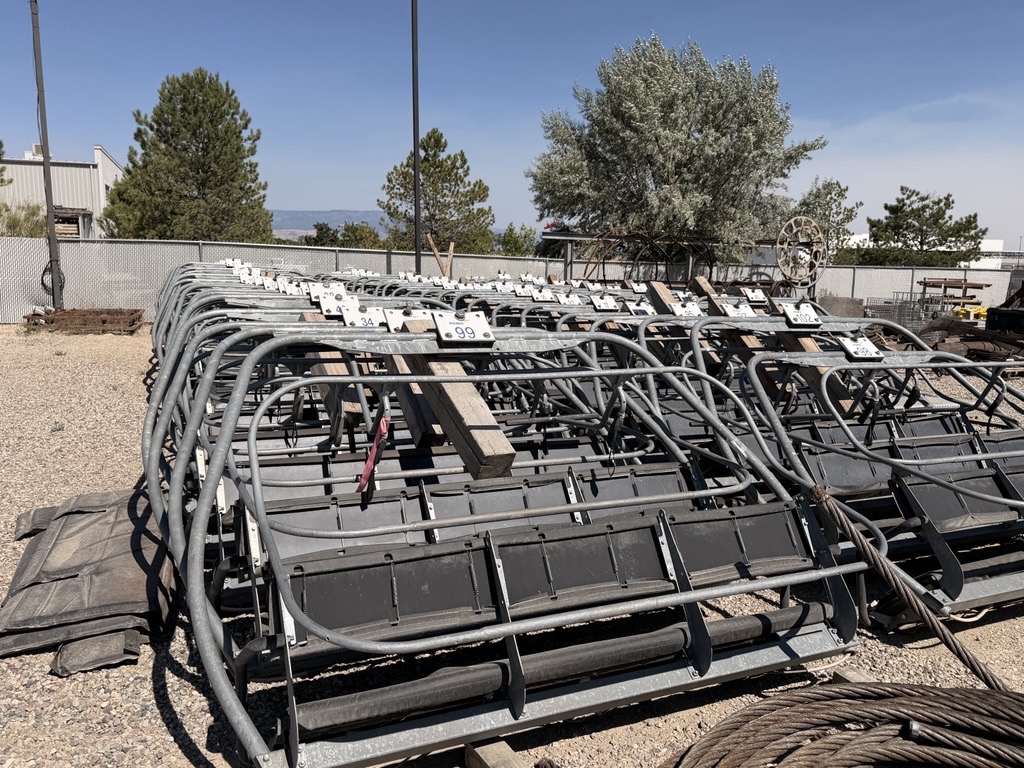
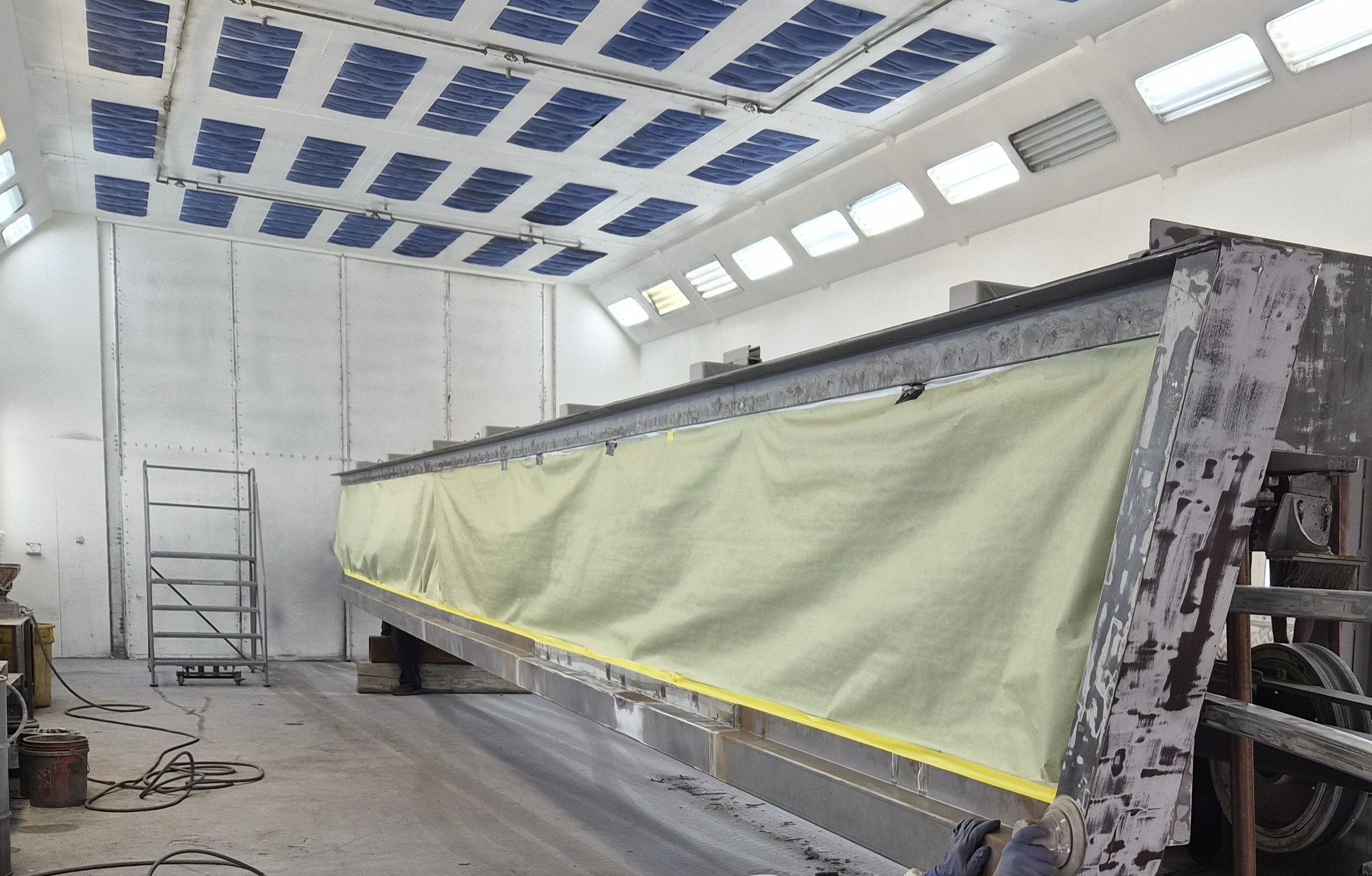
Just down the road in Grand Junction, the pace hasn’t let up for our partners at Leitner-Poma of America. Inside LPOA’s shops, the Wild West Express is steadily taking shape piece by piece. Grips and hangers have been inspected, rebuilt, and staged for their delivery to Powderhorn. Lift mechanisms are being sanded, painted, and prepared. Towers are being modified to match the geometry of the lift profile. Even the electrical control cabinets are moving through the refurbishment process.
One of the more interesting things about this project is that the Wild West Express isn’t being built in one place. It’s coming together in two. While mountain crews prepare the landscape, foundations, utilities, and access needed to support the new lift, just 30 miles away, skilled technicians are rebuilding the machinery that will eventually make the familiar climb up Highway 65, ready for another generation of service.
Sometimes progress is loud, with helicopters overhead and heavy equipment on the move. Other times it’s measured in careful inspections, fresh coats of paint, precision machining, and the patience to let nature set the schedule. This week has been a little of both. And when the helicopters return, they’ll be carrying the future uphill, instead of the past down.
As Powderhorn opens for summer operations over the Fourth of July holiday weekend, we’re excited to welcome everyone back to the mountain. You’ll notice construction activity continuing around the lift project, so please help us keep everyone safe by staying well clear of all construction equipment, work zones, and posted closures.
The Future Starts Here
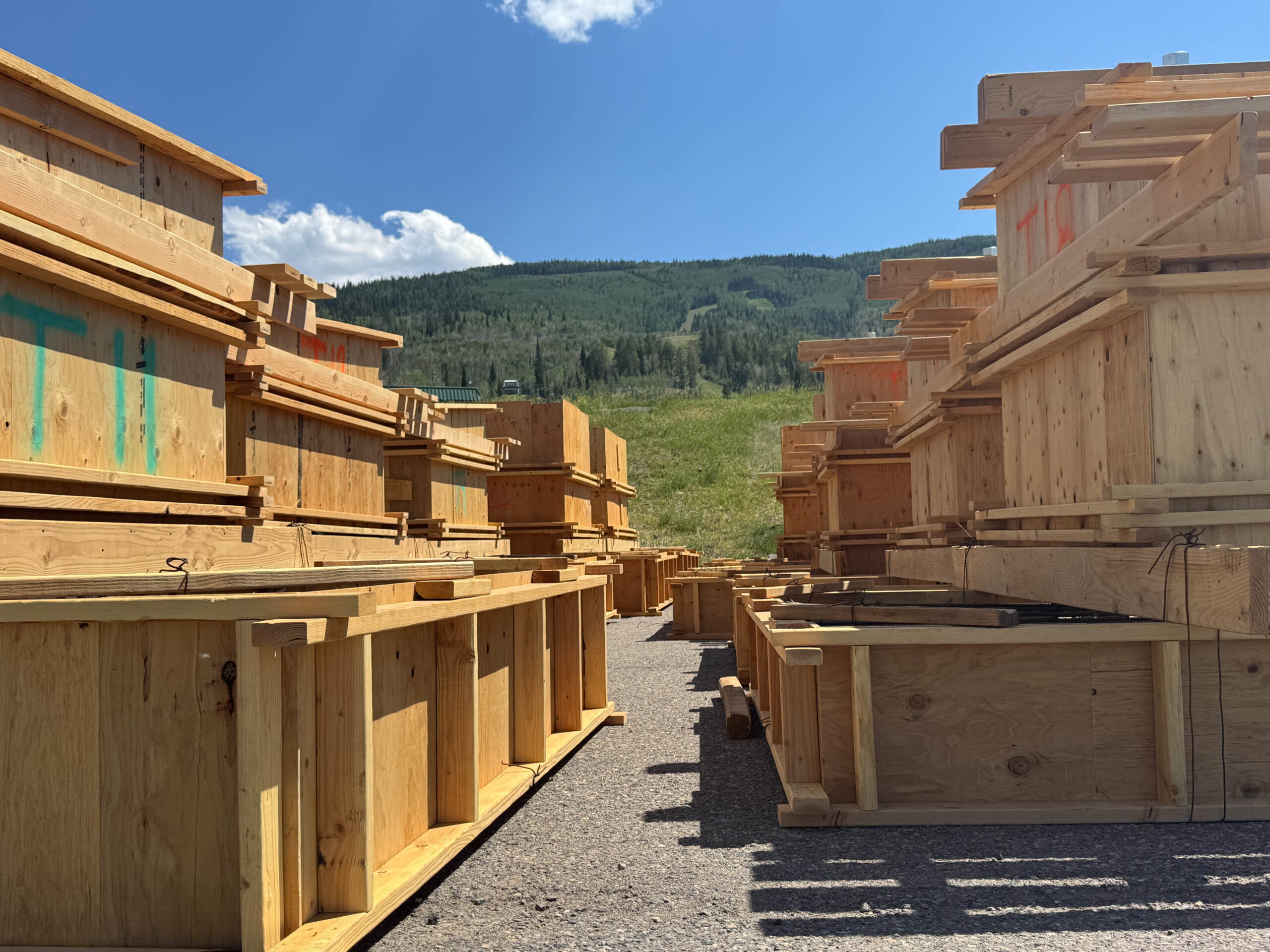
For the past several weeks, the Wild West Express project has mostly been defined by subtraction. The haul rope came down and the terminals were dismantled. Trucks lapped to town. One by one, the towers disappeared from the skyline until eventually they all lay on the hillside.
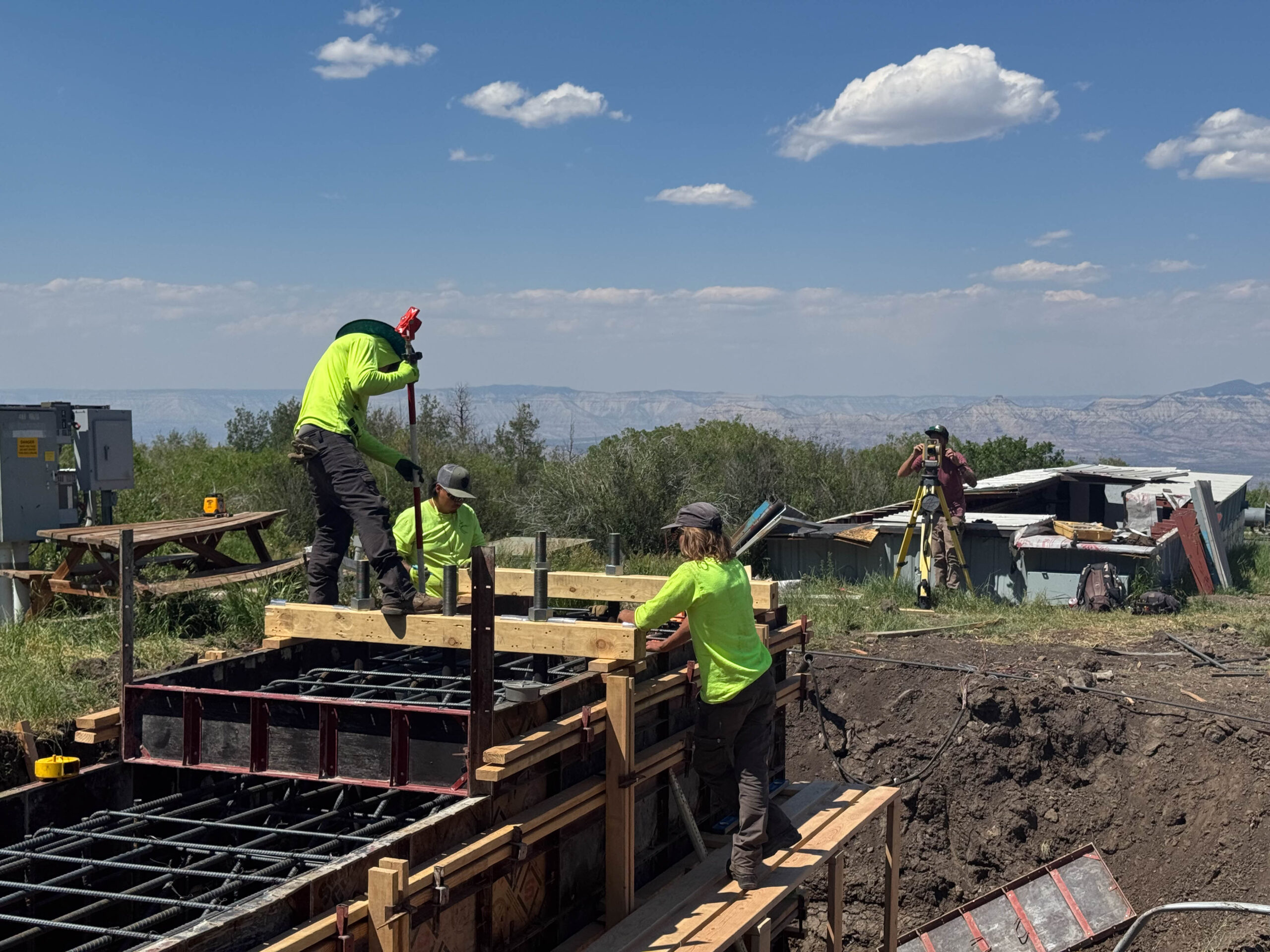
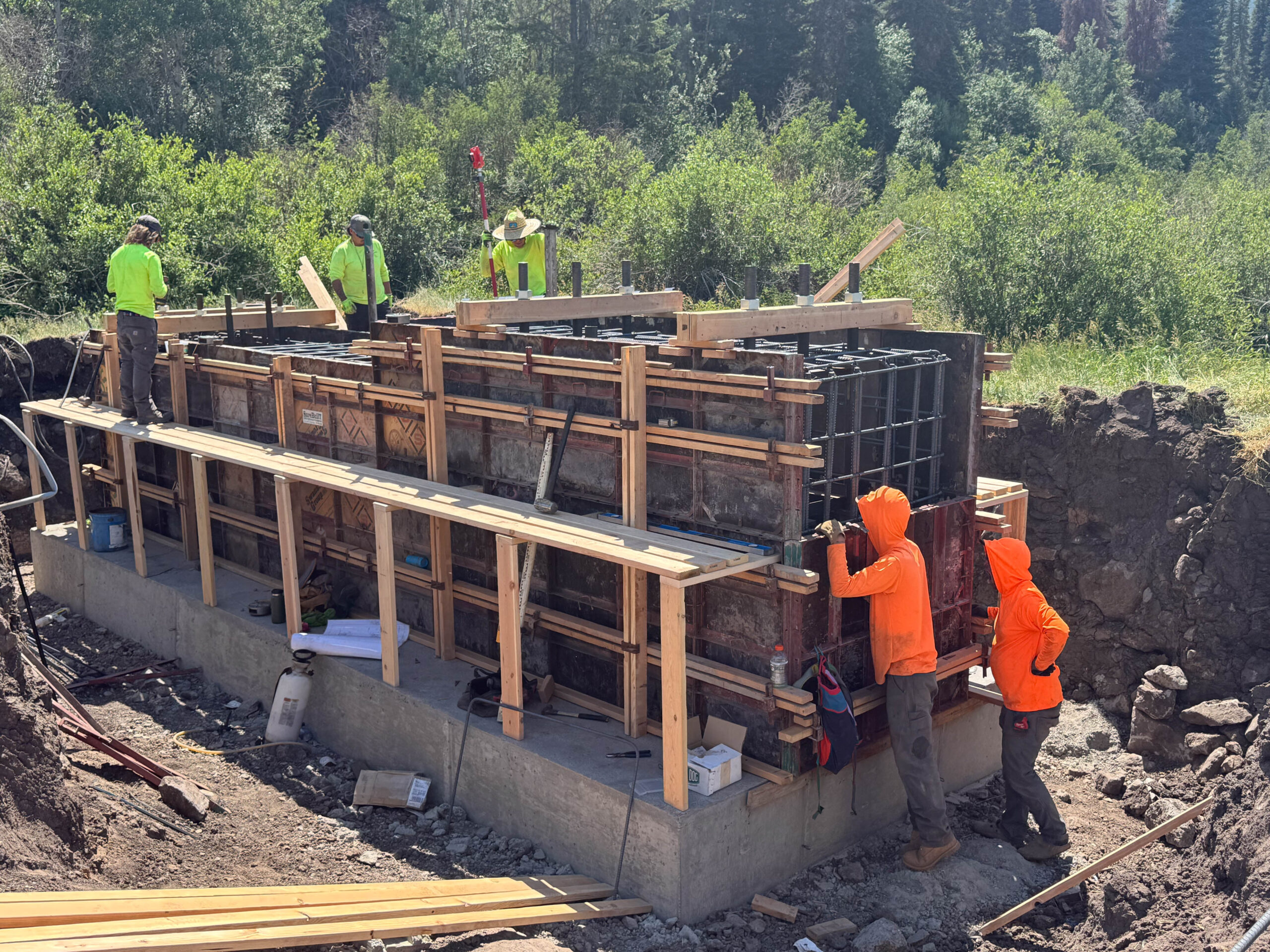
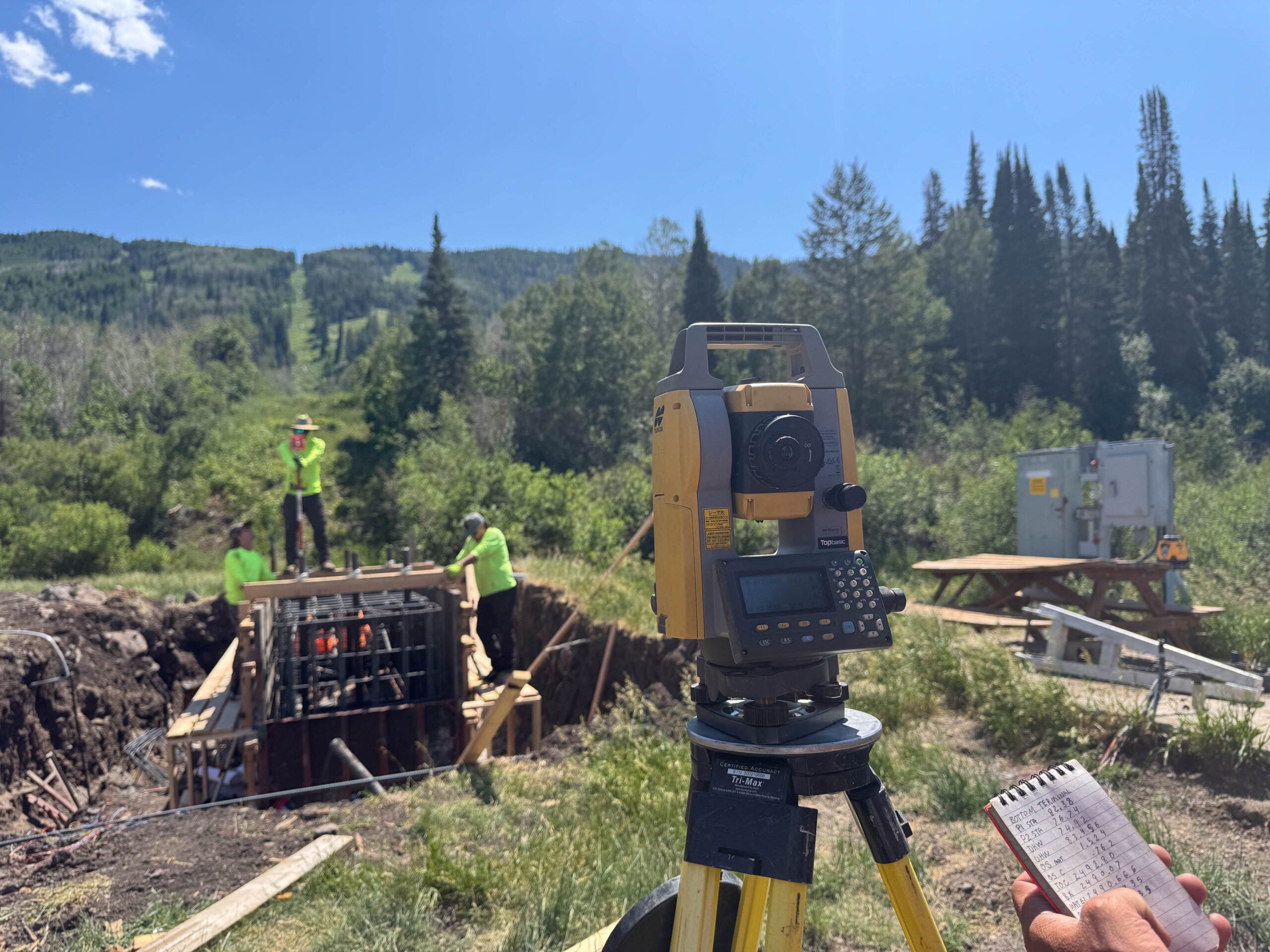
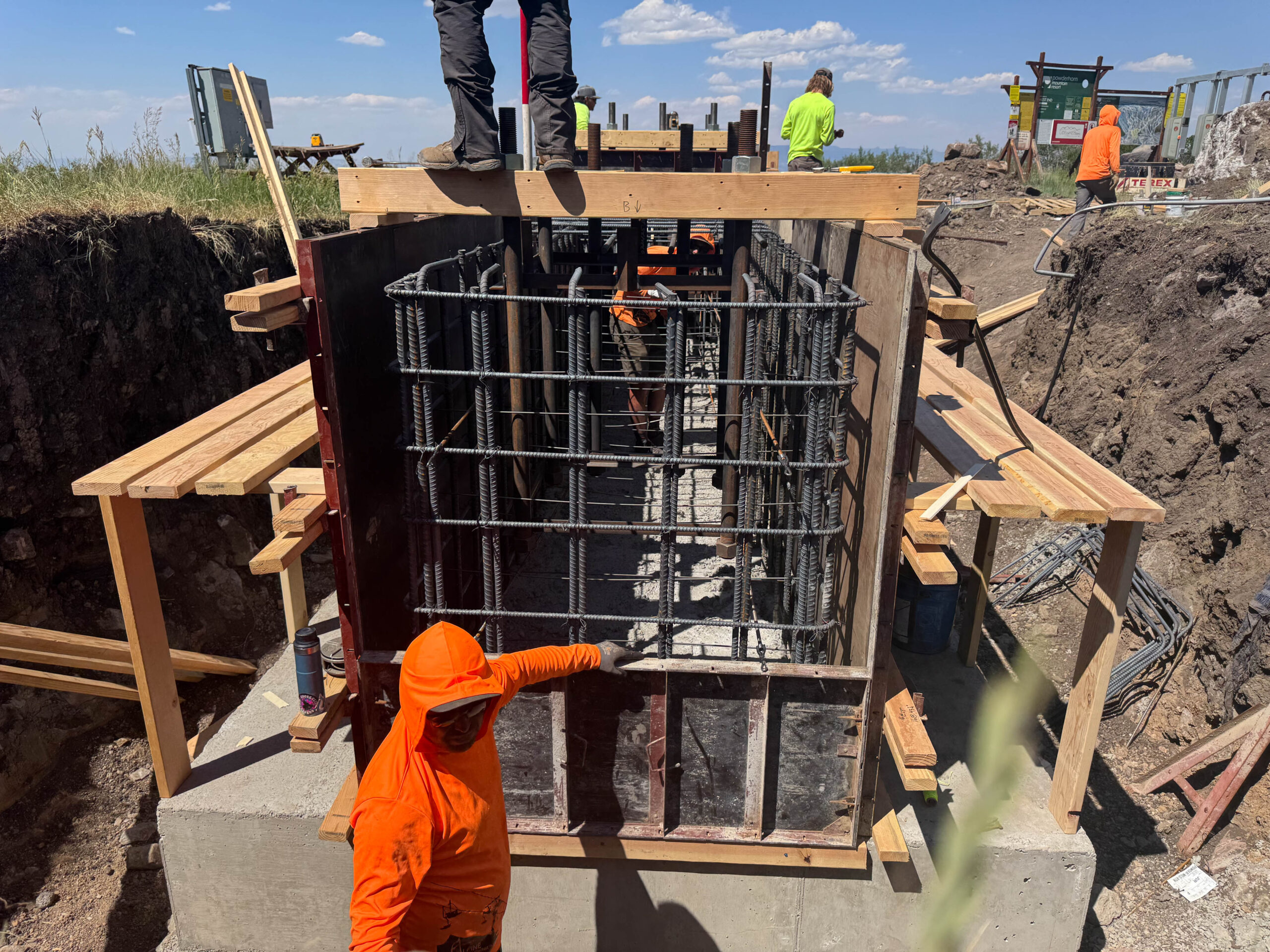
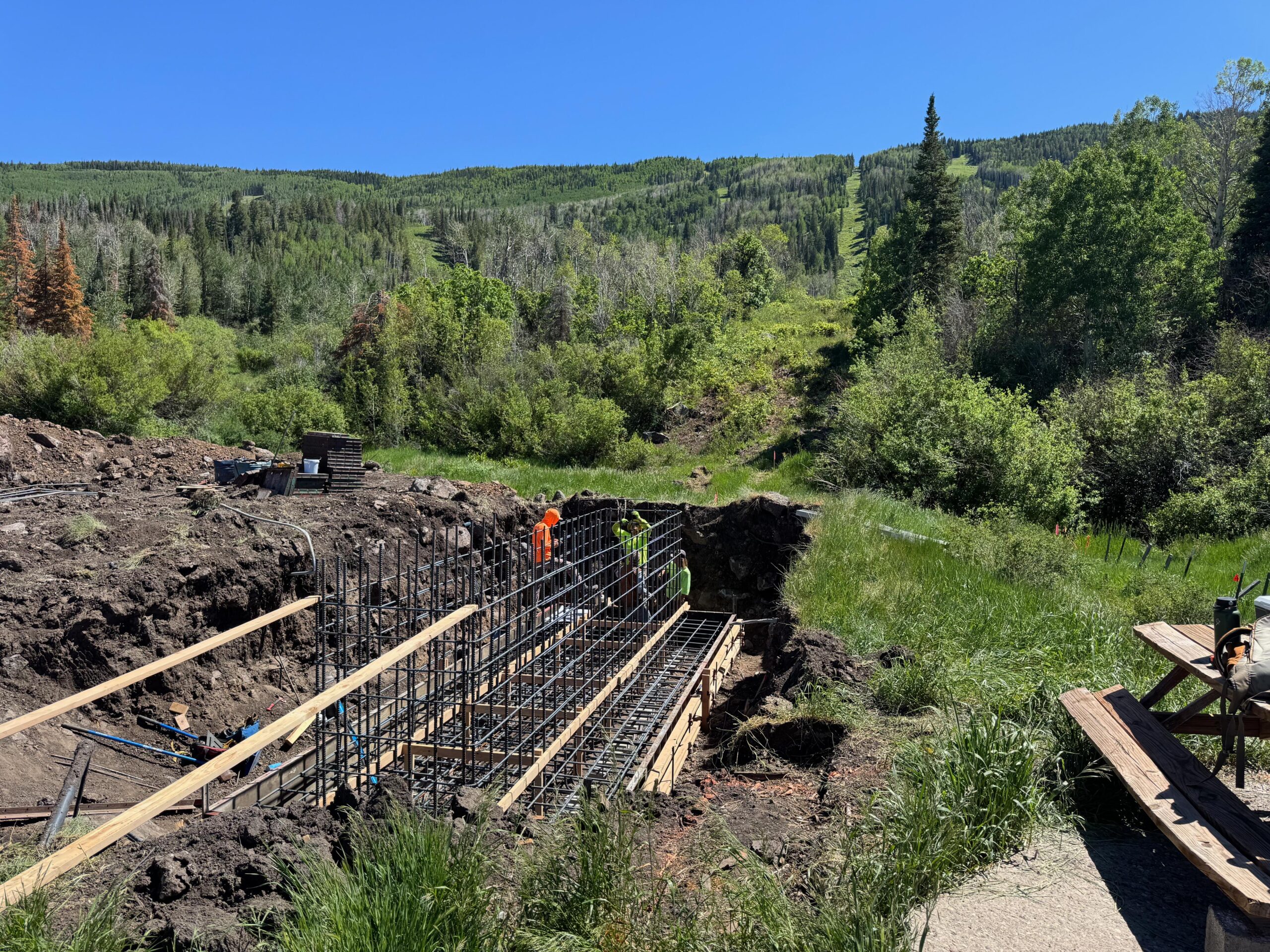
This week felt different. At the base area, crews poured concrete for the new bottom terminal footer and continued constructing and aligning the forms that will support the future terminals. It’s the first major piece for the Wild West Express that isn’t removing something old, it’s creating something new.
Elsewhere on the mountain, work continues to prepare for the busy summer ahead. Grand Valley Power have been on site making plans to relocate electrical infrastructure near Tower 1.
The view from the lift line is changing as well. Line widening operations are now complete except within the designated elk calving area, where work remains paused until those seasonal wildlife restrictions are lifted. Throughout the project, Powderhorn has worked closely with our land managers to balance construction needs with our stewardship role. Sometimes that means putting crews and equipment to work. Sometimes that means waiting patiently.
And soon, patience gives way to…helicopters!
Towers from the retired West End Double will begin flying from their resting places over the coming days. It will be a visible milestone of the entire project and the first time we’ll be able to look up the mountain and see the clean canvas awaiting the new lift.
Lift construction projects can evolve slowly but then have moments of accelerated visual progress. Weeks of planning, surveying, excavation, permitting, and preparation can pass with little obvious change to the casual observer. Then suddenly, in a matter of days, the landscape looks entirely different. We’re about to enter one of those moments. For the first time since the West End came down, something new is about to rise in its place.
As always, thanks for following along with the transformation of Powderhorn’s west side. If you have a memory about the West End Lift, or something special you’re excited to share about the upcoming Wild West Express, please let us know at [[email protected]](mailto:[email protected]).
A Mountain in Transition
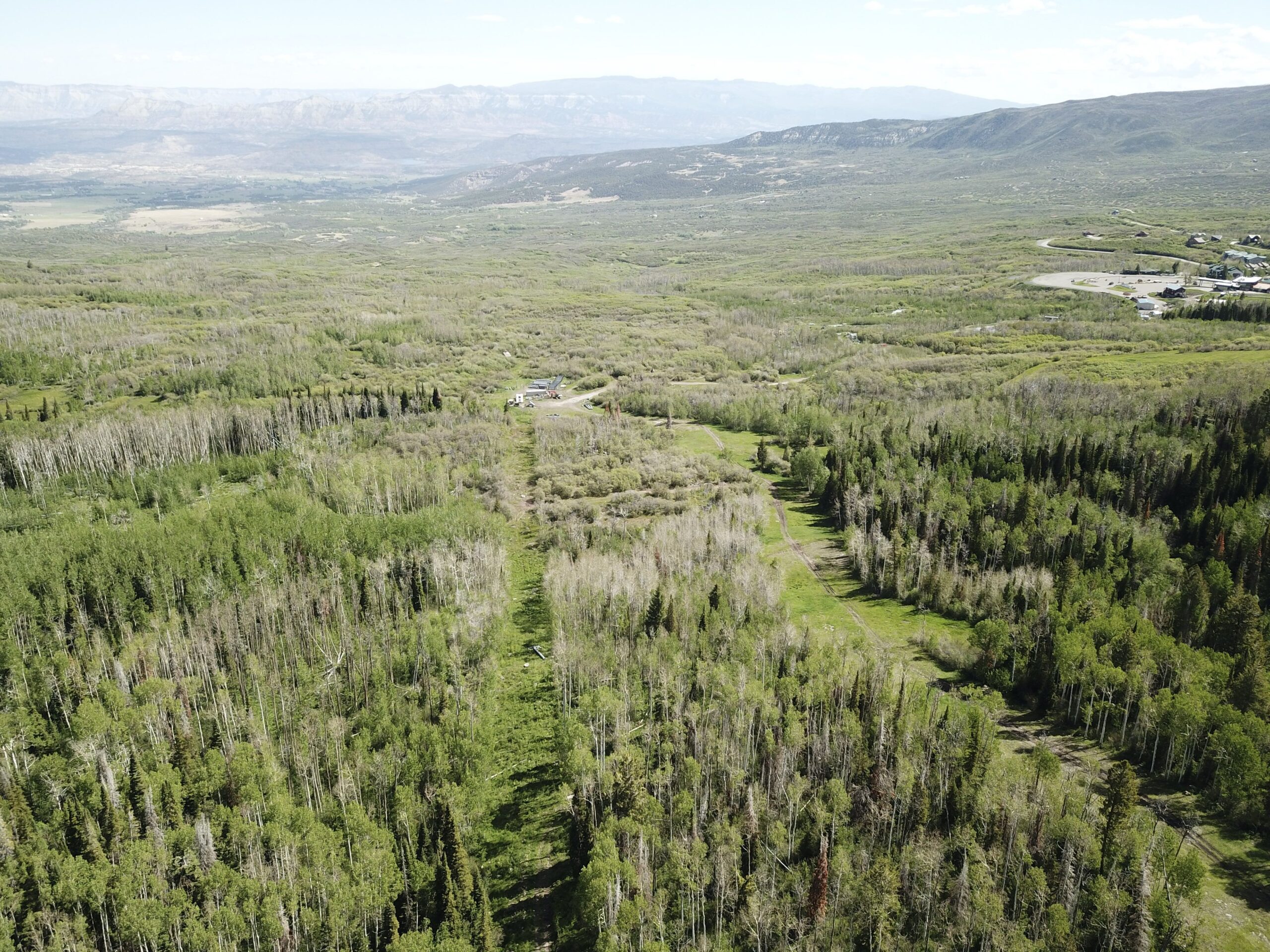
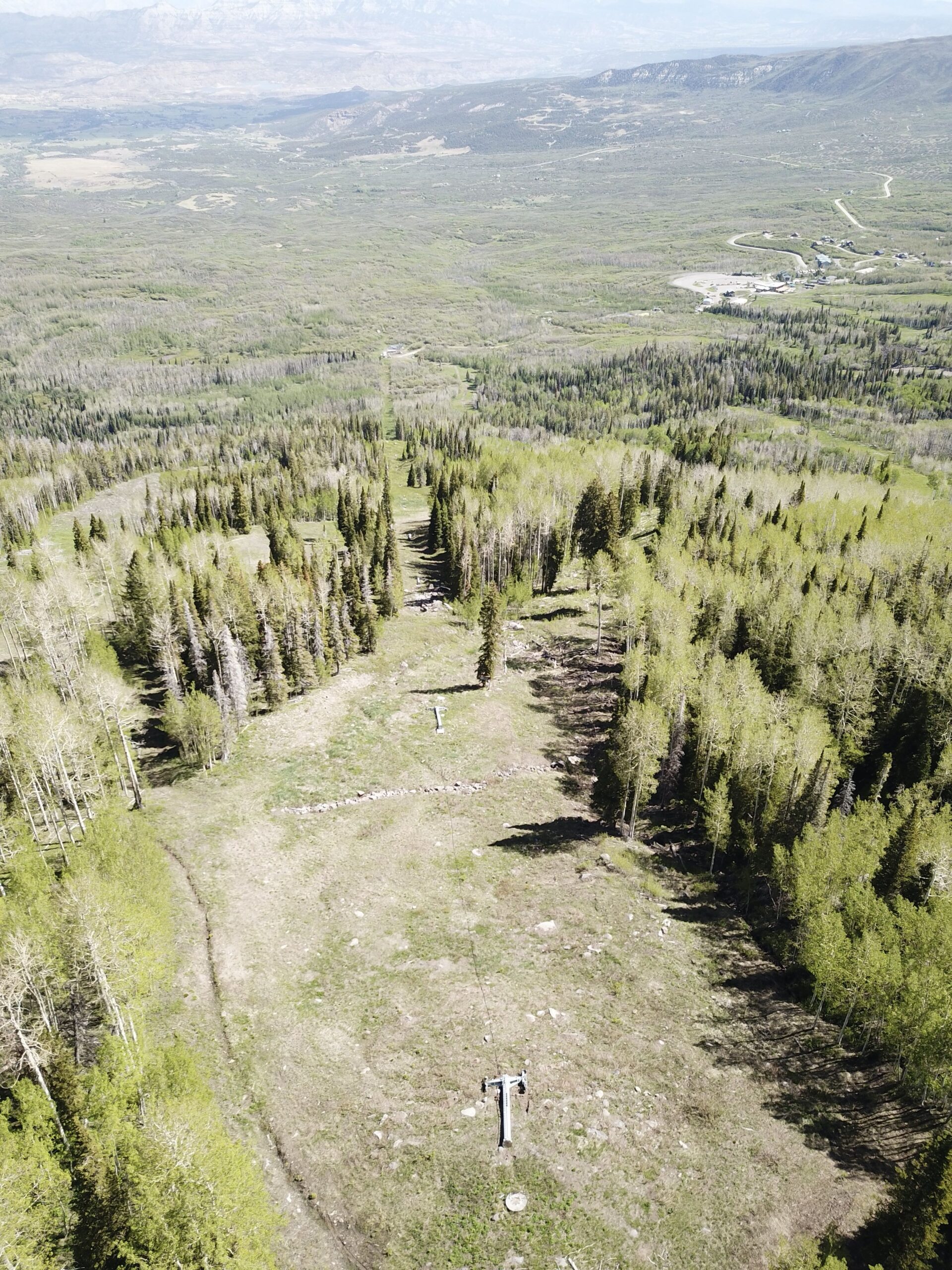
The highlight of this week was also key point in the Wild West Express master plan: a successful hike of the entire lift line, with representatives from the US Forest Service, project engineers, logging crews, and Powderhorn staff. Starting near the top of the Mesa and working all the way to the base area, the group reviewed upcoming construction activities, corridor management, environmental considerations, and the many details required to keep a project of this scale moving forward.
Logging operations are now underway as crews widen the corridor needed for the new detachable quad. Like much of this project, it’s work that looks straightforward from a distance but requires a tremendous amount of planning and coordination behind the scenes.
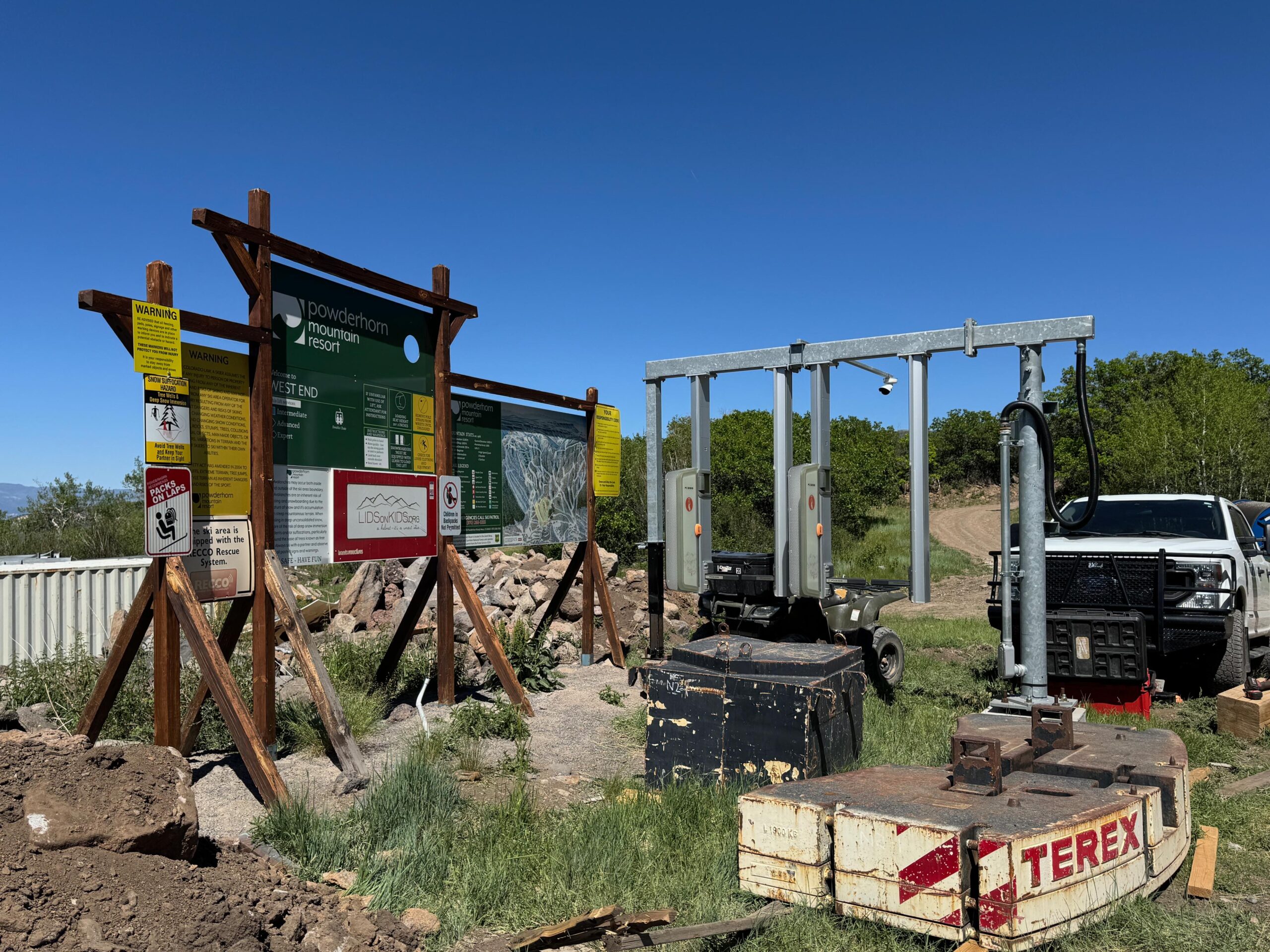
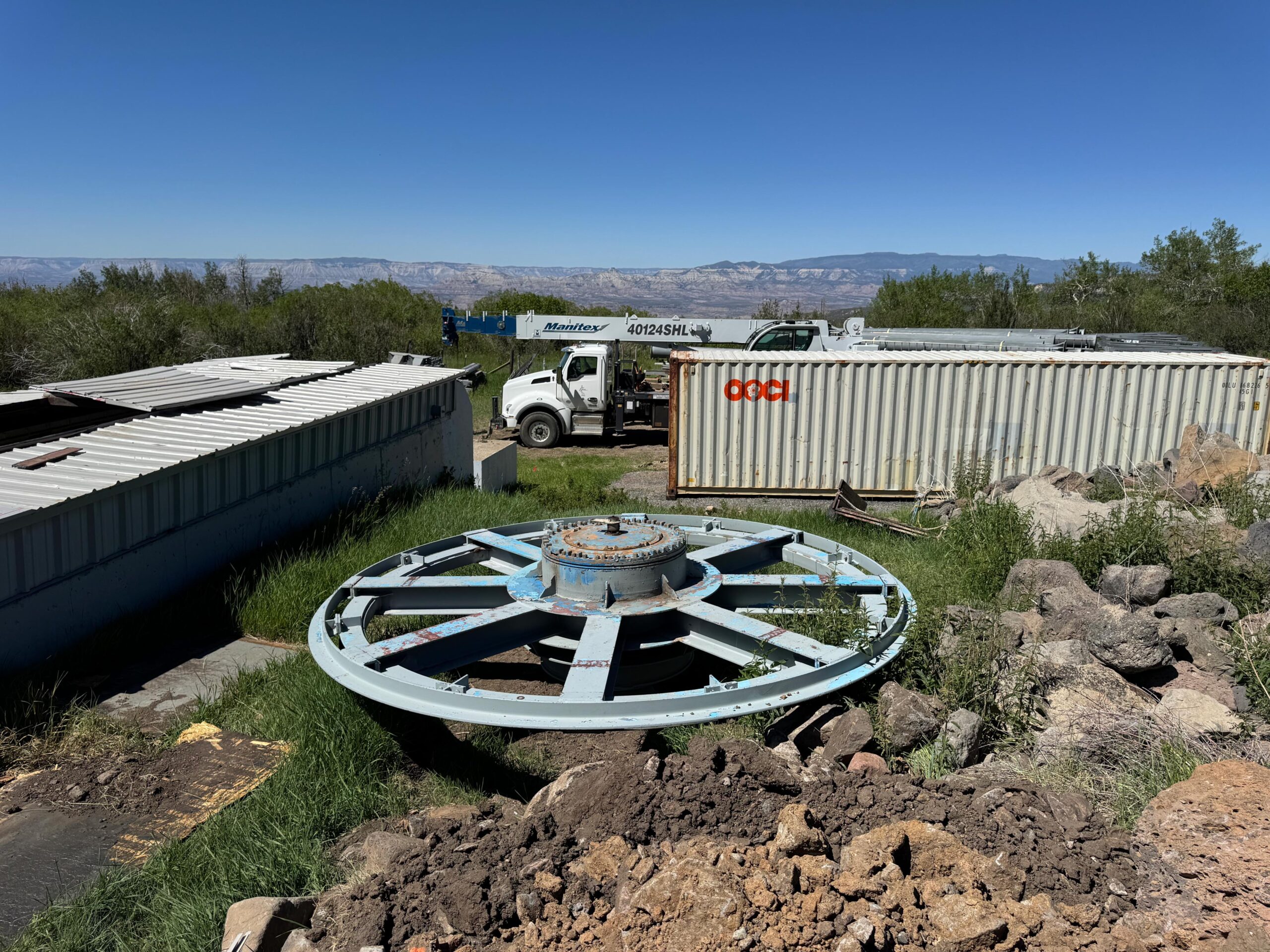
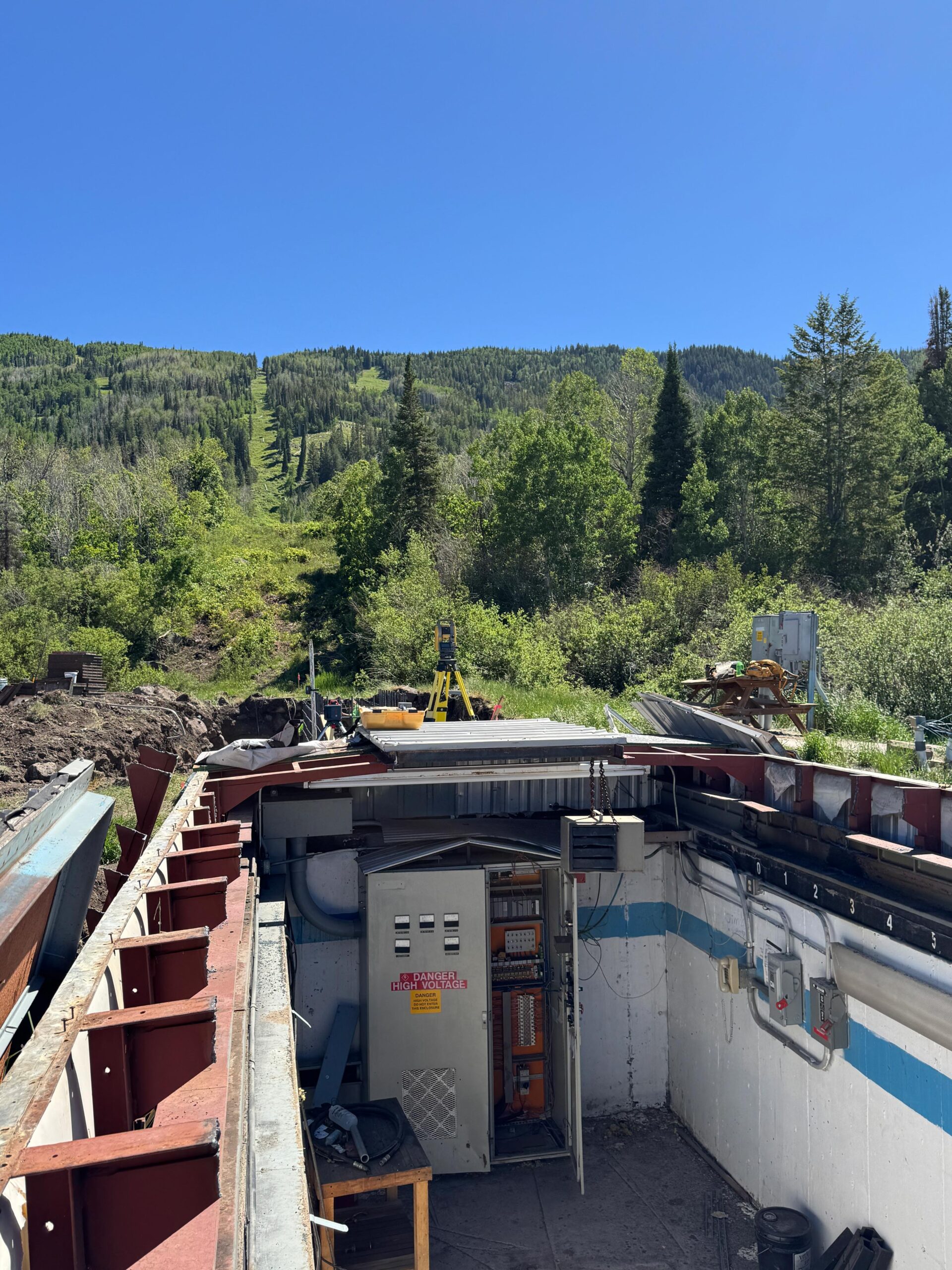
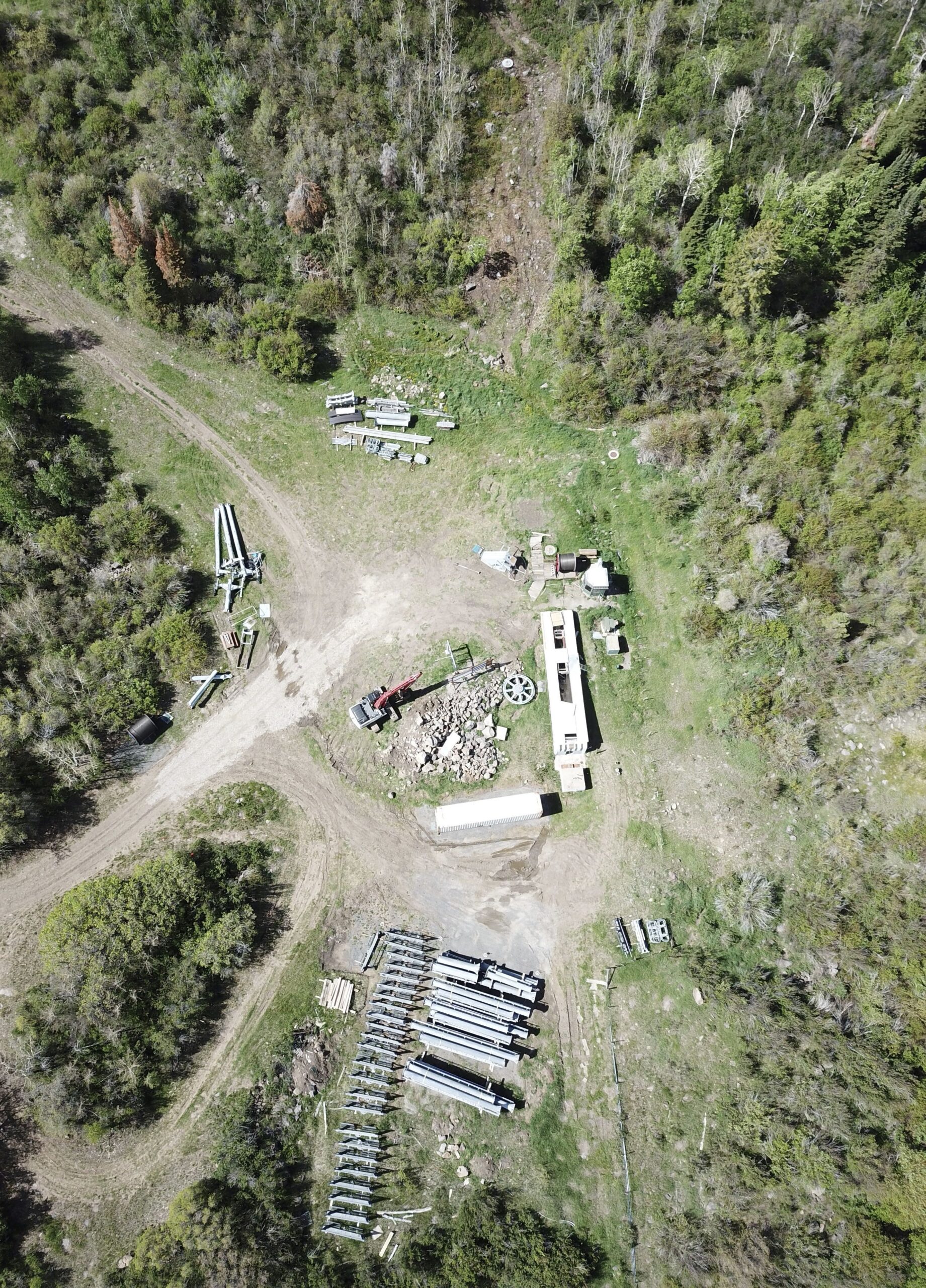
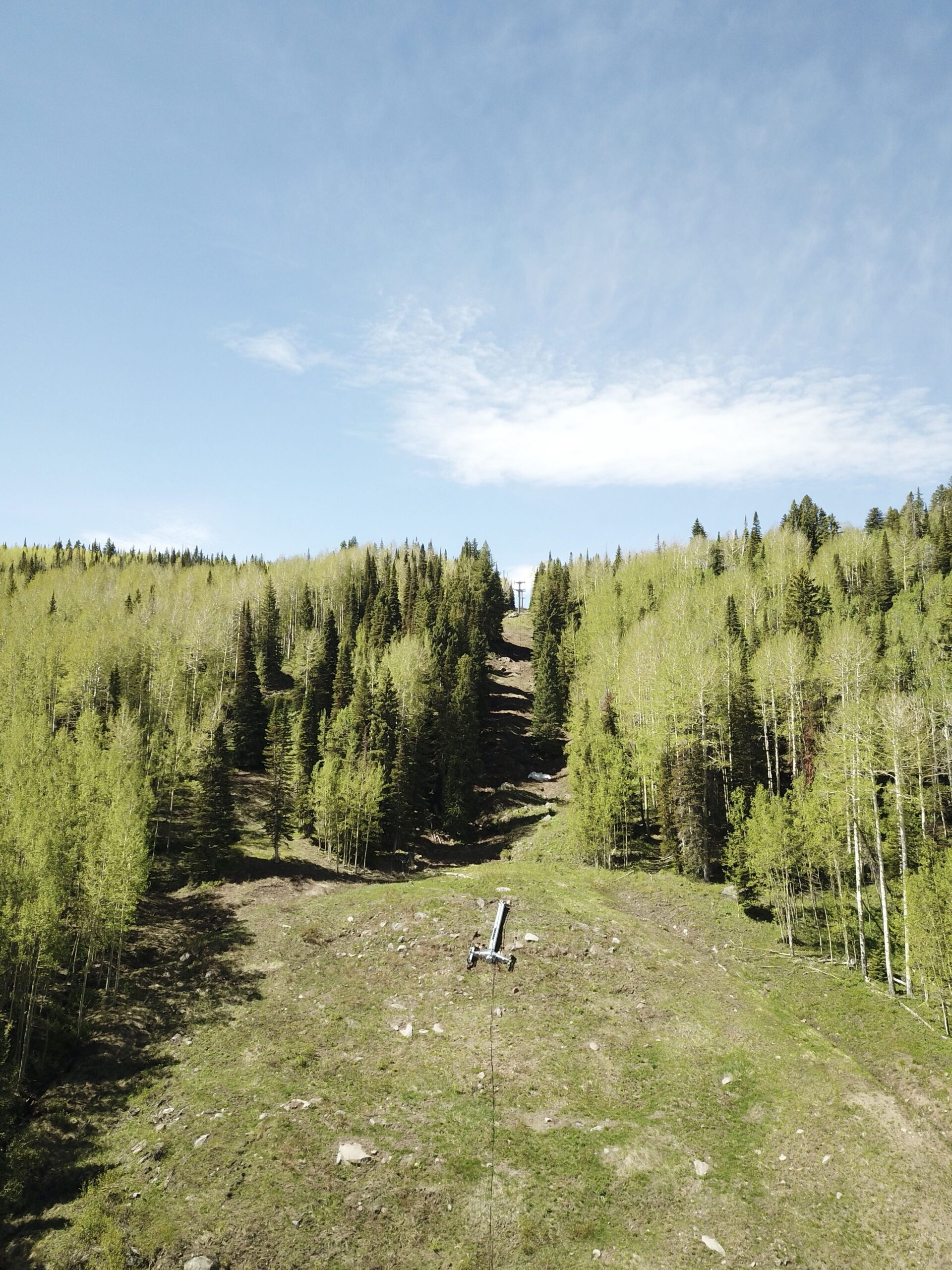
At the top of the mountain, the few remaining West End lift towers finally came down, bringing an end to the familiar skyline that’s defined Powderhorn’s west side. For the first time in over 50 years, the entire line stands open from top to bottom, offering a clear view of both where the West End has been and where the Wild West Express is headed.
But the lift line won’t stand empty for long. In the parking lot, the final tower forms are being built. Eventually, these will be airlifted up the mountain to the future tower locations, placed in the ground, and filled with concrete. At the base of the new lift, a garage-sized pit has been dug for the foundation of the lift terminal. The strength and scale of the machine is clearly apparent, but the precision involved can be overlooked—the past month’s pervasive efforts in surveying and flag-staking were needed to determine exactly where each foothold of the lift must lie.
This week’s progress was a great reminder that lift construction isn’t just about moving dirt or setting steel. It’s about bringing together experts from a wide range of fields, each playing a role in building something that will serve skiers and snowboarders for decades to come. With all towers now on the ground, logging underway, and work on the new bottom terminal site, the Wild West Express is starting to feel less like a plan and more like a construction project.
Thanks for following along. If you have a memory about the West End Lift, or something special you’re excited to share about the upcoming Wild West Express, please let us know at [email protected].
Between Memory and Momentum
There are interesting contrasts to lift construction. One day, some of the West End towers that stood for decades are suddenly gone from the skyline. The next, the mountain seems almost still again. There are scattered survey stakes in the ground, wooden forms rising, and orange flags fluttering in the wind. Little by little, Powderhorn’s western skyline continues to change.
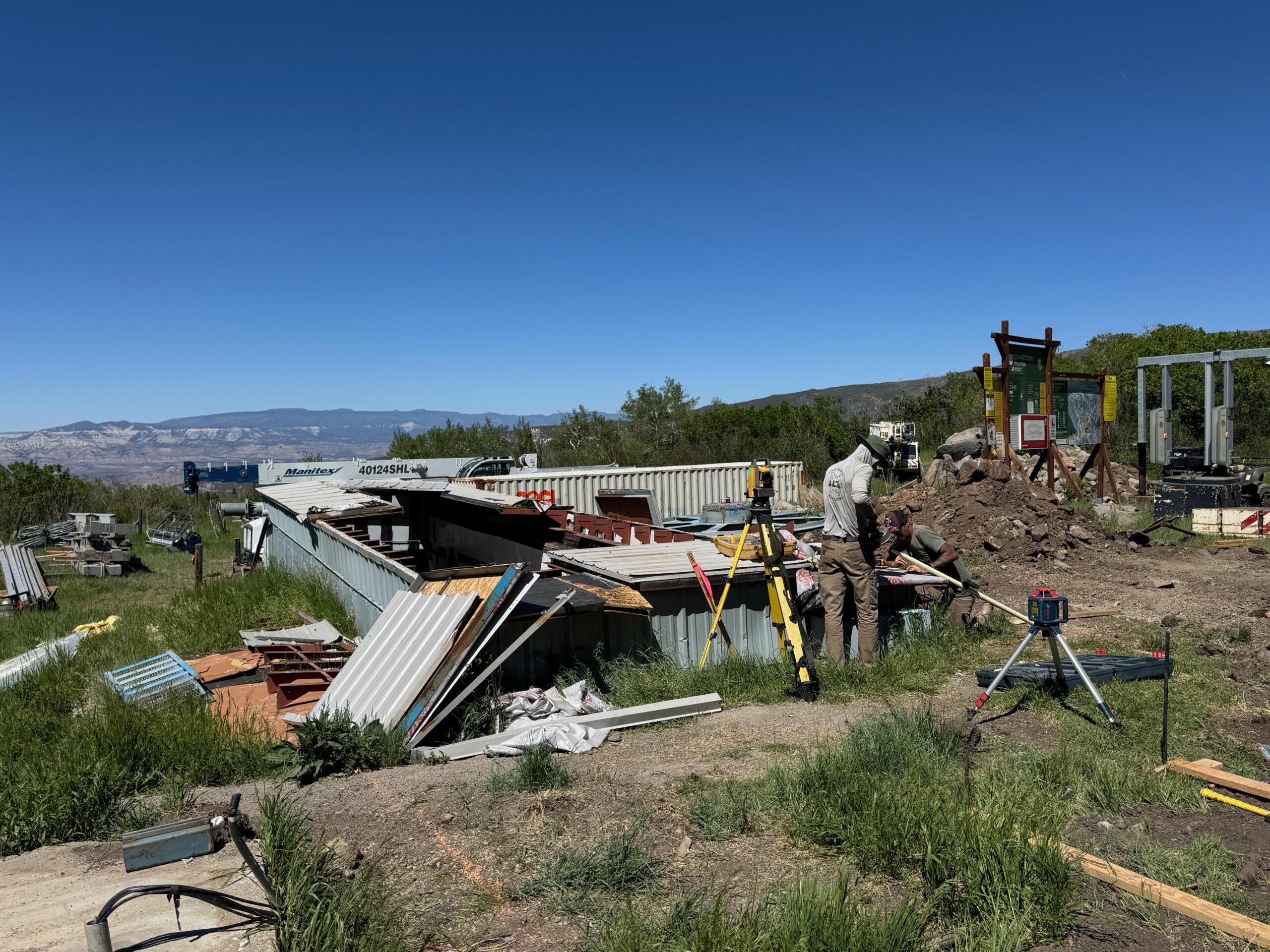
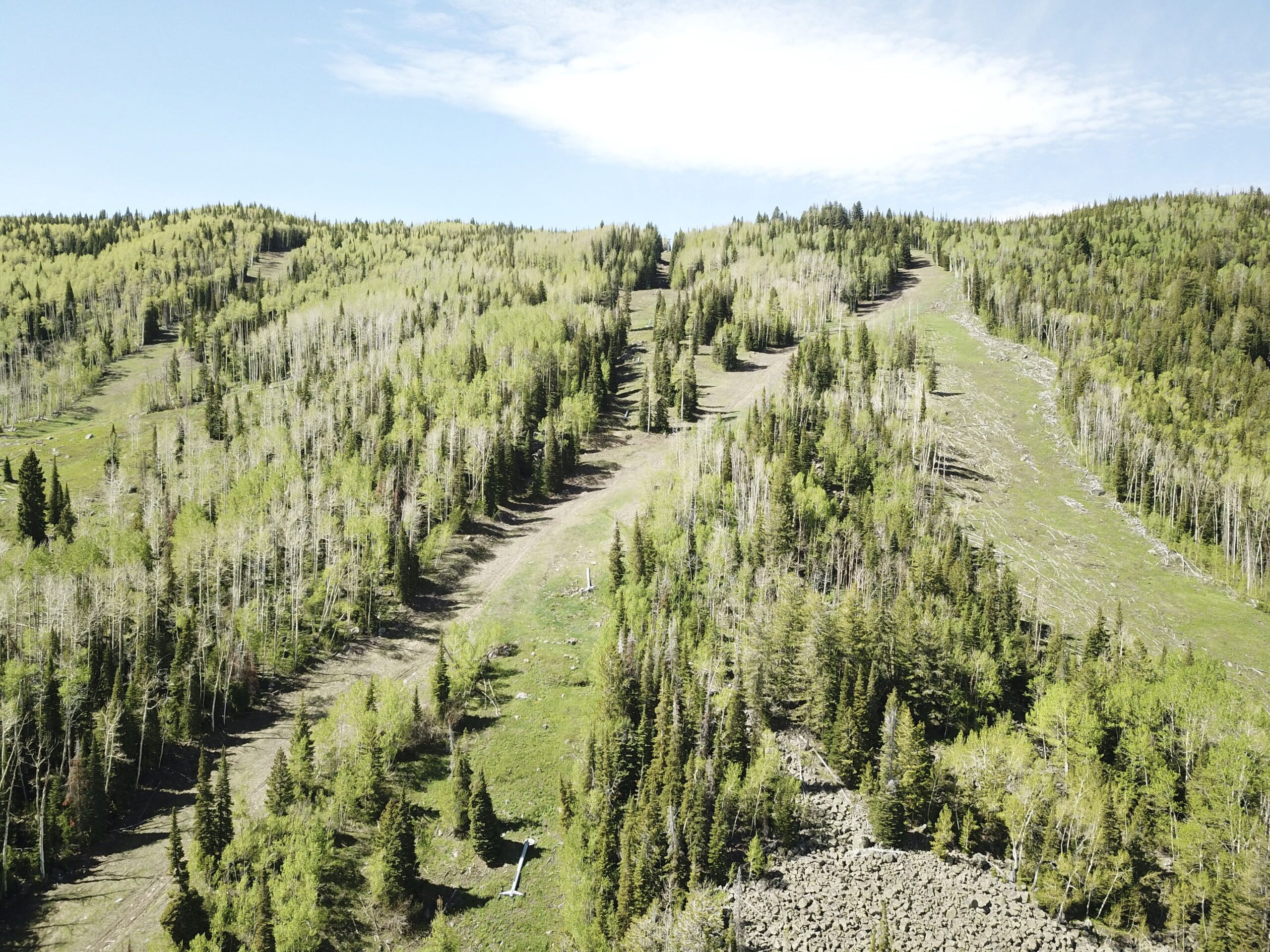
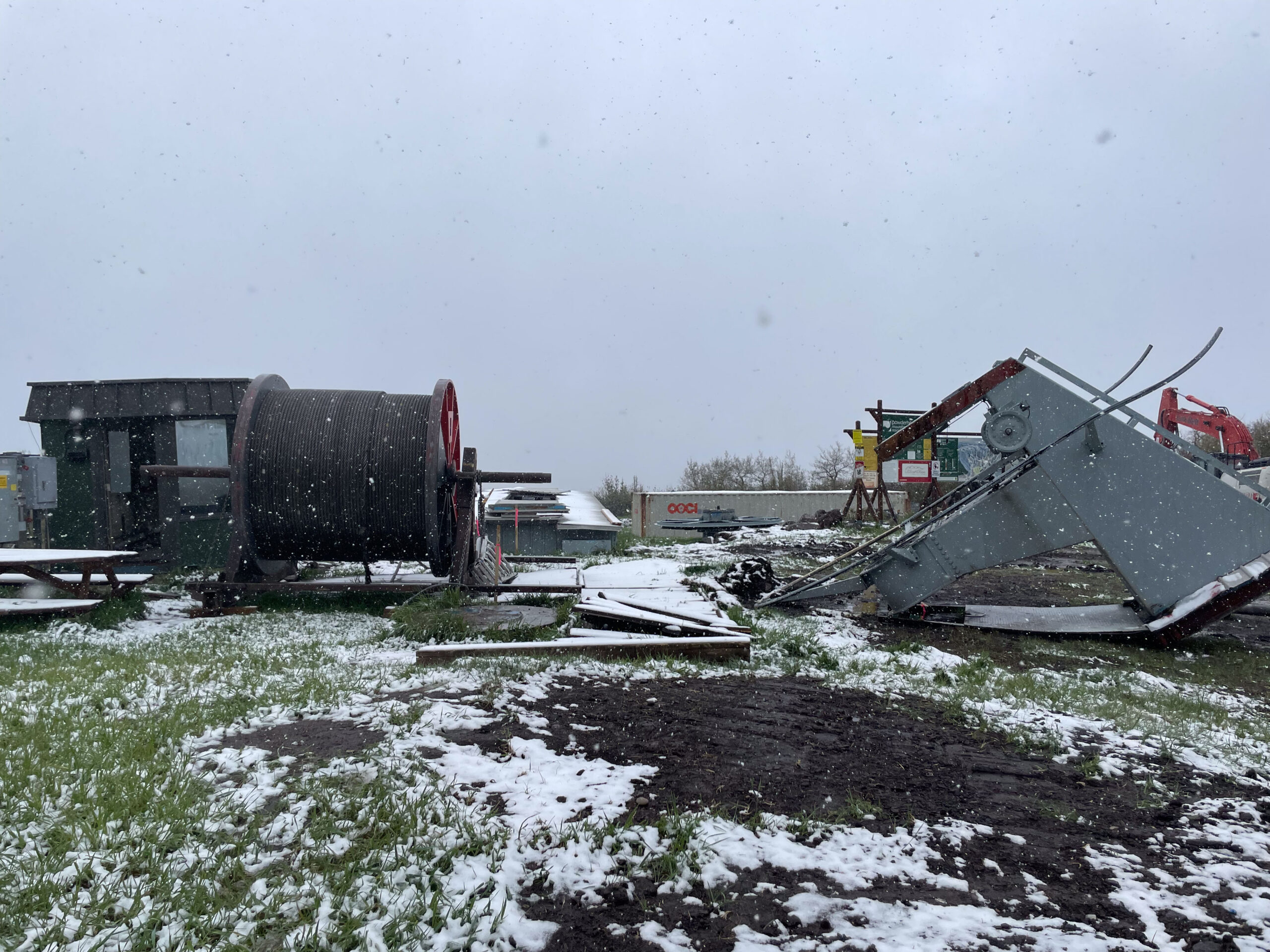
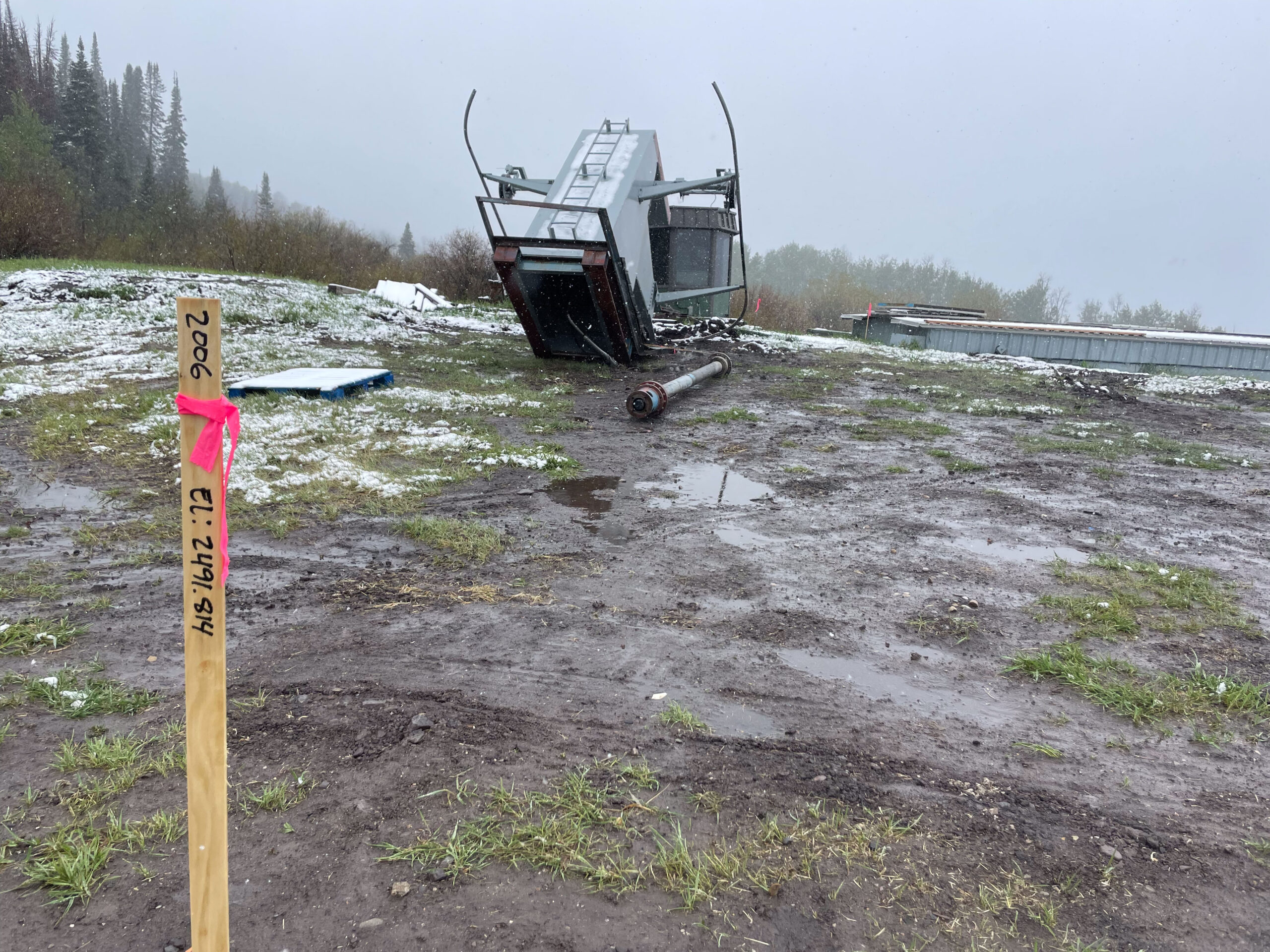
Over the past week, deconstruction crews have pushed farther up the line, with the old West End lift towers now on the ground past the intersection of Sweet Misery and Red Eye. For anyone who has been around Powderhorn for some time, it’s a pretty striking sight. Stretches of mountain that, for decades, were defined by towers, cable, and chairs now standing briefly open.
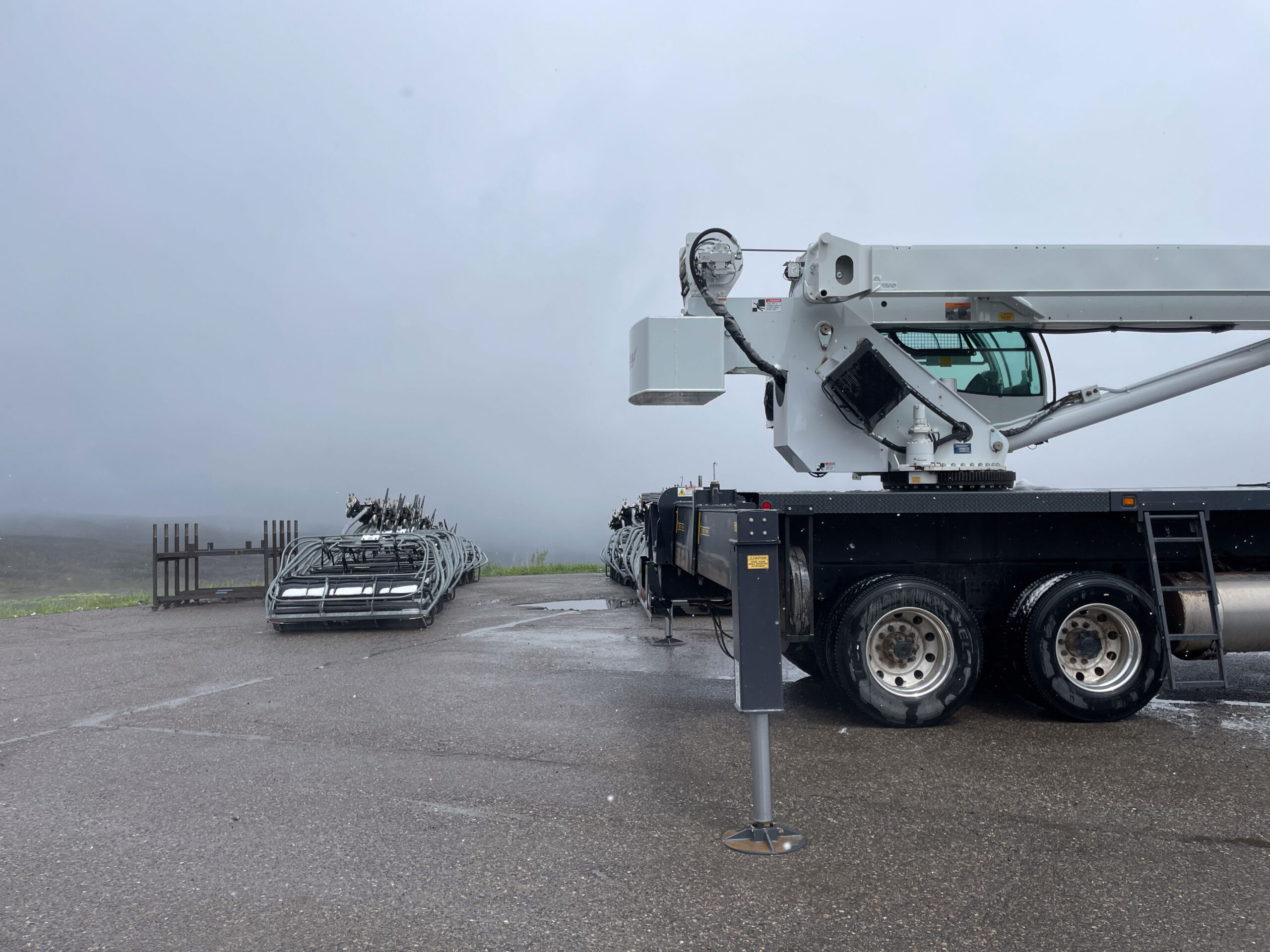
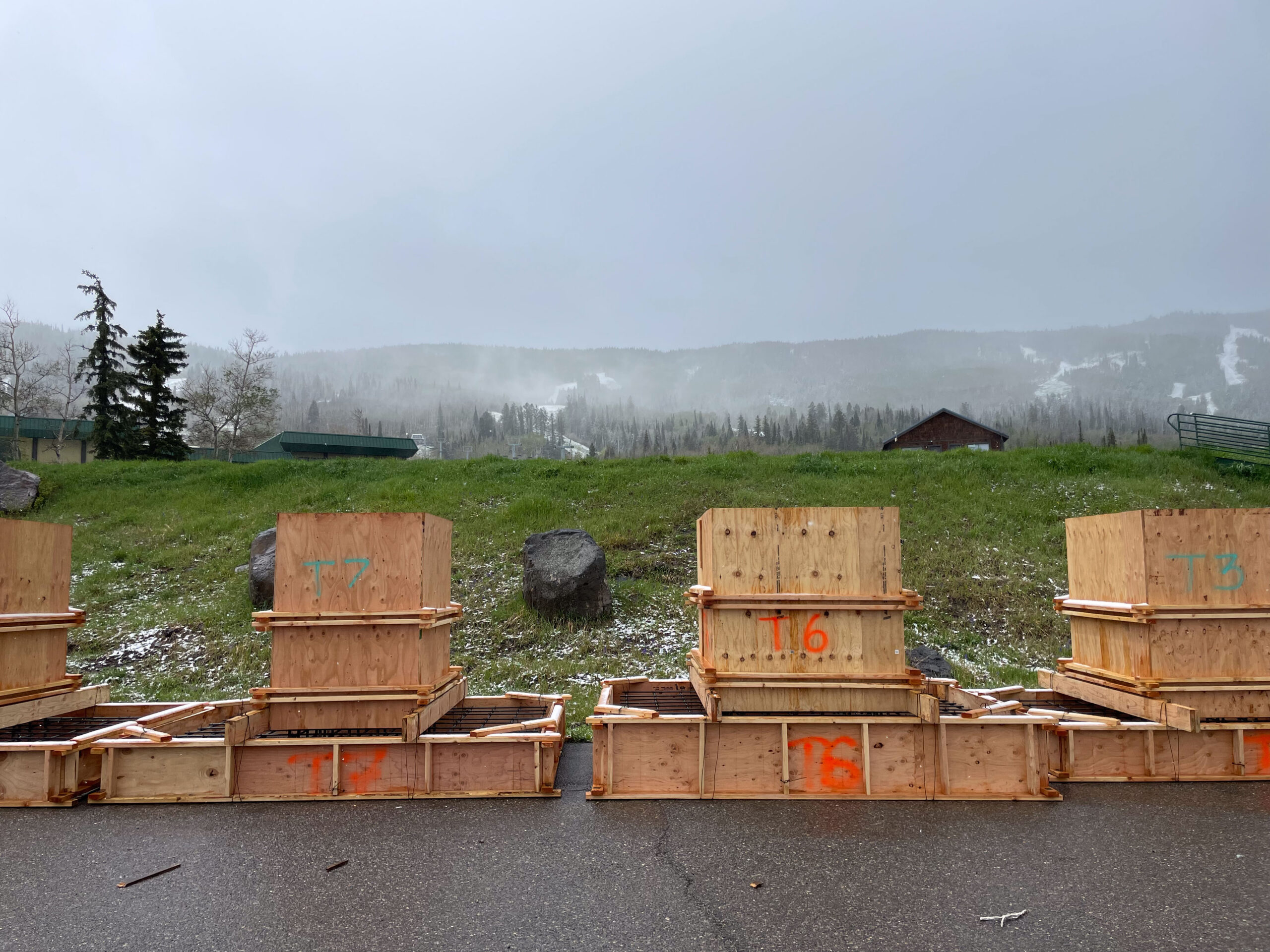
Down in the parking lot, activity continues steadily. Crews remain at work preparing the new tower foundations that will eventually support the Wild West Express as it carries guests toward the summit next season and for many winters beyond. Another important step occurred this week as the remaining chairs slated for refurbishment were transported down the Mesa to Leitner-Poma. This is just some of the work that must be done before towers fly and terminals arrive.
Lift construction is never just steel and concrete. It’s engineers, surveyors, operators, environmental specialists, loggers, mountain staff, and lots more working together. These teams will meet to walk the lift line next week, along with representatives from the US Forest Service. Discussions will cover line clearing operations, corridor management, environmental considerations, and the careful balance required when modern lift construction intersects with sensitive mountain terrain and wildlife habitat.
For now, the mountain remains in transition. Towers continue to disappear uphill, and somewhere between spring snow squalls and sunny drying days, the Wild West Express continues moving towards reality.
Thanks for following along with the project. Don’t forget that the online auction for the West End chairlift chairs will take place June 1-7. Click here for auction details.
The Mountain Makes the Schedule
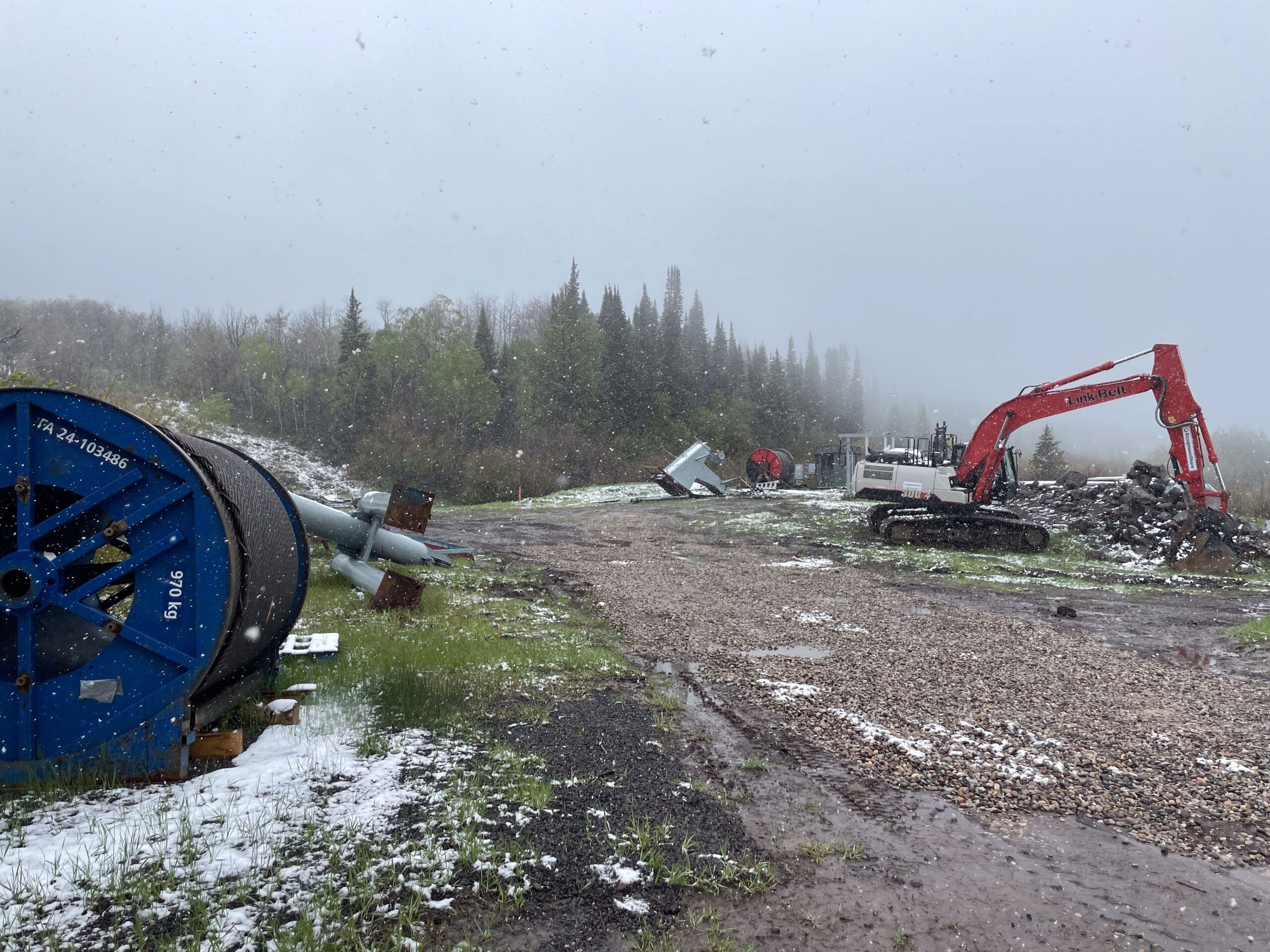
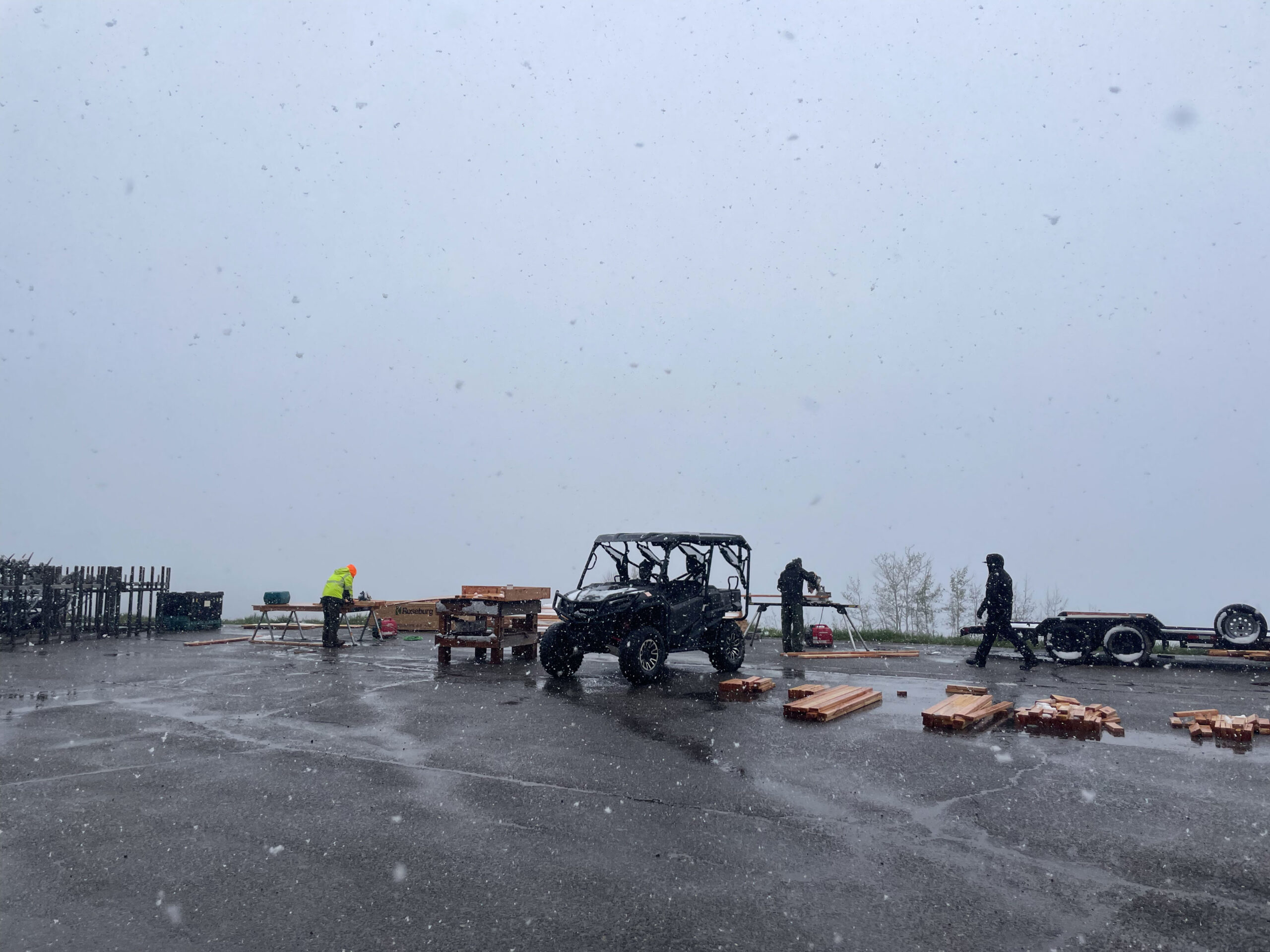
Spring construction can be unpredictable, and this week was a reminder of exactly that. Just when the Grand Mesa looked fully committed to spring, the mountain decided to remind everyone exactly who is in charge.
A late spring storm rolled across Powderhorn earlier this week, leaving several inches of fresh snow behind, and bringing periods of blowing snow to the Wild West construction site. For a few hours, with the mountain dusted in white once again, it almost felt like winter had returned. We certainly won’t complain, hopefully it’s a good omen for next winter and Powderhorn’s upcoming 60th Anniversary season.
Even with shifting weather conditions, progress on the Wild West Express continues steadily. Line clearing operations will begin along portions of the lift alignment. Because the Wild West Express will replace the existing fixed-grip double with a detachable quad, sections of the corridor must be widened to safely accommodate the larger lift profile and updated clearance requirements. The completed corridor will measure approximately 60 feet in most sections. All our line-clearing operations are being done in coordination with the US Forest Service, essential to our continuing role as good stewards of the land and forest.
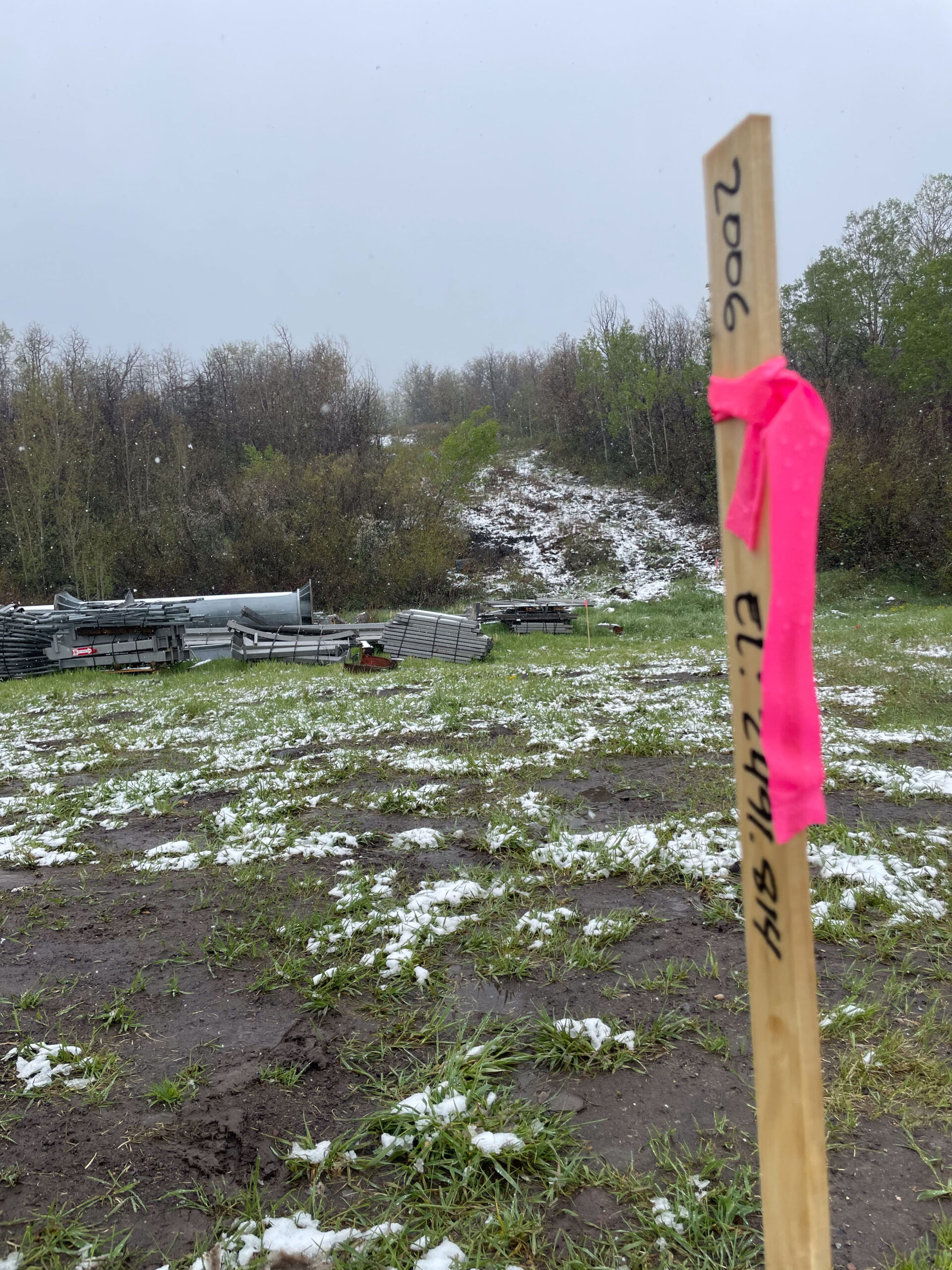
Crews remain at work constructing tower footer forms and survey teams have begun staking exact locations for the new bottom terminal and towers. This stage is precise and methodical work, the sort of effort that doesn’t make headlines. But it is among the most important, as it will establish the exact geometry that will quietly determine everything that follows.
One of the striking things about lift construction is how much of the work happens before the first tower ever rises into the skyline. Survey flags, foundation forms, environmental planning, and corridor preparation may look subtle today, but together they are reshaping the future of Powderhorn. For now, the Wild West Express still exists mostly as outlines and measurements, just markings on maps. But beneath that surface, an enormous amount of planning, coordination, and engineering is underway.
Thanks for following along as the lift project develops. Summer visitors, please steer well clear of all equipment and construction activity around the resort. And look for West End chair sale details on social media and in your email inboxes this week – the online auction begins June 1st.
The Next Chapter Begins
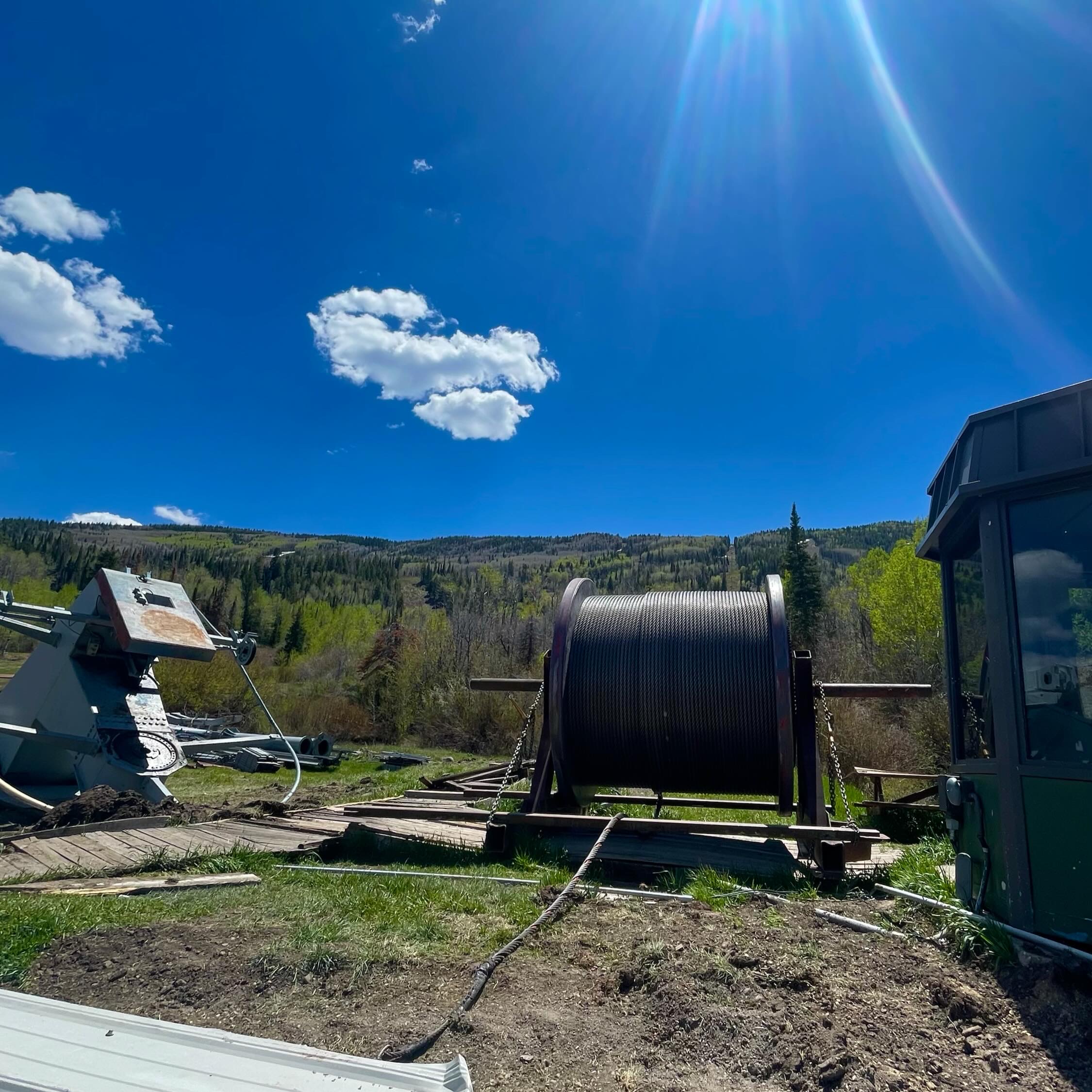
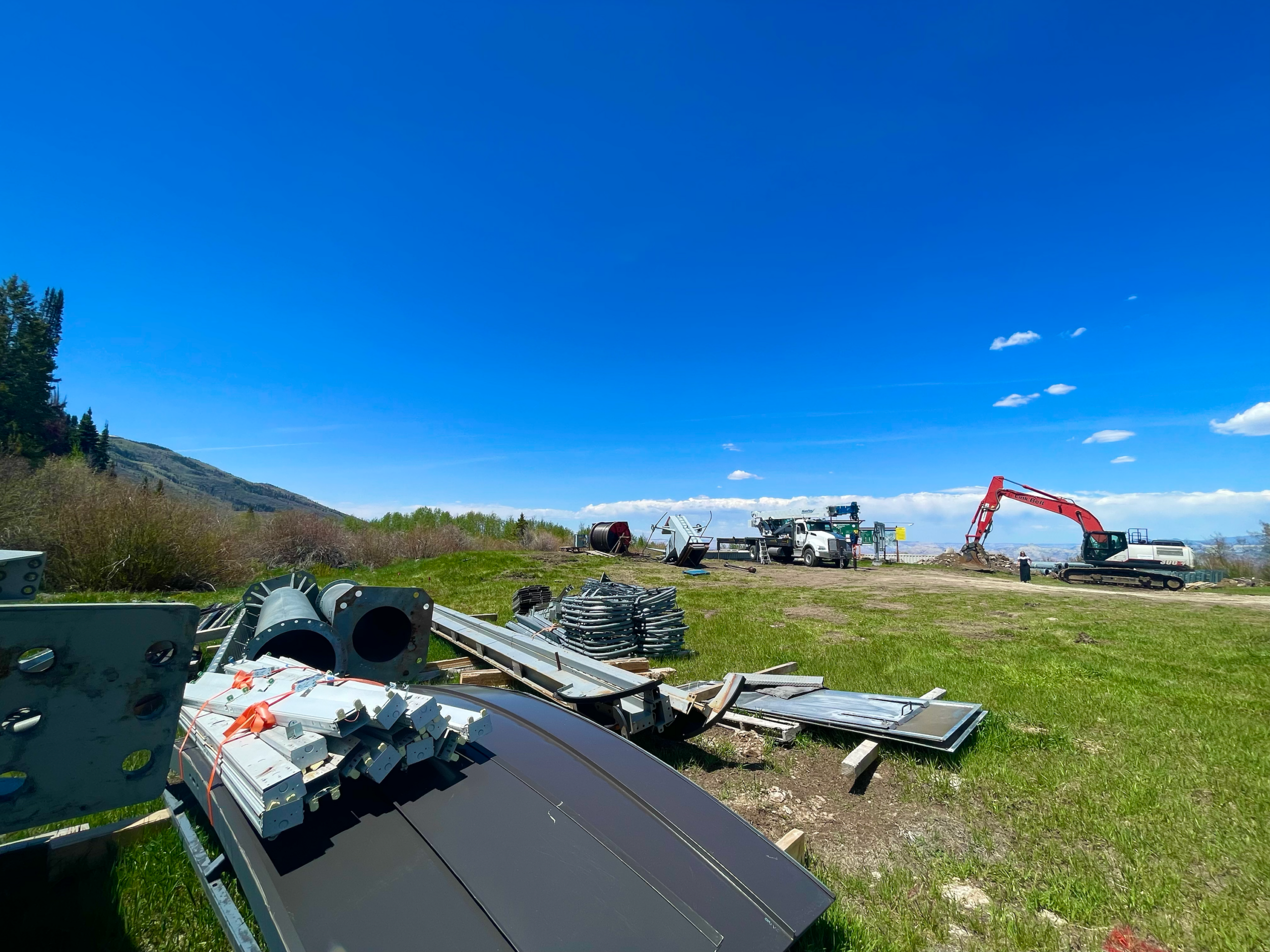
Over the past week, crews have made significant progress on the early stages of deconstruction. The haul rope has been removed, the motor room has been disassembled, and the lower terminal has come apart piece by piece. Several of the lower towers have also now been removed.
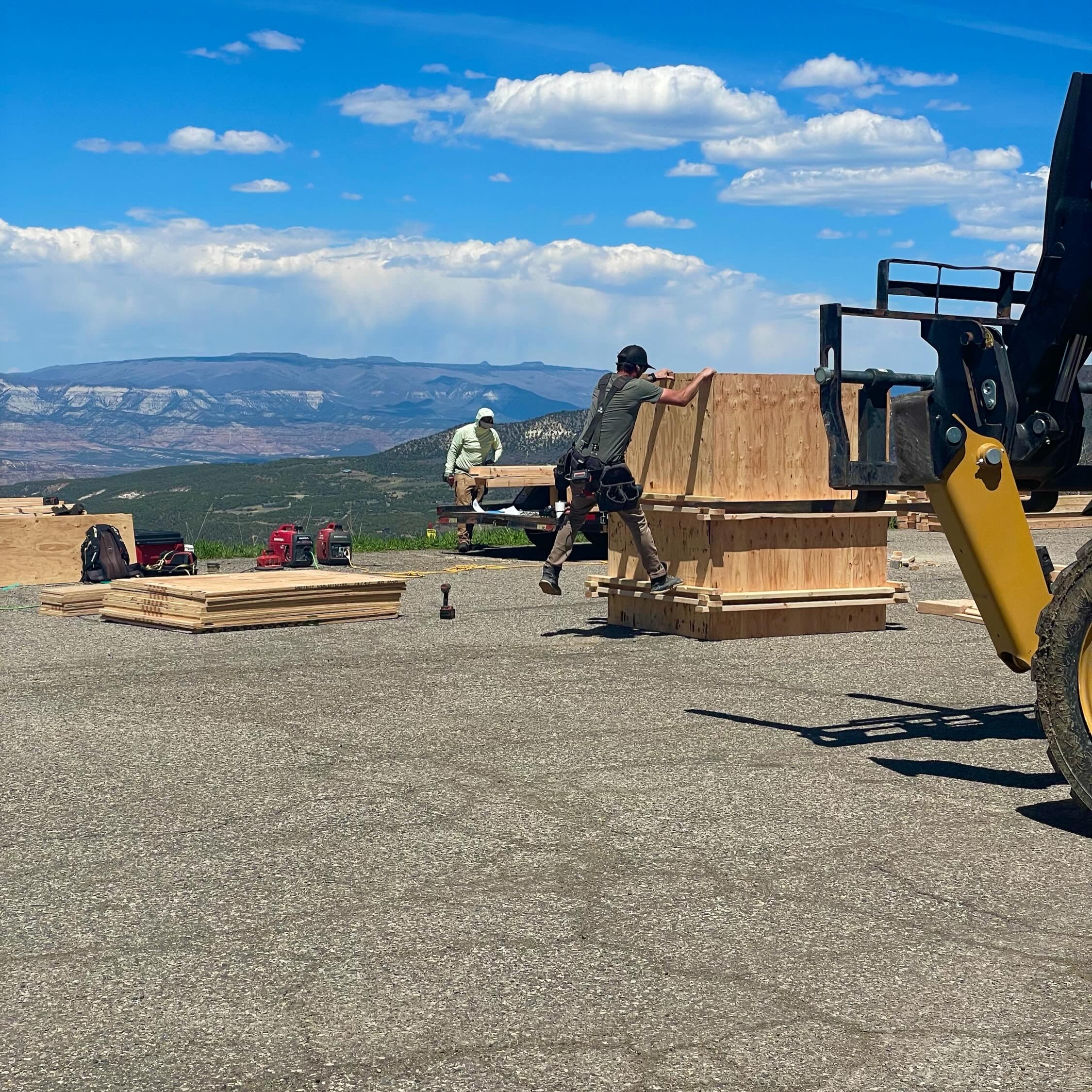
At the same time, the foundation for the future is literally beginning to take shape. Crews are actively building forms for upcoming tower footers and the first permanent steps toward the Wild West Express taking shape on the mountain.
Throughout the project, we are working closely with our lift engineering and construction partners at Leitner-Poma of America, whose nearby Grand Junction operations are helping lead the transformation from the historic West End lift to the new Wild West Express.
Equally important is our ongoing coordination with the United States Forest Service to ensure the project is completed responsibly and thoughtfully. Wildlife closures, erosion control, revegetation, and wetland protections remain central considerations throughout construction.
And while the mountain will look a little different next winter, one piece of the West End story will soon live on in homes, garages, cabins, and gathering spaces far beyond Powderhorn. The West End Chair Auction is scheduled for June 1-7, offering guests the opportunity to own a lasting piece of mountain history. Additional details will be announced soon.
While it’s bittersweet to watch the West End come down, there is excitement in seeing the future beginning to rise in its place. Stay tuned for ongoing projects, and a friendly reminder for all visiting the resort this summer to steer well clear of construction activity and equipment.